
JHS Pedals 3 Series Reverb
4.7Editor score
Made in USA
Versatile EQ controls
Adjustable pre-delay
This guide compares the top ten hardware reverb units for musicians and producers, evaluating sound quality and features to help you find the perfect unit.
Hardware reverb units provide authentic spatial effects that digital plugins often struggle to replicate. These devices add depth and atmosphere to your mixes using dedicated processing or analog circuits.
We evaluated ten top-rated models based on sound quality, feature sets, build durability, and user feedback. Our selection includes pedal formats, rack units, and modular options for various setups.
Each pick highlights key strengths and ideal use cases for different musicians. Note that availability and pricing may fluctuate, so check current listings before making your final purchase decision.
4.7Editor score

4.9Editor score

4.8Editor score
The following table provides a side-by-side comparison of all ten hardware reverb units evaluated in this guide, highlighting their core specifications and key differentiators.




The Strymon blueSky V2 stands out as a top-tier digital stereo reverb pedal designed for guitarists seeking high fidelity. It holds an impressive rating from users who praise its clarity and depth.
We may earn a commission when you buy through this link, at no additional cost to you.
Key strengths include its shimmer controls that add ethereal tones and pre-delay settings that prevent masking. The high and low controls allow precise tonal shaping.
While it is expensive and might overwhelm beginners with features, these trade-offs are acceptable for professionals needing reliable studio-grade tones on the road.
Guitarists prioritizing sound quality and versatility should buy this unit. It delivers the best balance of classic and modern reverb effects available today.
The stereo output creates a wide soundstage that fills space in any mix.
Pre-delay and high-low filters ensure the reverb fits any mix perfectly.
We may earn a commission when you buy through this link, at no additional cost to you.
The Strymon BigSky Multidimensional Reverb Pedal is a powerhouse for creators needing complex spatial effects. It has earned high praise for its ability to generate unique sounds beyond standard reverb.
We may earn a commission when you buy through this link, at no additional cost to you.
Its standout qualities include multidimensional algorithms that blend reverb with other modulations and extensive routing capabilities for flexible setups.
The complexity and price are the main downsides, but these are justified by the limitless sonic possibilities it offers for advanced users.
Professional musicians and producers should choose this unit. It remains the benchmark for high-end reverb pedals on the market today.
Multidimensional algorithms allow you to create unique atmospheric layers.
Built to withstand touring while maintaining pristine sound quality.
We may earn a commission when you buy through this link, at no additional cost to you.
The JHS Pedals 3 Series Reverb is an extremely versatile unit that allows you to achieve any reverberation effect at a great value. It is well rated for its clarity and usability.
We may earn a commission when you buy through this link, at no additional cost to you.
Key strengths include an EQ that lets you perfectly adjust for a bright or dark texture to the reverb and overall tone.
While it has a simple interface with limited modulation, this is acceptable for those needing straightforward sound shaping without complexity.
Musicians looking for a reliable budget option should buy this pedal. It delivers high-quality sound that rivals much more expensive units.
The EQ and pre-delay knob let you tailor the tone to any style.
Made in Kansas City USA ensuring durable construction.
We may earn a commission when you buy through this link, at no additional cost to you.
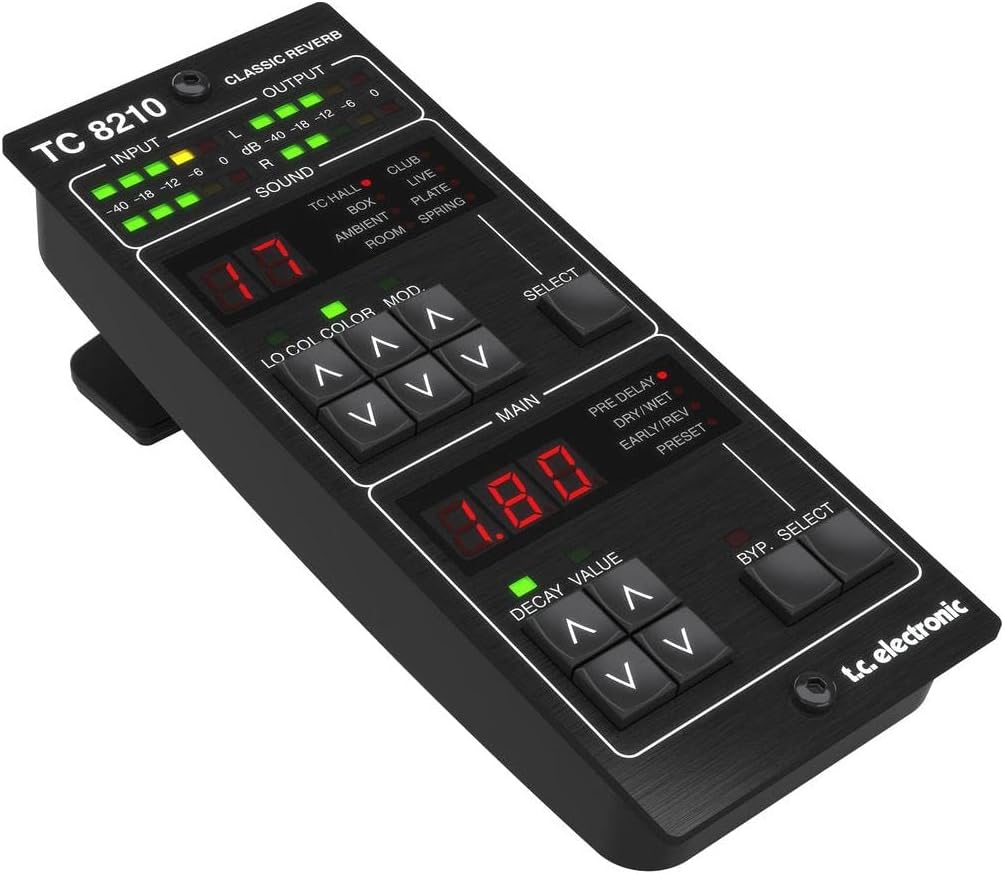
The TC Electronic TC8210-DT brings classic TC reverb sound to your DAW with a dedicated desktop interface that offers hands-on control. Users rate it highly for its sound preservation.
We may earn a commission when you buy through this link, at no additional cost to you.
It features a huge reverb variety to perfectly suit diverse musical needs and includes custom-built signature presets from your favorite artists.
The main drawback is its reliance on a computer and DAW which limits standalone use, but this is acceptable for home studio producers.
Producers who want classic reverb with hardware control should buy this. It bridges the gap between digital convenience and tactile workflow.
The dedicated desktop interface offers intuitive control without deep menus.
Preserves natural characteristics of original source recordings perfectly.
We may earn a commission when you buy through this link, at no additional cost to you.
The Donner Reverb Guitar Pedal is a compact solution offering 7 modes including room hall church spring and mod. It receives positive ratings for its price to performance ratio.
We may earn a commission when you buy through this link, at no additional cost to you.
Its key strength is a digital circuit design that delivers true bypass ensuring transparent tone and a durable aluminium-alloy case.
The limited control knobs and basic build are trade-offs, but these are acceptable for players needing a simple pedal for basic effects.
Beginners or those with tight pedalboards should buy this unit. It offers reliable reverb sound without taking up much space.
Its mini size makes it easy to fit into small setups.
True bypass design ensures your tone remains unaffected when off.
We may earn a commission when you buy through this link, at no additional cost to you.
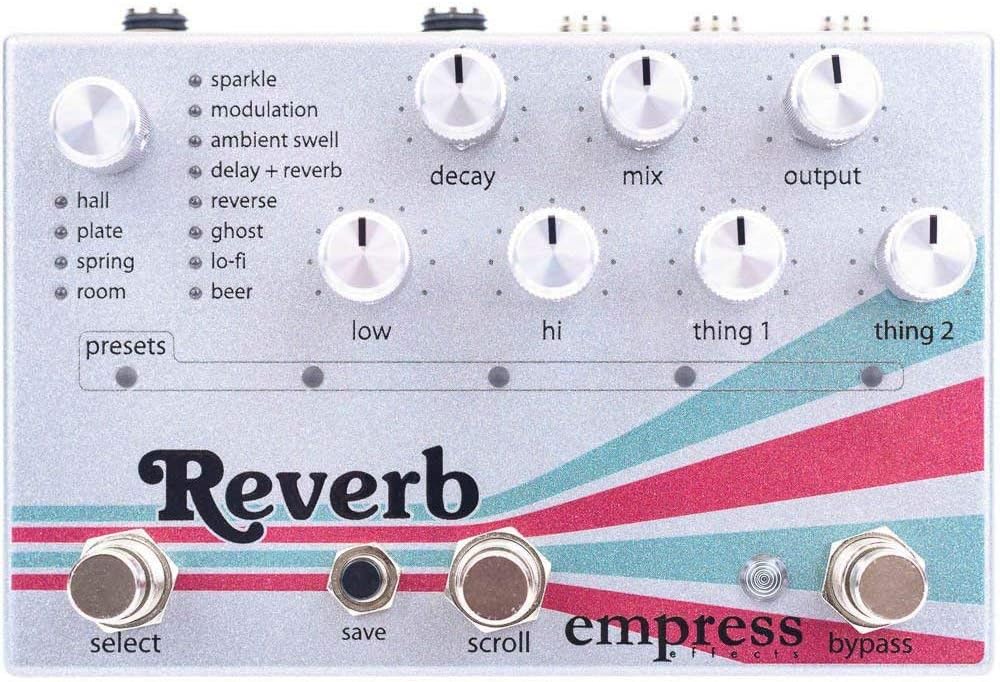
The Empress Effects Reverb features 24 studio quality algorithms that provide pristine classic and ambient sounds. It is rated highly for its ease of use.
We may earn a commission when you buy through this link, at no additional cost to you.
Key strengths include its ability to generate diverse tones quickly with tap functions that allow immediate adjustments during performance.
The main trade-off is its price and some menu navigation complexity, but this is acceptable given the high quality of sound it produces.
Players seeking a wide range of high-end reverbs should buy this unit. It offers exceptional versatility for creative soundscapes.
24 studio quality algorithms ensure professional audio quality.
Tap functions and intuitive layout allow quick adjustments on stage.
We may earn a commission when you buy through this link, at no additional cost to you.
The Behringer Spring Reverberation 66 is a 72HP analog reverb module that brings authentic dual-spring reverb to Eurorack systems. It provides users seeking vintage textures.
We may earn a commission when you buy through this link, at no additional cost to you.
Its strengths include a mute footswitch jack and unbalanced line outputs for seamless integration into modular setups.
The requirement for a Eurorack case and analog noise are trade-offs, but these are acceptable for those dedicated to analog workflows.
Modular synth users should buy this unit. It offers a unique analog reverb character that digital modules often lack.
Dual-spring reverb provides authentic warmth and texture.
Unbalanced line outputs make it easy to integrate.
We may earn a commission when you buy through this link, at no additional cost to you.
The Walrus Audio Mako Series MKII: R1 High-Fidelity Reverb features all six programs rebuilt for vast tonal improvement. Users praise its detailed control options and presets.
We may earn a commission when you buy through this link, at no additional cost to you.
It includes a new Ducking/Swelling feature as well as a size control and diffuse control for each program to shape sound precisely.
The complexity of its menus is a trade-off but this is acceptable for those needing deep sound customization.
Pedal users seeking high fidelity should buy this unit. It offers robust control over reverb tails and textures.
All six programs rebuilt to offer vast tonal improvement.
Feedback EQ control and size controls allow precise tailoring.
We may earn a commission when you buy through this link, at no additional cost to you.
The Universal Audio Galaxy '74 Tape Echo & Reverb is the most authentic emulation of the classic mid-70s analog Japanese ambience device. It captures the unique vibe of the era.
We may earn a commission when you buy through this link, at no additional cost to you.
It includes full modeling of the classic multi-head tape delay mechanism and exacting emulation of original hardware spring reverb.
The trade-off is needing power sold separately and using USB for updates, but this is acceptable for the authentic vintage tones provided.
Vintage tone lovers should buy this unit. It offers a definitive capture of iconic analog preamp sections and effects.
Authentic emulation of the classic mid-70s Japanese ambience device.
Doubled delay times allow effects beyond the original hardware.
We may earn a commission when you buy through this link, at no additional cost to you.
The Audio Effects Processor is a 24 Bit Digital Signal Rackmount Unit that features high-precision digital audio processing. It holds a perfect rating for its clear sound reproduction.
We may earn a commission when you buy through this link, at no additional cost to you.
It boasts 199 pre-programmed effect modes and a dual channel design for flexible audio routing and simultaneous effects.
The trade-off is its lack of portability, but this is acceptable for fixed installations like studio racks and karaoke setups.
System integrators should buy this unit. It provides a sturdy chassis designed to withstand the rigors of live touring.
Features high-precision 24 bit digital audio processing.
Dual channel parallel processing supports complex sound setups.
We may earn a commission when you buy through this link, at no additional cost to you.
Choosing the right hardware reverb unit depends on your workflow and sonic goals. Consider these factors to find a model that fits your needs.
Hardware reverb units come in various formats such as pedals rackmount units and modular systems. Pedals are portable and fit on board, rack units suit fixed studios, and modular systems fit into synth racks.
Choose a format that matches your typical performance or recording environment to ensure ease of use.
Digital processors offer precision and a vast number of presets while analog units provide warmth and natural modulation. Digital is versatile while analog offers character.
Select analog for vintage textures or digital for flexibility depending on your sonic preference.
Stereo input and output capabilities allow the reverb to be placed wider in the mix creating a more immersive sound. Many high-end units include this feature.
Ensure your setup supports stereo if you need wide ambient soundscapes.
Look for units with intuitive physical controls such as knobs and footswitches for easy adjustments during live performances. Menus can be slow to navigate on stage.
Prioritize units with immediate controls for live work and deep menus for studio work.
Units with a wide range of algorithms and presets provide more versatility for different musical styles. Check if presets are user editable or locked.
Choose models that offer editable presets if you need custom sounds.
Verify power requirements to ensure you have the correct supply. Units often need specific voltages and center polarities.
Confirm power specs before purchase to avoid compatibility issues.
Sturdy construction is vital for touring units while lighter materials may suffice for studio use. Check materials and warranty terms.
Select rugged builds for live use and lighter builds for static setups.
Look for high bit depth such as 24-bit processing to ensure clear and detailed sound without noise. This is crucial for professional results.
Prioritize high bit depth and sample rate for better audio fidelity.
Begin by connecting your instrument or audio source to the input and then connecting the output to your amplifier or audio interface. Ensure all cables are secure to avoid signal loss.
Adjust the control knobs to set the desired reverb decay and mix levels. Start with lower settings and gradually increase until the effect fits the mix naturally.
To maintain the unit, store it in a dry environment and use a protective case during transport. Regularly check inputs and outputs for dust and clean gently to ensure longevity.
Hardware reverb units provide a tactile interface that allows for quick adjustments without needing a computer. They also offer stable audio quality without CPU strain or latency issues during live performance.
Not all units support stereo. Many high-end models include stereo inputs and outputs but budget units might only have mono. Check the specifications carefully to ensure compatibility with your setup.
Yes many units are designed specifically for studio use with rack mounts or desktop interfaces. They provide high precision and preset management that is ideal for detailed production tasks.
Most units require a standard 9V DC power supply with center negative polarity. Some may need higher amperage so verify the current draw to ensure your adapter matches the requirements.
Yes if the inputs and outputs match your interface standards like 1/4 inch TS or TRS. Always check connector types to ensure physical compatibility before connecting.
Use a dry microfiber cloth to gently wipe down the knobs and body. Avoid using liquid cleaners as moisture can damage electronic components inside the casing.
This guide has explored ten top-rated hardware reverb units suitable for various needs and budgets. From the premium quality of Strymon to the affordable JHS Pedals each option offers unique benefits.
Prioritize features that match your workflow such as stereo support or physical controls to get the most out of your investment. Ensure the unit fits your existing gear setup.
Remember that availability may change so check current listings for the most up-to-date models and offers. We hope this guide helps you find the perfect reverb for your projects.