
Ortizan C7 Powered Studio Monitors Pair
4.6Editor score
Bluetooth 5.3 connectivity
24-bit DAC for fidelity
TRS and RCA inputs included
Finding the right EDM studio monitor is crucial for any producer who wants to craft tracks that sound great on every system. These specialized speakers deliver the accuracy needed to hear every detail in your mix without coloration or distortion.
We evaluated ten top-rated models based on frequency response, power output, connectivity options, and overall build quality. Our analysis focuses on how well each monitor handles the dynamic range and low-end energy essential for electronic music production workflows.
Each pick highlights specific strengths and ideal use cases to help you match the monitor to your room and budget. Note that product availability and pricing may change frequently, so verify current details before making your final purchase decision today.
4.6Editor score

4.5Editor score

4.8Editor score
As an Amazon Associate we earn from qualifying purchases.
The following table provides a side-by-side overview of all ten models considered in this guide. Each entry lists the product name, image, direct link, and key specifications to help you quickly identify the right fit for your studio setup needs.


The PreSonus Eris E4.5 stands out as a top choice for producers needing accurate monitoring without breaking the bank. It earns a high rating for delivering clear audio that reveals mix details effectively across various genres.
We may earn a commission when you buy through this link, at no additional cost to you.
Its woven-composite woofers produce a tight low end that is essential for electronic music. The 1-inch silk-dome tweeters ensure smooth highs, while the wide sweet spot allows for flexible positioning in smaller studios.
While the build is utilitarian, it offers everything needed for daily production. Some might find the controls basic compared to higher-end models, but the value provided justifies these minor compromises for most users.
Anyone starting a home studio or needing reliable near-field monitors should consider this pair. It balances performance and cost exceptionally well, making it a solid investment for consistent mixing results.
Acoustic tuning controls let you adjust frequency response to match your room acoustics for better accuracy.
Multiple inputs including TRS and RCA ensure you can connect various audio sources seamlessly.
We may earn a commission when you buy through this link, at no additional cost to you.
The Yamaha HS5 is renowned for its neutral sound signature that emphasizes sonic purity without coloration. With a strong rating, it remains a benchmark for producers seeking reliable monitoring that translates well.
We may earn a commission when you buy through this link, at no additional cost to you.
Its bi-amp system delivers 70 watts of power ensuring dynamic range and clarity. The white cone woofer and dome tweeter combination provides consistent performance that professionals trust for critical listening tasks.
The limited low end may require a subwoofer for full-range monitoring in bass-heavy genres. Despite the higher cost, the durability and sound accuracy make it a worthwhile long-term investment for serious studios.
Professional producers and engineers who prioritize accurate mixing will appreciate the HS5. It is an excellent choice for those building a reliable workflow where consistency is paramount.
The speakers emphasize sonic purity ensuring your mix translates accurately to other systems.
Separate amps for low and high frequencies provide better control and dynamic range.
We may earn a commission when you buy through this link, at no additional cost to you.
The Ortizan C7 offers incredible value for producers on a tight budget. Its high rating reflects the quality of sound it delivers relative to its low price point making it a standout budget option.
We may earn a commission when you buy through this link, at no additional cost to you.
Features like a 24-bit DAC minimize signal loss ensuring decent fidelity. Bluetooth 5.3 connectivity adds convenience for casual listening without compromising the ability to use balanced inputs for production.
The smaller drivers limit deep bass output compared to larger monitors but are sufficient for near-field work. The enclosure is basic but functional, making it ideal for entry-level setups or secondary monitoring.
Beginners looking for affordable monitors that still offer professional features should choose the C7. It provides a great entry point into accurate monitoring without a significant financial commitment.
Bluetooth 5.3 allows you to stream music wirelessly from any compatible device easily.
The built-in DAC captures digital audio directly minimizing signal loss during conversion.
We may earn a commission when you buy through this link, at no additional cost to you.
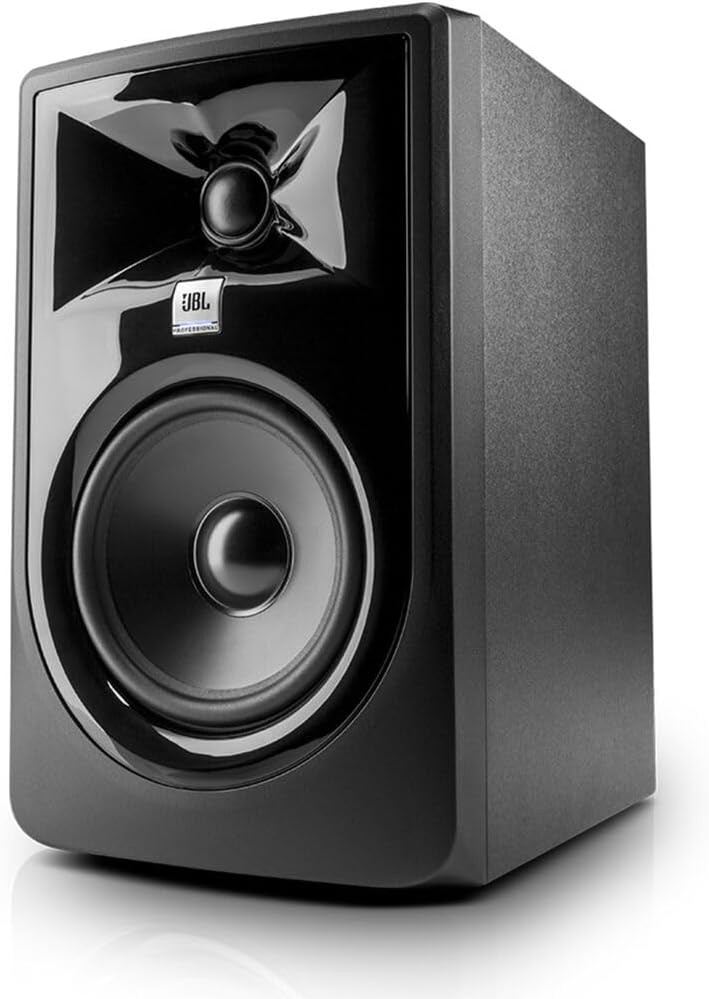
The JBL 305P MkII is famous for its Image Control Waveguide which creates a wide sweet spot. This feature ensures precise stereo imaging even when you are not sitting perfectly centered between the monitors.
We may earn a commission when you buy through this link, at no additional cost to you.
With 41 watts per channel and a Slip Stream port, these monitors deliver dynamic range and deep bass. The Boundary EQ allows you to tailor low and high frequencies to suit your specific room environment.
The robust MDF enclosure is durable but can be heavy to move around easily. While they perform exceptionally well, placement against walls may require careful EQ adjustments to avoid bass buildup issues.
Producers who need accurate imaging in less-than-ideal rooms will benefit from this model. It is a reliable choice for both music production and podcasting tasks requiring clear monitoring.
The waveguide ensures precise sound imaging from nearly any listening angle.
Boundary EQ adjustments help ensure accurate mixes for various room conditions.
We may earn a commission when you buy through this link, at no additional cost to you.
The Edifier MR3 is designed for accuracy with Hi-Res Audio certification covering a wide frequency range. This ensures you hear every detail in your tracks without coloration during critical listening sessions.
We may earn a commission when you buy through this link, at no additional cost to you.
Customizable sound modes and app-based EQ control allow precise tuning to your needs. The 18W output per channel provides sufficient volume for small to medium spaces while maintaining audio clarity.
The cabinet helps reduce distortion but the smaller drivers limit deep bass response. While great for near-field work, larger rooms might require a subwoofer for full-range monitoring capabilities.
Home studio owners needing precise monitoring with modern connectivity features will like the MR3. It offers a balance of traditional monitoring traits and smart features for versatile use.
Certified Hi-Res Audio delivers a flat response for precise monitoring accuracy.
The ConneX app allows in-depth adjustments and personalized EQ control easily.
We may earn a commission when you buy through this link, at no additional cost to you.
The PreSonus Eris E7 XT features a larger woofer that provides deep lows essential for full-range monitoring. Its EBM Waveguide ensures a wide sweet spot making mixing more forgiving in various room setups.
We may earn a commission when you buy through this link, at no additional cost to you.
Acoustic tuning controls let you tailor the monitor to your space for accurate results. The inclusion of Studio One Prime adds significant value making it an attractive package for producers needing software tools.
While powerful, the size requires adequate desk space and careful positioning to avoid boundary interference. Single unit pricing means you must buy two for stereo monitoring which increases the total cost.
Producers who need better low-end extension than smaller monitors offer should consider the E7 XT. It balances performance with practical features for a comprehensive studio experience.
The larger woofer gives deep lows that smaller monitors often cannot reproduce.
Included production software adds significant value beyond the hardware itself.
We may earn a commission when you buy through this link, at no additional cost to you.
The KALI AUDIO LP-6 V2 offers superb sound quality with a robust DSP system for flat response. This monitor emits sounds exactly as they are in your mix without alterations for true accuracy.
We may earn a commission when you buy through this link, at no additional cost to you.
Upgrades like low distortion and noise reduction ensure clear sound without chuffing from the port. The boundary EQ allows high-quality output regardless of placement on stands against walls or on desks.
It delivers 80 watts of power with a high max SPL suitable for various environments. The front port design might cause turbulence if positioned poorly but the overall performance is exceptional for the price.
Those seeking professional-grade monitors without the premium price tag should look at the LP-6 V2. It delivers performance well above its price point for serious music production.
The robust DSP system ensures flat frequency response without boosts or suppressions.
Boundary EQ helps maintain quality audio output no matter where placed.
We may earn a commission when you buy through this link, at no additional cost to you.
The Edifier MR5 uses a 3-way active crossover system for accurate and detailed audio reproduction. This design ensures that high mid and low frequencies are handled by dedicated drivers for clarity.
We may earn a commission when you buy through this link, at no additional cost to you.
With 110W RMS and LDAC Bluetooth support it delivers powerful sound with high-resolution wireless streaming. The physical knobs and app-based controls allow you to tailor the sound to your space effectively.
The cabinet reduces distortion and the waveguide ensures consistency across a wider listening area. However the larger size and higher cost might be less appealing for smaller desks or tighter budgets.
Serious producers needing detailed monitoring with modern connectivity options should consider the MR5. It combines power with advanced features for a professional studio experience.
The 3-way system separates frequencies for accurate and detailed audio reproduction.
LDAC Bluetooth support allows high-resolution wireless streaming of audio files.
We may earn a commission when you buy through this link, at no additional cost to you.
The Mackie CR4.5BT combines studio-quality sound with tone controls and Bluetooth making it versatile for various tasks. Its high rating reflects a balance between production-ready accuracy and casual listening features.
We may earn a commission when you buy through this link, at no additional cost to you.
A tone knob lets you shape the sound for gaming or partying when production isn't needed. The location switch optimizes performance between desktop speaker mode and bookshelf speaker mode for your setup.
The tone controls may color the sound which is not ideal for critical monitoring work. While affordable and clear, those needing strict accuracy should bypass tone adjustments for neutral mixes.
Multi-use creators who also listen to music or play games daily will appreciate the CR4.5BT. It offers a practical solution for those wanting one speaker for both work and play.
The location switch optimizes the speakers for desktop or bookshelf placement.
A tone knob adds flexibility for bass and high-end adjustments easily.
We may earn a commission when you buy through this link, at no additional cost to you.
The Yamaha HS8 is a top-tier monitor for its extended frequency response and deep bass capabilities. It offers a reliable and accurate sound that professionals trust for critical mixing and mastering.
We may earn a commission when you buy through this link, at no additional cost to you.
With an 8-inch cone woofer and 120W power amplification it delivers exceptional detail. The advanced magnetic circuit design ensures the low-end remains tight and controlled even at higher volumes.
The higher price and larger size make it better suited for dedicated control rooms. It requires significant space to operate properly and might be overkill for small desktop setups.
Serious engineers needing a full-range reference monitor for large rooms should invest in the HS8. It delivers the detail and power required for high-end professional audio work.
The 38Hz frequency response ensures deep bass is captured accurately.
120W power amplification provides dynamic and detailed audio performance.
We may earn a commission when you buy through this link, at no additional cost to you.
Selecting the right monitor requires understanding several key factors that impact how your music sounds and translates to other systems. This guide covers the essential aspects to consider.
The physical size of the monitor affects both sound performance and placement. Smaller drivers are ideal for compact desks while larger ones require more space but offer deeper bass extension.
Choose a size that fits your room and desk without blocking your line of sight or creating acoustic interference issues.
Frequency response indicates the range of bass and frequencies the monitor can reproduce accurately. Look for models that cover the full audio spectrum to ensure you hear every detail in your mix.
A flat response curve is generally preferred for mixing to avoid false impressions of your track.
Power output in watts determines the volume and dynamic range the monitor can achieve without distortion. Higher wattage allows for louder listening and better headroom during intense mixing sessions.
Ensure the power matches your room size so you can hear comfortably without straining the drivers.
Connectivity options determine how easily you can connect your audio interface and other gear. Balanced inputs like XLR and TRS reduce noise and interference for cleaner signals.
Multiple inputs add versatility allowing you to switch between devices without constantly unplugging cables.
Room tuning controls allow you to adjust frequency response to match your acoustic environment. Features like acoustic space controls or EQ switches help compensate for room modes.
This flexibility is crucial for achieving accurate mixes regardless of where your speakers are placed.
Build quality affects durability and resonance control within the cabinet. Materials like MDF reduce unwanted vibrations that can color the sound.
Investing in solid construction ensures your monitors last longer and perform consistently over time.
The sweet spot is the area where the stereo imaging is most accurate. A wider sweet spot allows for more flexible seating positions during long sessions.
Waveguide technology can help expand this area making monitoring more forgiving in small studios.
Budget determines what features and performance level you can access. While expensive models offer superior sound, there are capable options available for entry-level setups.
Prioritize sound quality and reliability over extra features that you may not need for your workflow.
Position your monitors symmetrically at ear height forming an equilateral triangle with your head. This setup ensures the stereo image is balanced and the sound reaches you directly.
Keep the speakers at least a few feet away from walls to prevent bass buildup. Adjust acoustic tuning controls to compensate for any room reflections you hear.
Clean the cabinets regularly with a dry cloth and avoid direct sunlight or moisture. Proper care will maintain performance and extend the life of your monitoring equipment.
Yes, studio monitors are essential because they provide flat frequency response and accurate sound. This allows you to hear every detail in your mix which is crucial for producing professional-sounding EDM tracks that translate well on other systems.
For small studios, 4 to 5-inch monitors are usually the best choice. They provide accurate midrange and high-frequency detail without overwhelming the space with excessive bass that can be difficult to manage in tight rooms.
Balanced inputs like XLR or TRS are highly recommended as they reduce noise and interference. Unbalanced cables can introduce hum and hiss which degrades the quality of your monitoring signal during critical listening.
Regular consumer speakers are generally not ideal because they color the sound to make it sound better. Studio monitors are designed to be transparent so you can make accurate mixing decisions based on the true sound of your track.
A subwoofer is beneficial if you produce bass-heavy music or work in a large room. It extends the low-frequency response allowing you to monitor sub-bass frequencies that smaller monitors might not reproduce accurately.
Position monitors at ear level and angled slightly inward to form an equilateral triangle with your head. Keep them away from walls to reduce boundary effects and ensure a balanced sound presentation.
The sweet spot is the area where the stereo imaging is most accurate and balanced. Sitting in this zone ensures you hear the mix as intended with proper separation and placement of instruments.
Studio monitors are built to last and can serve you for many years with proper care. Avoiding excessive volume levels and physical damage will help ensure their longevity and consistent performance.
We have reviewed ten excellent options ranging from budget-friendly choices to professional-grade monitors. Each model offers distinct strengths suited to different needs and studio environments.
Prioritize sound accuracy and room fit over extra features that you might not use. Investing in the right monitor will improve your mixes and help you create better music overall.
Always check current prices and availability before purchasing as these details can change quickly. The best monitor for you is the one that fits your specific workflow and budget.