
Built-in GPS Distance Tracking Watch
4.2Editor score
Fast GPS signal lock
50m waterproof rating
Multiple sport modes available
Explore the top distance tracker for running models rated by experts. This guide compares GPS accuracy, battery life, and health features to help you find your
Finding the right distance tracker for running can transform your fitness journey. Whether you are training for a marathon or just starting out, accurate tracking helps you monitor progress and stay motivated throughout your workout routine.
We evaluated ten leading devices based on GPS precision, battery endurance, and user feedback. Our analysis focuses on real-world performance metrics that matter most to runners seeking reliable data during their daily training sessions and long-distance adventures.
Each pick highlights unique strengths like heart rate monitoring or sleep analysis. Note that prices change frequently so check current deals before purchasing. Our goal is to guide you toward a device that fits your specific needs and budget effectively.
4.2Editor score

4.6Editor score

4.6Editor score
This side-by-side comparison highlights key specifications across all ten selected models. Use this overview to quickly identify which device offers the features you need for tracking distance, pace, and health metrics effectively.


The Garmin Forerunner 165 stands out as a top-tier option for runners seeking reliable tracking. With a 4.6 rating, it balances advanced features with an easy-to-use interface that suits both beginners and experienced athletes.
We may earn a commission when you buy through this link, at no additional cost to you.
Its built-in GPS provides accurate pace and distance data without needing a phone. The AMOLED screen is vivid even in sunlight and allows quick navigation through 25 activity profiles. Garmin Coach integration helps adapt workouts based on recovery metrics.
While it lacks standalone music storage compared to pricier models, the battery life is impressive at up to 11 days. The morning report feature offers valuable insights into sleep and training readiness to optimize your schedule effectively.
Runners who want precise tracking and helpful coaching tools should consider this device. It delivers solid performance for daily training and races without overwhelming you with excessive complexity or heavy weight on your wrist.
Adaptive training plans adjust based on your performance to ensure you are always training at the right intensity for your goals.
Incident detection can send your live location to emergency contacts if an accident occurs during outdoor activities for added peace of mind.
We may earn a commission when you buy through this link, at no additional cost to you.
This distance tracker offers remarkable value with features often found in more expensive devices. It earns a 4.2 rating thanks to its robust build and versatile capabilities that suit various training environments including swimming.
We may earn a commission when you buy through this link, at no additional cost to you.
The 2.06-inch AMOLED display is clear and responsive during workouts. You get over 170 sport modes plus essential tools like a compass and altimeter for outdoor adventures. Bluetooth calling allows you to handle calls without reaching for your phone.
Battery performance is a strong point with up to seven days of heavy use. However, the companion app experience might not be as polished as premium brands. GPS accuracy is generally good but requires open outdoor areas for optimal signal.
Ideal for budget-conscious runners who still want advanced tracking features. It handles daily wear well and offers enough functionality to track progress effectively without breaking the bank.
Five ATM waterproofing handles pool laps and open water swimming while tracking stroke counts and lap times accurately.
24/7 heart rate and stress monitoring provide continuous insights into your physical state to help manage recovery effectively.
We may earn a commission when you buy through this link, at no additional cost to you.
The Forerunner 70 focuses heavily on health and recovery data to help you train smarter. With a 4.4 rating, it delivers reliable GPS tracking and useful coaching tools for runners focused on consistency and long-term progress.
We may earn a commission when you buy through this link, at no additional cost to you.
Its training readiness score analyzes sleep quality and HRV to tell you when to push hard or rest. The quick workout feature lets you plan sessions directly on the watch based on time and intensity. This saves time before heading out.
Battery life extends up to 13 days in smartwatch mode which reduces charging frequency. While it lacks some advanced metrics like running power, it covers all the basics well. The AMOLED screen ensures clear visibility during any lighting conditions.
This watch suits runners who prioritize recovery and consistency over raw performance metrics. It is lightweight and comfortable enough for 24/7 wear while providing actionable insights to improve your overall fitness routine.
Detailed sleep stages and scores help you understand how well you rest to better align training loads with recovery needs.
Garmin Coach plans adjust based on your performance to keep you challenged without risking burnout from overtraining.
We may earn a commission when you buy through this link, at no additional cost to you.
The Zeacool tracker offers a vast array of features for users who want variety without a high cost. It holds a 4.5 rating due to its versatility and ease of use for basic health and fitness monitoring needs.
We may earn a commission when you buy through this link, at no additional cost to you.
With over 123 sports modes you can track nearly any activity from running to yoga. The 1.47-inch AMOLED screen is vibrant and supports multiple watch faces. Blood oxygen and sleep monitoring provide holistic health insights beyond just physical exercise metrics.
Battery life reaches up to 10 to 14 days on a single charge. While it may not offer the GPS precision of dedicated running watches, it serves well for casual tracking and daily step counting. Waterproofing handles rain and washing easily.
Best for casual runners and fitness enthusiasts who want a budget-friendly device. It provides essential data to track progress without complex settings or high monthly fees.
Real-time dynamic heart rate and blood oxygen readings keep you informed about your vital signs during and after workouts.
IP68 rating allows you to wear it while washing hands or in the rain without risk of water damage.
We may earn a commission when you buy through this link, at no additional cost to you.
For serious athletes who demand top-tier accuracy, this model delivers unmatched performance. With a 4.6 rating, it stands as a benchmark for GPS precision and detailed running dynamics essential for competitive training.
We may earn a commission when you buy through this link, at no additional cost to you.
The full-color built-in maps allow route planning without your phone. Multi-band GPS with SatIQ technology maintains accuracy even in challenging environments like cities with tall buildings. Running power and dynamics metrics help you optimize form and efficiency.
Battery life is excellent at up to 23 days in watch mode. The titanium bezel adds durability while keeping weight manageable. Training readiness and race widgets help plan strategy and track progress with detailed analytics.
This device is perfect for marathon runners or triathletes needing deep data. It justifies its cost with features that support advanced training strategies and reliable navigation on every run.
SatIQ technology optimizes battery life while providing superior location accuracy in urban canyons or dense forest trails.
Personalized race widgets and workout suggestions adapt based on your target course to help you prepare effectively for race day.
We may earn a commission when you buy through this link, at no additional cost to you.
With a high 4.8 rating, this watch is praised for its user-friendly interface and connected features. It bridges the gap between a fitness tracker and a smartwatch to handle daily communication needs.
We may earn a commission when you buy through this link, at no additional cost to you.
The built-in microphone and speaker enable hands-free calls directly from your wrist. Morning and evening reports give you a complete picture of your sleep and readiness for the day. Training status indicators help you understand if you are peaking or strained.
GPS battery lasts up to 18 hours which suits most long runs. While it is larger than smaller models, the display is bright and clear. Safety features like incident detection provide extra security during solo runs outdoors.
Ideal for runners who want to stay connected without carrying their phone. It combines solid fitness tracking with convenient smart features that enhance daily usability.
Use your smartphone voice assistant to respond to messages quickly during a run without stopping to type.
Get an overview of sleep recovery and training readiness immediately after waking to plan your workout effectively.
We may earn a commission when you buy through this link, at no additional cost to you.
At just 41 grams this tracker is designed to disappear on your wrist while running. It carries a 4.3 rating due to its specialized focus on runner-specific metrics and ultra-light build quality.
We may earn a commission when you buy through this link, at no additional cost to you.
The high-speed processor tracks time and distance accurately without lag. Precision Prime optical heart rate monitoring is known for reliability during high-intensity workouts. Training tools support over 150 sports to provide structured programs and recovery analysis.
Battery life lasts up to 35 hours in training mode which is impressive. However, it lacks full color maps found in other premium models. This makes it best for runners who prioritize data and comfort over navigation features.
Choose this if you want a distraction-free experience focused purely on running performance. Its light weight ensures comfort even during ultramarathons or long training sessions.
Specialized training programs and recovery tools help you optimize performance while reducing the risk of injury from overtraining.
Advanced optical technology tracks heart rate accurately even during intense intervals to ensure reliable performance data.
We may earn a commission when you buy through this link, at no additional cost to you.
This classic watch offers basic GPS tracking for runners who prefer simplicity over smart features. With a 3.9 rating it serves as a reliable entry-level device for those needing fundamental pace and distance data.
We may earn a commission when you buy through this link, at no additional cost to you.
TomTom GPS provides accurate speed and distance indoors or outdoors. The water-resistant design allows use in various weather conditions. Charging via USB is convenient and battery life supports up to eight hours of GPS use per charge.
While it lacks modern smart notifications or heart rate monitoring it remains a straightforward tool for tracking runs. The interface is easy to navigate without complex menus or app requirements for data syncing.
Best for casual runners who want a dedicated device that just works. It avoids distractions by focusing on essential running metrics without unnecessary connectivity.
TomTom GPS sensor ensures reliable tracking even if signal is interrupted allowing you to see your full route later.
We may earn a commission when you buy through this link, at no additional cost to you.
The vivoactive 5 balances fitness tracking with smart features for daily use. A 4.3 rating reflects its solid performance in health monitoring and general activity tracking capabilities.
We may earn a commission when you buy through this link, at no additional cost to you.
Body Battery energy monitoring tracks stress and sleep to tell you when you need rest. Music storage allows phone-free listening with Spotify or Amazon Music. Wheelchair mode tracks pushes instead of steps to support diverse fitness needs.
Battery life reaches up to 11 days and includes nap detection for personalized insights. While it lacks advanced navigation maps it covers all essential tracking functions well. The AMOLED display remains vibrant and easy to read during workouts.
Ideal for those who want a smartwatch that supports fitness goals. It provides comprehensive health insights alongside music convenience for a well-rounded experience.
Energy monitoring analyzes sleep and stress to help you manage your daily activity levels and rest effectively.
Automatic nap logging tracks your daytime rest to understand how it affects your overall energy and recovery.
We may earn a commission when you buy through this link, at no additional cost to you.
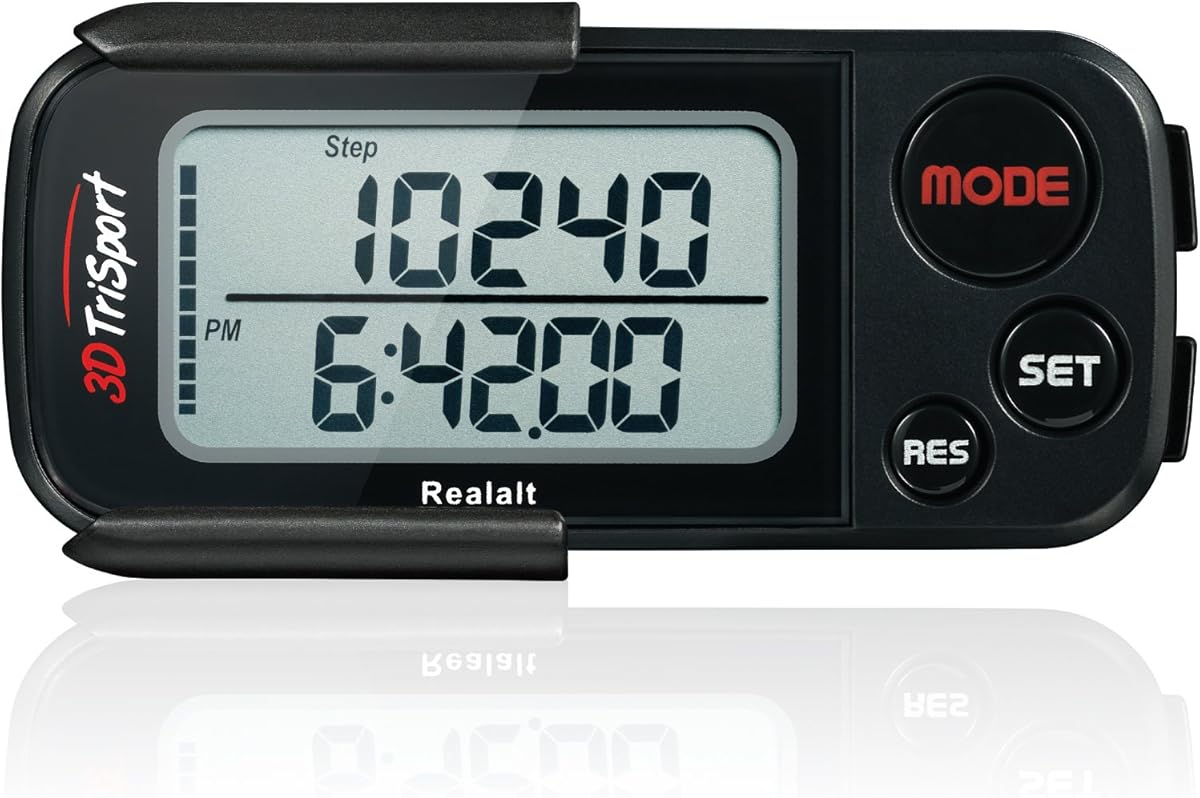
This simple device focuses purely on counting steps and distance without relying on smartphones. A 4.0 rating highlights its reliability for basic daily activity tracking without complex setup or charging.
We may earn a commission when you buy through this link, at no additional cost to you.
It uses 3D Tri-Axis sensor technology to track activity accurately regardless of position. The battery lasts up to 12 months reducing the need for frequent changes. Memory stores 30 days of records to help you monitor progress easily.
Without GPS or app connectivity it remains affordable and easy to use for all ages. It does not track routes or pace but offers clear data on total steps and calories burned. Ideal for maintaining consistent daily movement habits.
Best for seniors or beginners who want basic tracking. It removes the learning curve by providing straightforward metrics to motivate activity throughout the day.
3D Tri-Axis sensors record steps accurately in any position whether clipped to your waist or placed in a pocket.
No Bluetooth or downloads are required making it instantly usable for all ages after inserting the battery.
We may earn a commission when you buy through this link, at no additional cost to you.
Selecting the right device involves balancing several key factors to ensure it meets your specific training needs and lifestyle preferences.
Look for models with built-in GPS that lock onto signals quickly. Multi-band GPS technology offers better accuracy in urban areas compared to standard single-band systems.
Prioritize devices that provide consistent distance tracking without needing your phone to ensure reliable data during runs.
Long battery life reduces charging interruptions. Consider how often you run and choose a model that lasts at least a week in smartwatch mode.
Extended GPS battery is essential for marathon training or ultrarunning to avoid mid-workout power loss.
An AMOLED or bright LCD screen ensures readability in sunlight. Touch controls combined with physical buttons offer reliable navigation during sweaty workouts.
Clear visibility prevents eye strain and helps you check metrics quickly without stopping.
Lighter watches reduce wrist fatigue during long runs. Check the casing size to ensure it fits comfortably under clothing and does not hinder movement.
A comfortable strap ensures you can wear the device 24/7 for better health tracking.
Heart rate and stress monitoring help manage recovery. Look for sleep tracking features to understand rest quality and overall energy levels.
Advanced metrics like Body Battery or HRV status provide deeper insights into training readiness.
Bluetooth calling and notifications keep you connected without your phone. Ensure the companion app syncs data reliably to your preferred platforms.
Music storage allows phone-free listening but may reduce battery life.
Set a budget based on essential features. Basic trackers offer great value for step counting while advanced models justify higher costs with GPS accuracy and coaching tools.
Compare specs carefully to avoid overpaying for features you will not use.
Begin by pairing your device with the companion app using Bluetooth to sync personal data. Wear the tracker snugly but comfortably on your wrist above the wrist bone for accurate heart rate readings.
Before each run ensure GPS signal is acquired outdoors. Set your specific activity profile to track relevant metrics like cadence or pace depending on your goals.
Clean the device regularly with a damp cloth to remove sweat and debris. Charge it fully before long training sessions and store it in a dry place to extend battery life.
Most modern trackers work independently using built-in GPS but syncing data often requires a smartphone app. Some models allow calls and notifications via Bluetooth pairing to enhance convenience during runs.
High-end models with multi-band GPS provide excellent accuracy even in urban areas. Entry-level trackers are generally reliable but may struggle slightly in dense urban environments or forests.
Many models carry a 5ATM or IP68 rating allowing use in pools and rain. Avoid hot showers or high-velocity water sports to prevent damage to internal components.
Yes, most devices support multiple activity profiles including cycling and hiking. Specific features like elevation tracking or compass navigation enhance performance for outdoor adventures beyond running.
Charging frequency depends on usage and battery capacity. Typical smartwatch modes last one to two weeks while continuous GPS usage reduces this to a few days requiring more frequent charging.
Focus on pace, distance, and heart rate zones to optimize training intensity. Recovery metrics and sleep scores help ensure you are resting enough to avoid burnout and injury.
Choosing the ideal device depends on your specific training goals and budget. The Garmin Forerunner 165 offers excellent balance while budget options provide solid functionality for casual runners.
Prioritize accuracy, battery life, and comfort when making your decision. These factors ensure the device supports your routine without adding unnecessary complexity or distraction during workouts.
Always check current prices and availability before purchasing. Technology evolves quickly so verifying the latest model features ensures you get the best value for your investment.