
AMD Ryzen AI Halo
5.0Editor score
16 cores and 32 threads
Up to 50 TOPS NPU
Linux AI developer platform
This guide compares the top CPUs for machine learning including desktop processors and AI supercomputers to help you choose the right hardware for your needs.
Machine learning workloads demand powerful computing resources to handle complex models and large datasets efficiently. Choosing the right processor is critical for developers and researchers who need fast training times and reliable inference capabilities in their daily workflows.
We evaluated the top ten CPUs and AI desktop systems available today based on performance metrics architecture efficiency and software compatibility. Our analysis focuses on core counts cache sizes and specialized AI accelerators that define modern machine learning hardware capabilities.
Each pick highlights specific strengths such as unified memory capacity clock speeds and integration with popular AI frameworks. Remember that product availability and pricing can change frequently so verify the latest details before making your final purchase decision online.
5.0Editor score

5.0Editor score

4.8Editor score
The following table provides a side by side comparison of all ten products evaluated in this guide to help you quickly identify the best fit for your machine learning projects.



The NVIDIA DGX Spark 2 Pack represents the pinnacle of personal AI desktop computing with its Grace Blackwell architecture delivering up to 1 petaFLOP of AI performance. With a perfect rating this system is designed to bring enterprise-scale AI capabilities directly to your desk for local model fine-tuning and inference.
We may earn a commission when you buy through this link, at no additional cost to you.
Its standout qualities include 128GB of unified memory per unit enabling experimentation with large models up to 200 billion parameters at FP4. The seamless integration of the full NVIDIA AI software stack allows developers to build locally and deploy anywhere without friction or compatibility issues.
While the price is substantial this hardware is justified for professionals who need rapid iteration and validation in a secure high-performance setting. The compact energy-efficient design ensures it fits into workspace constraints while delivering power that would typically require a full data center rack.
Ideal for AI researchers and enterprise developers this system accelerates time-to-solution by augmenting cloud or laptop resources. If your workflow demands local processing of massive models without latency this is the definitive choice for modern machine learning infrastructure.
The Grace Blackwell chip delivers unparalleled AI throughput in a compact form factor enabling rapid prototyping and testing cycles.
Access to 128GB unified memory per unit allows seamless handling of large datasets and complex model parameters during training.
We may earn a commission when you buy through this link, at no additional cost to you.
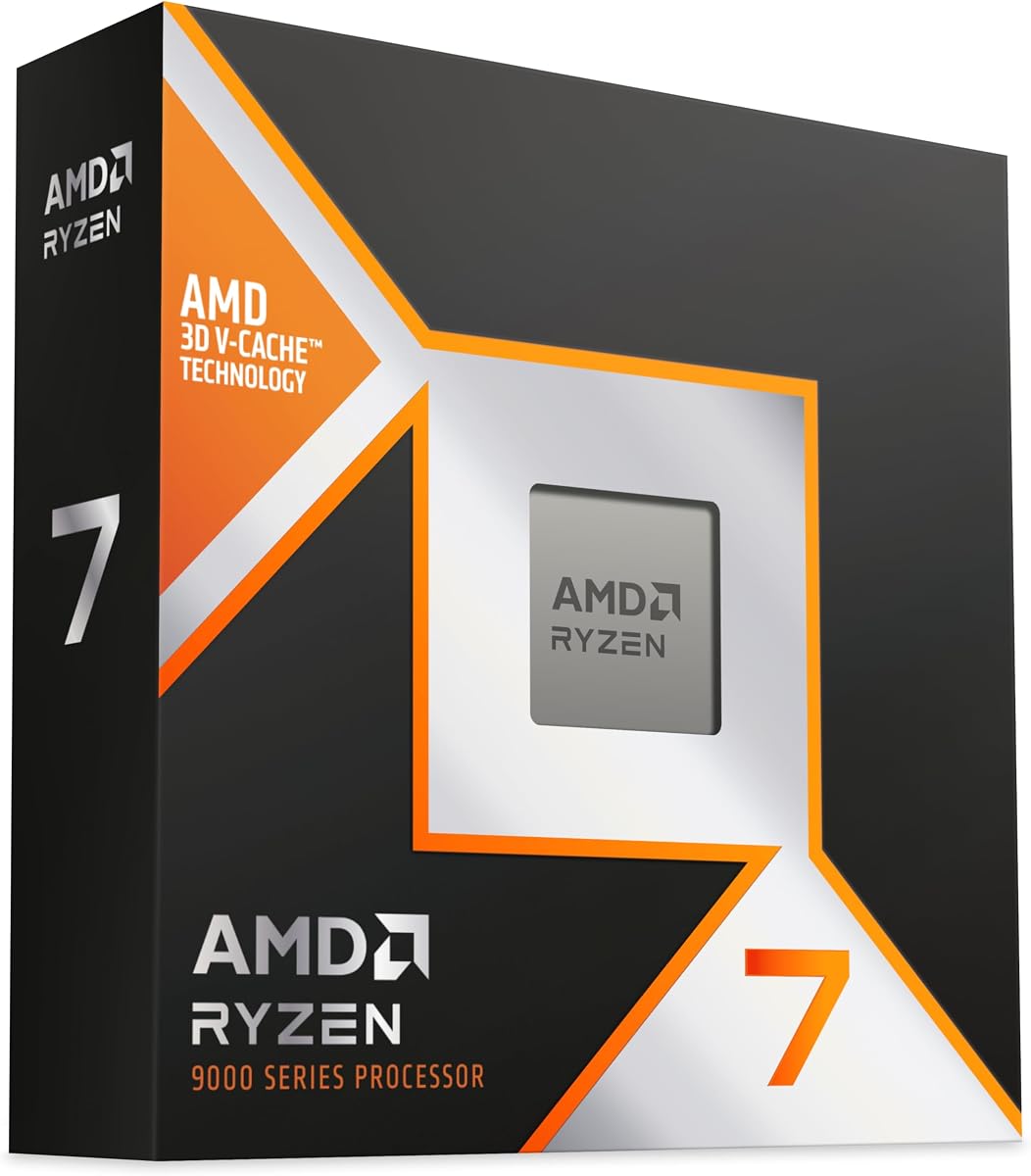
The AMD RYZEN 7 9800X3D is built on AMD Zen5 technology and Next Gen 3D V-Cache making it a top contender for high frequency workloads. Its rating of 4.8 reflects excellent performance and efficiency for developers who need reliable multitasking capabilities on a budget.
We may earn a commission when you buy through this link, at no additional cost to you.
This processor delivers a 16% IPC uplift over previous generations while maintaining great power efficiency. The 96MB L3 cache allows higher clock speeds up to 5.2GHz which benefits applications requiring low latency access to frequently used data during processing.
One trade-off is that the cooler is not included requiring separate purchase to ensure optimal thermal performance during sustained loads. Additionally its 8 core count may limit parallel throughput compared to higher tier options but remains sufficient for many development environments.
For developers seeking a balance of performance and efficiency this drop-in ready AM5 processor is an excellent choice. It provides the speed needed for responsive development cycles while supporting proven infrastructure for future upgrades.
The Zen5 technology delivers improved instruction per clock rates allowing faster execution of complex tasks without excessive power consumption.
The 96MB L3 cache provides better thermal performance and enables higher clock speeds for faster data access times.
We may earn a commission when you buy through this link, at no additional cost to you.
The Intel Core Ultra 9 285K delivers ultra-efficient performance with a 24 core design comprising 8 P-cores and 16 E-cores. With a rating of 4.6 it prioritizes and distributes workloads effectively using Performance Hybrid Architecture to optimize performance for varied tasks.
We may earn a commission when you buy through this link, at no additional cost to you.
Its key strengths include up to 5.7 GHz unlocked speed and support for PCIe 5.0 ensuring compatibility with next-generation hardware standards. The integrated Intel Graphics and compatibility with Intel 800 series chipsets make it a flexible option for diverse machine learning setups.
While the lack of a thermal solution means additional investment is required for cooling the system runs cooler and quieter compared to previous generations. Its efficiency gains allow it to handle demanding tasks without excessive energy consumption which benefits long-term operational costs.
For developers needing a versatile high-performance CPU this processor balances core count with efficiency. It supports demanding workloads and modern standards making it a strong candidate for hybrid compute environments.
Integrating two core microarchitectures allows prioritization of tasks distributing workloads efficiently to optimize overall system performance.
Support for PCIe 5.0 ensures future-proof connectivity for high-speed storage and peripheral devices in advanced setups.
We may earn a commission when you buy through this link, at no additional cost to you.
The AMD Ryzen 9 9950X3D is a powerful 16-core processor featuring Zen 5 architecture designed for gaming and content creation workloads. With a 4.7 rating it offers a robust combination of core count and speed ideal for handling complex parallel tasks efficiently.
We may earn a commission when you buy through this link, at no additional cost to you.
Its maximum boost clock reaches up to 5.7 GHz ensuring responsive performance across a wide range of applications. The Granite Ridge AM5 form factor provides compatibility with modern desktop systems and supports demanding workloads requiring significant computational resources.
This processor excels in environments where thread count matters for parallel execution but may require careful thermal management due to high performance. It serves as a strong foundation for developers who need raw processing power without specialized AI accelerators.
For those building high-performance workstations this processor delivers the versatility needed for both development and production tasks. Its architecture ensures longevity and support for future software demands in professional machine learning environments.
The 16-core design provides ample parallelism for running multiple processes simultaneously without performance bottlenecks.
Boost clocks reaching 5.7 GHz ensure responsive performance for single-threaded tasks and latency-sensitive operations.
We may earn a commission when you buy through this link, at no additional cost to you.
The AMD Ryzen 9 9900X is an unlocked desktop processor offering 12 cores and 24 threads based on Zen 5 architecture. With a 4.8 rating it delivers ultra-fast performance suitable for development environments requiring responsive multitasking capabilities.
We may earn a commission when you buy through this link, at no additional cost to you.
Its key strengths include a 5.6 GHz Max Boost clock and support for DDR5-5600 memory ensuring fast data throughput. The processor supports PCIe 5.0 on select motherboards enabling high-speed connectivity for storage and peripherals essential for large dataset handling.
While cooling is not included allowing users to customize thermal solutions for overclocking the platform requires AM5 compatibility. This flexibility ensures compatibility with modern high-speed memory standards and future upgrades without platform constraints.
For developers seeking a balanced budget-friendly option this processor provides ample cores and speed. Its unlocked nature allows fine-tuning for specific workloads making it an efficient choice for cost-conscious machine learning practitioners.
Support for DDR5-5600 ensures fast memory bandwidth essential for loading large datasets during training phases.
Support for PCIe 5.0 on select boards enables faster storage access and peripheral communication speeds.
We may earn a commission when you buy through this link, at no additional cost to you.
The AMD Ryzen 7 7800X3D delivers dependable and fast execution of tasks with maximum efficiency using 5nm process technology. A 4.8 rating reflects its reliability for multitasking and execution of instructions ensuring maximum convenience for developers.
We may earn a commission when you buy through this link, at no additional cost to you.
Its 96 MB L3 cache memory provides excellent hit rates enabling improved system performance during data processing tasks. The octa-core design allows reliable multitasking with great reliability while the integrated Radeon Graphics controller ensures robust output options.
While the core count is limited compared to higher tier processors its efficiency and cache performance make it ideal for focused workloads. The 4.20 GHz clock speed ensures fast execution of instructions without excessive power consumption.
For users prioritizing power efficiency and reliability this processor offers solid performance for development tasks. Its architecture ensures consistent speeds over time making it suitable for sustained workloads in professional settings.
The 5nm process technology delivers reliable performance with reduced power consumption compared to older manufacturing nodes.
96 MB L3 cache provides excellent hit rate reducing access times for frequently used data during processing.
We may earn a commission when you buy through this link, at no additional cost to you.
The AMD Ryzen AI Halo is designed for local AI development featuring 128GB unified memory and support for up to 200B parameter models. With a perfect 5.0 rating it serves as a dedicated Linux AI developer platform optimized for intensive workloads.
We may earn a commission when you buy through this link, at no additional cost to you.
Its 16 cores and 32 threads paired with Zen 5 architecture and AMD XDNA 2 NPU delivering up to 50 TOPS provide robust processing power. The 128GB unified memory pool allows seamless sharing across CPU GPU and NPU for larger model handling.
While it is restricted to Linux OS which may limit compatibility for Windows users its full AMD ROCm support ensures tool compatibility. The compact connected design includes features like Wi-Fi 7 and USB-C for seamless integration into modern workspaces.
For AI developers needing a purpose-built platform this desktop offers unmatched integration of hardware and software. It enables local inference and development without cloud dependencies making it ideal for privacy-focused or offline workflows.
128GB LPDDR5x unified memory provides a shared pool across CPU GPU and NPU to support larger AI models.
Preloaded tools and workflows optimized for local AI development streamline setup and deployment on Linux systems.
We may earn a commission when you buy through this link, at no additional cost to you.
The Intel Core i9-14900K delivers game without compromise with 24 cores and 32 threads enabling faster play and smarter work. Its rating of 4.2 reflects solid performance for demanding games and rapid responsiveness across various computing tasks.
We may earn a commission when you buy through this link, at no additional cost to you.
Its leading max clock speed of up to 6.0 GHz provides smoother gameplay and higher frame rates essential for real-time development. The processor supports both DDR4 and DDR5 platforms cutting load times and offering flexibility for existing hardware investments.
While compatibility with 600-series chipsets may require BIOS updates the integrated UHD Graphics 770 ensures basic display output without dedicated GPUs. Its power draw is a consideration but the performance gains justify the investment for high-throughput environments.
For developers requiring a versatile high-frequency CPU this processor delivers the speed needed for efficient task execution. It serves well for environments requiring both compute power and rapid I/O capabilities.
Leading max clock speed up to 6.0 GHz gives you smoother game play and higher frame rates for responsive tasks.
DDR4 and DDR5 platform support cuts your load times and gives you space to run demanding workloads.
We may earn a commission when you buy through this link, at no additional cost to you.
The AMD Ryzen 7 9850X3D Desktop Processor is designed for performance and efficiency delivering reliable execution of tasks. With a 4.8 rating it offers a robust foundation for developers needing consistent speed and reliable multitasking capabilities.
We may earn a commission when you buy through this link, at no additional cost to you.
Its architecture ensures improved performance with maximum efficiency through optimized thermal design and fast processing speeds. The processor supports modern standards and integrates well with current desktop systems for seamless upgrades.
While detailed specifications like core counts are not listed in the source data the 9850X3D series is known for high performance gaming and compute capabilities. It remains a solid choice for users prioritizing reliability and speed in their workstations.
For developers needing a dependable processor this option provides efficient power usage and high throughput. It supports modern hardware standards ensuring future compatibility for advanced development workflows.
Optimized thermal design and fast processing speeds ensure reliable performance with maximum efficiency for demanding workloads.
We may earn a commission when you buy through this link, at no additional cost to you.
The NVIDIA DGX Spark delivers supercomputer performance directly to your desk in a compact energy-efficient design. With a 4.4 rating it provides enterprise-scale AI and high-performance computing right where you need it for rapid prototyping.
We may earn a commission when you buy through this link, at no additional cost to you.
Its Grace Blackwell architecture delivers up to 1 petaFLOP of AI performance for local model fine-tuning and analytics. The seamless integration of the NVIDIA AI software stack allows developers to build locally and deploy anywhere without friction.
While the price is substantial this system unlocks new ideas by enabling direct experimentation with large models up to 200 billion parameters. It augments laptop cloud or data center resources to deliver exceptional ROI for increased productivity.
Ideal for enterprise developers this system accelerates time-to-solution and enables rapid testing validation and iteration. If local processing of massive models is critical to your workflow this offers a secure high-performance setting for innovation.
Supercomputer performance directly to your desk enables enterprise-scale AI and high-performance computing in compact space.
Experiment with large models up to 200 billion parameters at FP4 directly on your desktop for rapid testing.
We may earn a commission when you buy through this link, at no additional cost to you.
Selecting the right CPU for machine learning requires balancing raw processing power with specific architecture needs like cache size and AI acceleration capabilities.
Higher core counts and thread counts allow for better parallel processing which is crucial for training large models and managing multiple workflows simultaneously.
Look for at least 12 to 16 cores for serious machine learning development to ensure smooth multitasking and faster training iterations.
Large L3 cache reduces latency when accessing frequently used data improving overall system responsiveness during compute intensive tasks.
Prioritize processors with 96MB or more of L3 cache for optimal performance in machine learning data processing workflows.
Modern CPUs and specialized desktop systems now include NPUs or integrated accelerators that handle AI tasks more efficiently than traditional cores.
Check for dedicated NPU performance measured in TOPS if you plan to run local inference or model testing without external GPUs.
Unified memory allows shared pools of memory across CPU GPU and other accelerators which is vital for handling massive model parameters.
For deep learning workloads look for systems offering 128GB or more unified memory to avoid bottlenecks during training sessions.
Ensure your chosen CPU is compatible with your motherboard chipset and memory type to avoid costly upgrades or compatibility issues.
Verify support for DDR5 memory and PCIe 5.0 standards to future-proof your setup for upcoming hardware advancements.
High performance CPUs generate significant heat requiring adequate cooling solutions to maintain stable clock speeds during long training runs.
Plan for high-quality air or liquid cooling to prevent thermal throttling that can reduce performance and efficiency.
Support for AI frameworks like ROCm and CUDA determines how easily you can integrate hardware with your preferred development tools.
Select systems with full stack support for Linux or Windows environments to streamline setup and deployment.
Efficient processors reduce overall power consumption which lowers operational costs and heat output in your workspace.
Look for processors with high IPC uplift and advanced process technologies like 5nm for better energy efficiency.
Always install the latest drivers and firmware updates to ensure your CPU operates at peak efficiency and security standards are met.
Use monitoring tools to track thermal levels and performance metrics during long training sessions to prevent overheating and system instability.
Regularly clean dust from cooling fans and vents to maintain airflow and prolong the lifespan of your hardware components.
The AMD Ryzen 9 9900X offers a balanced combination of cores and speed at an affordable price. Its 12 cores and DDR5 support make it suitable for entry-level machine learning development without requiring specialized expensive hardware.
For large models up to 200 billion parameters at least 128GB of unified memory is recommended. Systems like the NVIDIA DGX Spark provide this capacity enabling efficient handling of complex parameters during training.
Not all CPUs have full support for Linux AI development tools like ROCm. Check compatibility lists before purchase to ensure your system supports the frameworks you plan to use for local development.
Larger cache reduces latency when accessing frequently used data which speeds up processing during training. A large L3 cache helps the CPU handle complex algorithms more efficiently without waiting for memory.
An NPU is not strictly necessary but it significantly accelerates AI inference tasks. For workstations focused on local inference or testing NPUs reduce load on the main CPU improving overall system performance.
Use built-in monitoring tools or third-party software to track thermal levels in real time. Ensuring temperatures stay within safe limits prevents throttling and maintains consistent performance over time.
Our top picks like the NVIDIA DGX Spark 2 Pack and AMD Ryzen AI Halo offer unmatched performance for developers needing enterprise-grade capabilities.
Prioritize core counts and memory capacity when selecting a CPU to ensure your system can handle increasingly complex models and datasets.
Always check current pricing and availability as hardware costs fluctuate and new models may offer better value over time.