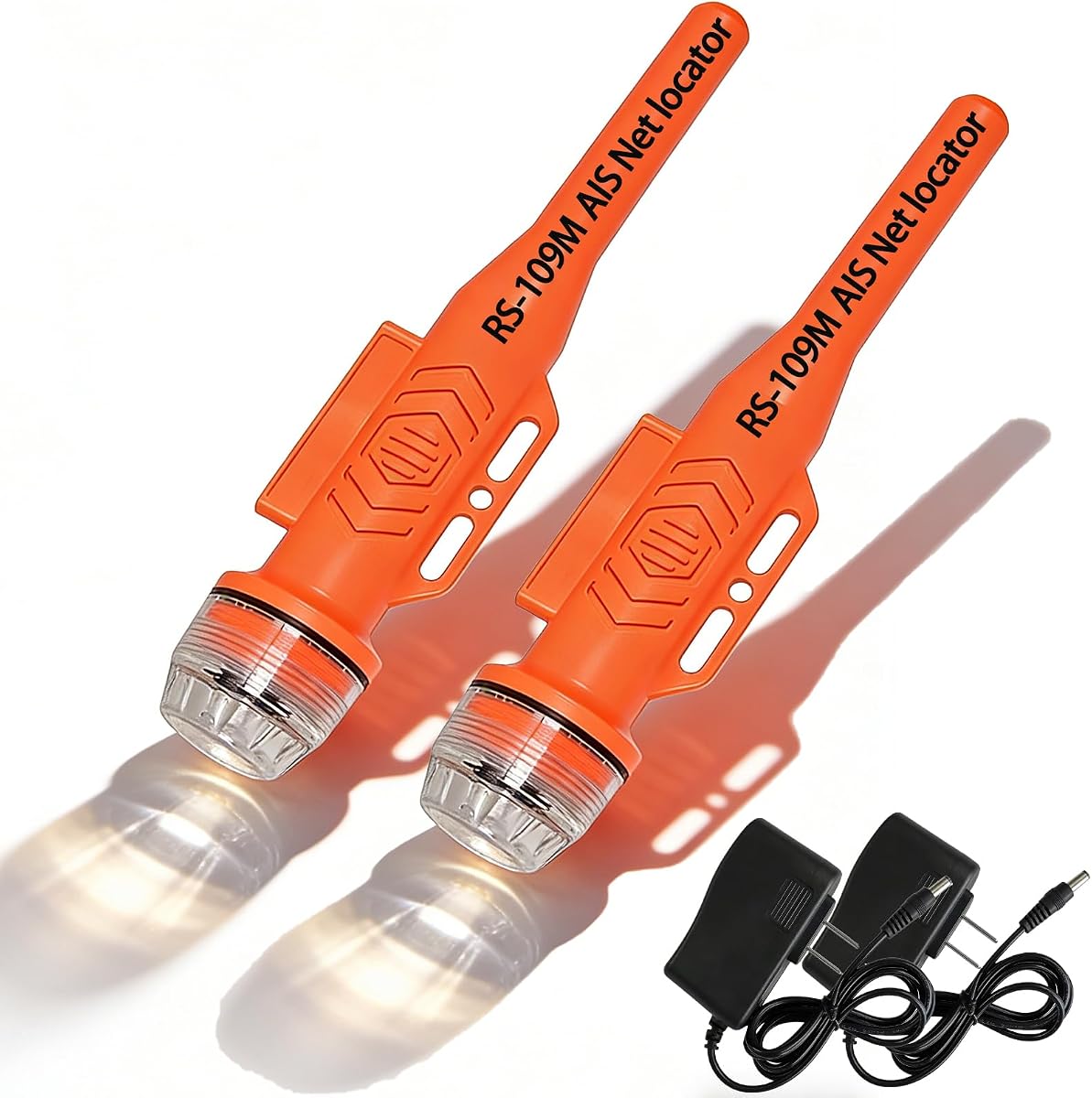
RS-109M Marine Net Locator
4.5Editor score
IPX7 Waterproof Design
Accurate GPS Positioning
10 Nautical Mile Range
This comprehensive guide compares the top ten Ais Transponders available in the market today to help you find the perfect navigation safety device for your
Navigating modern waterways requires advanced technology to ensure safety and situational awareness for all vessel operators. Ais Transponders play a critical role in this ecosystem by broadcasting and receiving vessel data to prevent collisions. Choosing the right device depends on your specific boating needs and budget constraints.
We have evaluated the leading models based on functionality reliability and user feedback to create this definitive list. Our comparison covers everything from compact personal beacons to full Class A transponders suitable for commercial shipping. Each entry highlights key features that matter most for marine safety and navigation efficiency.
Every selection in this guide offers unique advantages depending on whether you prioritize range battery life or advanced display capabilities. Please note that product availability and pricing can fluctuate frequently due to market demand and seasonal promotions. We recommend verifying current details directly with the retailer before making your final purchase decision.
4.5Editor score

4.8Editor score
4.9Editor score
The following table provides a side by side overview of all ten products included in this review to help you quickly compare their core capabilities and design specifications at a glance.




The Icom MA-510TR stands out as a leading choice for boaters seeking reliable vessel identification and safety features. It offers a vibrant color display that ensures visibility even under bright sunlight conditions which is crucial for marine environments. This model combines essential AIS capabilities with user-friendly navigation tools.
We may earn a commission when you buy through this link, at no additional cost to you.
One of the strongest aspects of this transponder is its integrated GPS navigation system which removes the need for separate hardware installations. The device supports multilingual user interfaces making it accessible to a wide range of international mariners. Additionally it features a silent mode that allows for secure operations without broadcasting your position unnecessarily.
While the unit is feature rich it does come at a higher price point compared to basic Class B transponders available on the market. You will also need to ensure you have a compatible VHF radio for DSC calling which may add to the overall setup cost. These trade-offs are generally acceptable given the enhanced safety and navigation convenience provided.
This transponder is ideal for serious recreational boaters and small commercial vessels that prioritize situational awareness and ease of use. If you need a robust device that integrates seamlessly with your existing navigation setup this model is highly recommended. It provides peace of mind during long voyages and crowded harbor approaches.
The collision alarm feature alerts you instantly when other vessels are too close allowing for timely maneuvering actions.
USB connectivity allows for easy data transfer and updates ensuring your device remains current with the latest firmware.
We may earn a commission when you buy through this link, at no additional cost to you.
The Unisex Adult NF-189 by EM-TRAK provides a solid foundation for vessels needing basic AIS transmission and reception capabilities. It operates on both 12 and 24 volt systems making it versatile for different types of marine electrical setups. This unit focuses on core functionality without unnecessary bells and whistles.
We may earn a commission when you buy through this link, at no additional cost to you.
Its compact design allows it to fit easily into tight electrical compartments on smaller boats where space is at a premium. The device is designed to work seamlessly with existing chart plotters and multifunction displays. It ensures your vessel is visible to others using the AIS network which is a critical safety requirement.
However this model does not include an integrated display which means you must rely on external navigation equipment to view traffic data. The feature set is also relatively limited compared to more advanced transponders that offer additional alarm or navigation tools. It is best suited for users who already have a robust navigation system in place.
Choose this transponder if you need a dependable and straightforward solution for Class B AIS compliance on a smaller budget. It is perfect for sailboats and recreational powerboats that do not require extensive standalone navigation features. The focus remains on delivering consistent and accurate position reports to the marine network.
Supporting both 12 and 24 volts ensures this unit can be used on a wide variety of boat sizes and power systems.
It connects easily with standard marine electronics to enhance your existing navigation setup without requiring major upgrades.
We may earn a commission when you buy through this link, at no additional cost to you.
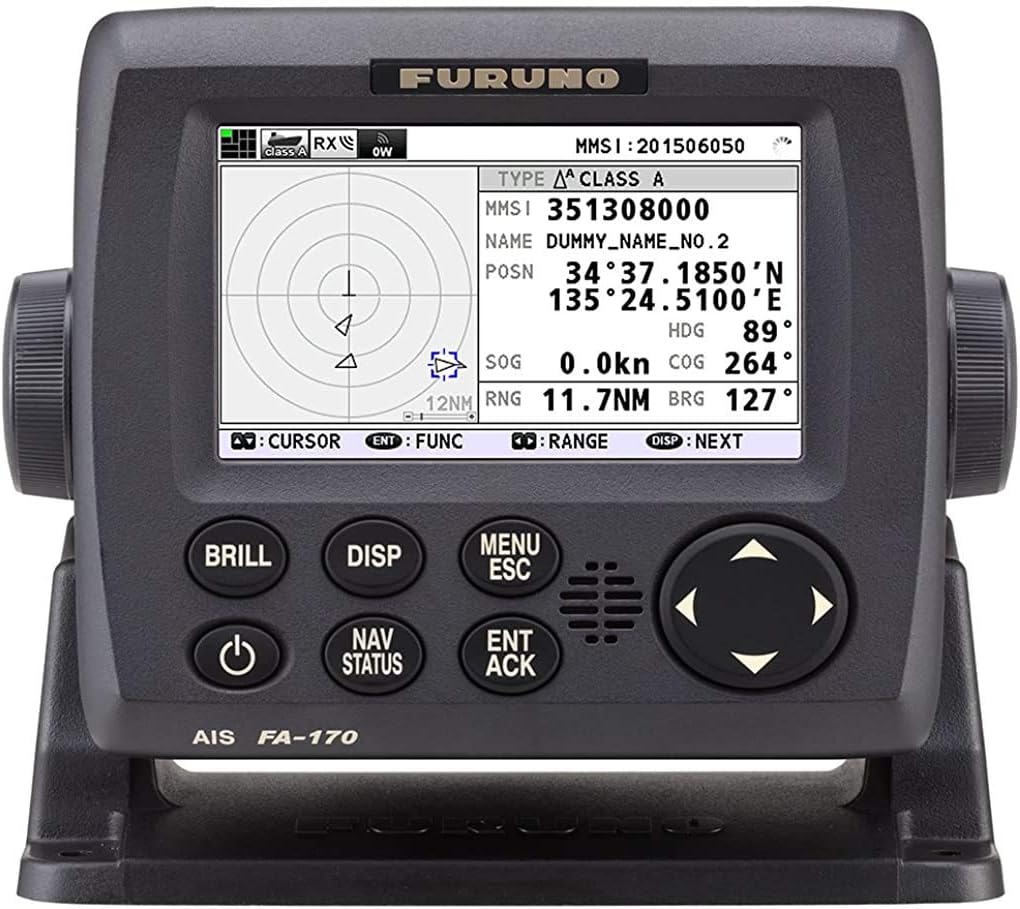
The Furuno FA170 represents the gold standard for AIS technology offering Class A capabilities that are typically reserved for commercial shipping. This device allows you to store up to 2048 AIS targets and SARTs ensuring you have a comprehensive view of nearby traffic. It includes a dangerous target list that highlights risks immediately.
We may earn a commission when you buy through this link, at no additional cost to you.
Its extensive connectivity options include multiple input output ports and a LAN port which allows for deep integration into complex marine networks. You can also create AIS messages or send name requests to target ships facilitating better communication on the water. This level of control is invaluable for large vessels and professional maritime operations.
The high cost of this unit may be prohibitive for casual recreational boaters who do not require such advanced features. Additionally the complexity of setup and operation might be overwhelming for those unfamiliar with sophisticated marine electronics. It is an investment best made by those who need the highest level of compliance and visibility.
For commercial operators and large yacht owners this transponder provides an unmatched level of safety and situational awareness. The ability to manage large amounts of traffic data and communicate directly with other vessels sets it apart from Class B options. It ensures you meet rigorous international standards while maximizing onboard security.
Storing over 2000 targets allows you to review historical traffic patterns and identify potential hazards before they become critical.
Sending name requests and AIS messages enables you to establish contact with other vessels without relying solely on voice radio.
We may earn a commission when you buy through this link, at no additional cost to you.
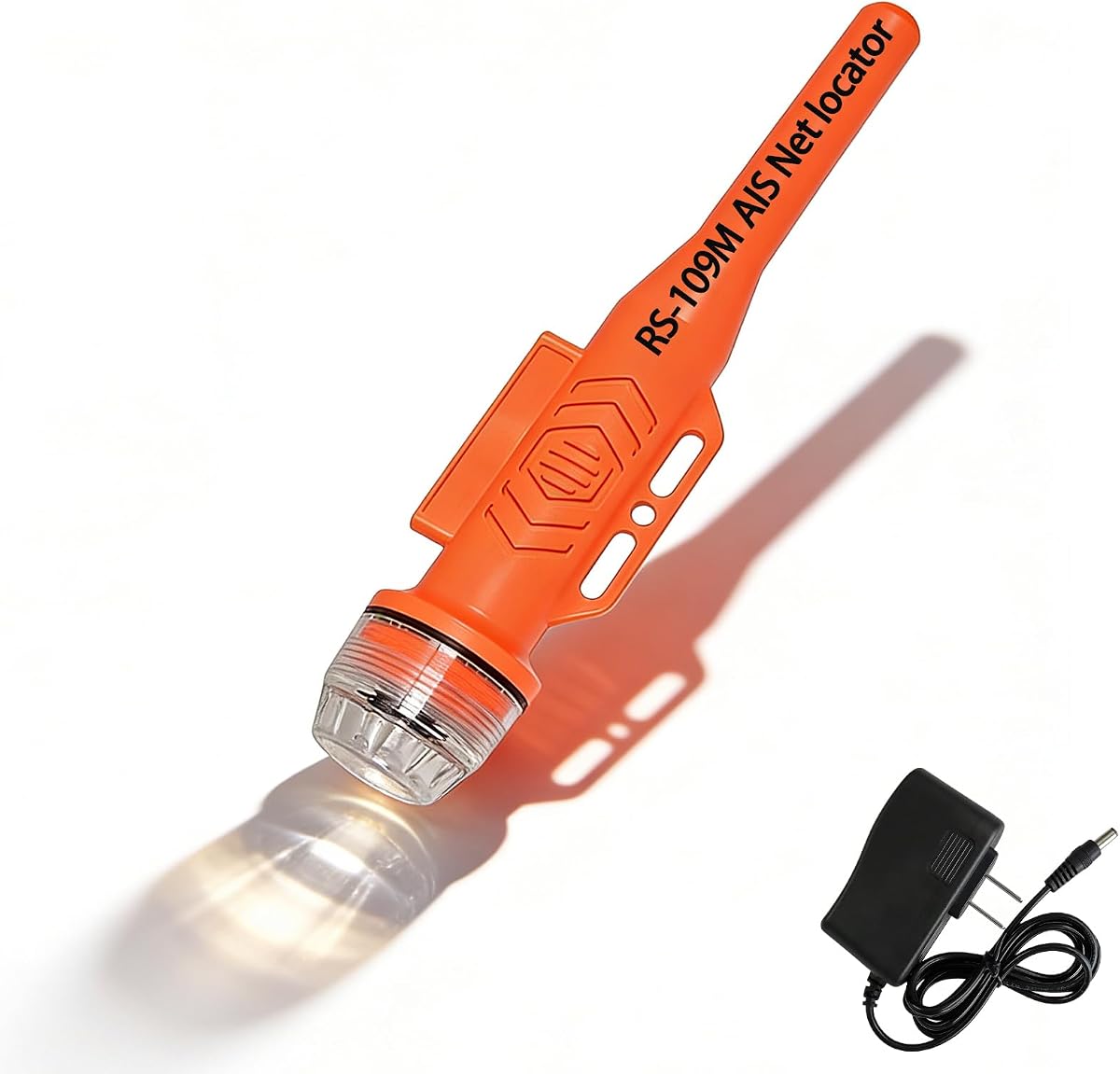
The RS-109M Marine Net Locator is a specialized device designed to provide real-time tracking for buoys and nets in open waters. It transmits both AIS positioning data and battery levels directly to your onboard receiver ensuring you never lose track of your equipment. This functionality is particularly useful for fishermen and commercial net users.
We may earn a commission when you buy through this link, at no additional cost to you.
Its IPX7 waterproof design ensures that the device performs dependably even when fully submerged in marine conditions. The high sensitivity GPS module delivers quick and precise location updates which are essential for retrieving gear efficiently. Additionally the extended battery life supports continuous signal transmission for up to two weeks.
This device is not intended as a primary navigation transponder for the vessel itself but rather as a tool for monitoring assets. It lacks voice communication capabilities which means it cannot replace a standard VHF radio for emergency contact. However for its specific purpose it offers incredible value and reliability.
Select this tracker if you frequently use nets buoys or other equipment that needs to be located quickly and accurately. It reduces maintenance frequency and provides peace of mind regarding your valuable gear. The 10 nautical mile signal range ensures clear coverage across coastal and offshore waters.
Real-time battery updates prevent unexpected signal loss allowing you to retrieve your gear before power runs out completely.
The fully sealed housing protects internal electronics from salt spray and waves extending the lifespan of the tracker significantly.
We may earn a commission when you buy through this link, at no additional cost to you.
The Raymarine T70424 bundle offers a convenient all-in-one solution for boaters who need both VHF communication and AIS capabilities. It includes the Ray90 VHF radio and a fixed mount accessory ensuring you have the essential tools for safety and navigation. This package simplifies installation by reducing the need for separate purchases.
We may earn a commission when you buy through this link, at no additional cost to you.
Raymarine is a trusted name in marine electronics and this bundle reflects their commitment to quality and reliability. The fixed mount design ensures that your radio is securely installed and easily accessible in an emergency. You benefit from seamless integration between the radio and AIS features for enhanced situational awareness.
While the bundle is comprehensive it might be more expensive than buying components separately if you already own a VHF radio. Additionally the fixed mount limits flexibility if you prefer handheld units or portable setups for smaller boats. However for new installations it provides a streamlined and professional setup.
This bundle is ideal for boat owners outfitting a new vessel or replacing older equipment with a modern integrated system. It ensures you have both communication and identification systems working together from day one. The combination of features supports safe and compliant operations on the water.
Having both units in a coordinated bundle reduces wiring complexity and ensures compatibility between the communication and navigation systems.
The fixed mount accessory keeps your radio stable and accessible which is vital for effective communication during rough conditions.
We may earn a commission when you buy through this link, at no additional cost to you.
The ACR RESQLINK AIS Personal Locator Beacon is a critical safety device designed for individuals on the water in emergency situations. It sends a distress alert on VHF frequencies that are received by nearby vessels with AIS receivers. This system also includes a Return Link Service to confirm that search and rescue has received the signal.
We may earn a commission when you buy through this link, at no additional cost to you.
Using NFC technology you can easily access beacon data via a mobile device to check battery life and test results. The device features a 406 MHz distress signal compatible with global satellite systems and a local homing signal for enhanced rescue precision. It is small and lightweight for easy attachment to personal flotation devices.
This device is strictly for emergency use and does not serve as a general navigation transponder. It requires manual activation to send a distress signal which means it will not broadcast your position continuously under normal conditions. Users should understand these limitations to use it effectively in crisis scenarios.
Every boater and angler should consider carrying a personal locator beacon as part of their essential safety gear. The ability to alert nearby vessels directly via AIS significantly increases the chances of a swift rescue response. It provides an extra layer of security for solo boaters or night operations.
Sending an alert to nearby ships ensures that help is on the way even if you are outside of cellular coverage areas.
The Return Link Service confirms that your signal was received giving you and your family peace of mind during emergencies.
We may earn a commission when you buy through this link, at no additional cost to you.
This second variation of the RS-109M tracker offers similar robust features for buoy monitoring with a focus on accuracy and durability. It delivers quick and precise location updates which are vital for navigating to specific fishing spots or recovering gear in open waters. The device transmits battery levels to ensure you are always aware of power status.
We may earn a commission when you buy through this link, at no additional cost to you.
Its fully sealed housing meets IPX7 waterproof standards ensuring reliable performance even in submerged marine conditions. The continuous signal transmission capability supported by a high capacity lithium battery reduces the need for frequent maintenance or charging. It is a reliable tool for anyone managing equipment offshore.
While effective for buoy tracking it does not provide a visual display for navigation on its own. You will need to pair it with a chart plotter or smartphone app to view the actual map data. This requirement should be factored into your setup plan before purchase.
Ideal for anglers and net fishermen this tracker simplifies the process of locating equipment and reduces lost gear incidents. The 10 nautical mile range ensures that you maintain communication with your gear over long distances. It is a cost effective addition to a professional fishing operation.
Continuous signal transmission allows you to track movement of your gear in real time without worrying about sudden disconnection.
Real-time battery reporting prevents unexpected downtime so you can plan maintenance around your actual usage patterns.
We may earn a commission when you buy through this link, at no additional cost to you.
The Icom M94D is a handheld marine transceiver that includes a built-in AIS receiver to display nearby vessel traffic. This allows you to see who is around you without needing a fixed installation which is perfect for kayakers and small boat users. It also features DSC safety capabilities for distress alerts and individual calls.
We may earn a commission when you buy through this link, at no additional cost to you.
With a 2400 mAh battery it provides up to ten hours of typical operating time ensuring you stay connected throughout the day. The radio floats and flashes if dropped overboard which adds a layer of safety for handheld equipment. Additionally it delivers loud audio output ensuring calls stay intelligible in noisy conditions.
Since it is a receiver only it does not transmit your own position via AIS which limits its utility for collision avoidance. The screen is also smaller than fixed units meaning traffic data might be harder to read in bright sunlight. However for portability and emergency comms it excels.
Choose this unit if you need a portable solution that offers basic AIS awareness and reliable voice communication. It is excellent for recreational boaters who want to know their surroundings but do not need a full Class A transponder. The floating feature is a critical benefit for safety on the water.
Handheld portability allows you to carry the device anywhere on the vessel ensuring communication access even at a distance from the helm.
The integrated AIS receiver brings essential safety data to a compact device allowing you to monitor traffic patterns effectively.
We may earn a commission when you buy through this link, at no additional cost to you.
The Icom M510 EVO is a modern fixed mount VHF radio that integrates AIS capabilities for enhanced situational awareness. It is designed to work seamlessly with NMEA 2000 networks making it a smart choice for boats with digital navigation systems. This unit focuses on delivering reliable voice communication with added safety features.
We may earn a commission when you buy through this link, at no additional cost to you.
Its compact design ensures it fits well into most dashboards without taking up excessive space. The interface is intuitive allowing operators to access key functions quickly during critical moments. It supports the latest communication standards to ensure compatibility with modern marine electronics.
While it offers AIS integration it primarily serves as a communication device rather than a dedicated navigation chart plotter. Users should ensure their existing navigation system can fully utilize the AIS data provided by the radio. This device complements other safety gear but does not replace the need for a full navigation suite.
Ideal for boaters upgrading their fixed comms station this radio offers a blend of tradition and modern technology. It ensures you stay connected with other vessels and coast guards while keeping abreast of nearby traffic. The NMEA 2000 support future proofs your investment for years to come.
NMEA 2000 integration ensures your radio can communicate efficiently with other digital marine electronics for better data sharing.
The sleek design and button placement are optimized for ease of use allowing quick adjustments even with gloves on.
We may earn a commission when you buy through this link, at no additional cost to you.
The FLIR RAYMARINE E70476 M AIS700 Class B Transceiver is designed for use with Raymarine multifunction navigation displays. It simplifies installation with a built-in antenna splitter allowing you to share a single antenna for both VHF radio and AIS. This reduces clutter and potential points of failure in your wiring setup.
We may earn a commission when you buy through this link, at no additional cost to you.
It supports both transmit and receive AIS functions which enhances situational awareness significantly when paired with the right display. The unit uses SO-TDMA networking for longer range and faster performance ensuring you see targets quickly and accurately. It is compatible with NMEA2000 and SeaTalkng networks for seamless integration.
This transponder relies heavily on the host display for visualization which limits its usability on boats without a Raymarine system. If you are not using the ecosystem you may miss out on advanced features or find setup more complicated. It is a powerful tool but one that works best within a specific framework.
If you already use Raymarine multifunction displays this device is a natural choice for upgrading your AIS capabilities. It offers a streamlined way to add full Class B AIS to your setup without running extra cables. The combination of speed and reliability makes it a solid choice for modern boats.
The built-in antenna splitter means you do not need a separate antenna for AIS simplifying your helm area and reducing clutter.
Support for NMEA2000 and SeaTalkng ensures this unit can be easily integrated into a wide range of existing navigation networks.
We may earn a commission when you buy through this link, at no additional cost to you.
Selecting the right Ais Transponder involves understanding several key technical factors that affect performance compatibility and cost.
Class A transponders are used for commercial vessels and provide higher transmission power and faster update rates. Class B units are more affordable and sufficient for recreational boats but transmit less frequently.
Choose Class B unless you are a commercial operator requiring the highest visibility and regulatory compliance.
Check whether the transponder needs to connect to an existing chart plotter or if it has a built-in display. Systems with built-in splitters simplify wiring by sharing VHF antennas.
Prioritize units that match your existing navigation network to avoid extra cabling and compatibility issues.
A vibrant color display helps you see traffic data clearly in various lighting conditions. Look for features like collision alarms and anchor watches on the screen.
Invest in a display model if you need standalone operation without relying on a secondary screen.
Ensure the device matches your boat's electrical system such as 12V or 24V power. Battery life is critical for portable beacons used in emergencies.
Verify voltage compatibility before installation to prevent electrical system failures.
Look for high waterproof ratings like IPX7 for devices used in exposed environments. This ensures the electronics survive water splashes and humidity.
Select units with strong sealing to maintain longevity in harsh marine conditions.
Modern transponders offer USB NMEA2000 or Ethernet ports for data transfer and updates. These features allow for easy firmware upgrades and detailed diagnostics.
Choose units with multiple port options to ensure future expandability and system integration.
Prices vary significantly based on features and brand. Consider whether you need basic safety or advanced navigation tools.
Balance the initial cost with the long-term value of reliable communication and collision avoidance.
A proper antenna setup is crucial for the signal range of your transponder. Some models include splitters to share the VHF antenna.
Ensure your antenna is installed correctly to maximize the transmission and reception quality.
Install the transponder in a dry secure location where it is easily accessible for maintenance and updates. Connect all cables firmly and ensure the antenna is positioned high for optimal signal range.
Regularly check the battery levels and firmware versions to ensure the device remains fully operational. Use the built-in diagnostic tools to verify that the unit is transmitting correctly.
Keep the unit clean from salt spray and debris using a soft cloth and fresh water. Store any portable models in a protective case when not in use to prevent accidental damage.
Class A transponders transmit more frequently and at higher power making them suitable for large commercial vessels. Class B units transmit less often but are sufficient for smaller recreational boats. The choice depends on your vessel size and local regulations.
Not always. Many modern transponders come with built-in splitters that allow you to share a VHF antenna. This simplifies installation and reduces the need for extra drilling on your vessel.
Most units have a diagnostic mode or status LED that indicates successful transmission. You can also check your chart plotter to see if your vessel data is being received by the system.
Basic AIS transponders do not require a monthly subscription to transmit data. Some specific tracking services may have fees but standard safety transmission is free.
Yes if you have a compatible transponder or receiver that connects to Bluetooth or Wi-Fi. This allows you to view traffic data on your mobile device while on the water.
Your vessel will disappear from the AIS network until power is restored. This can impact safety during emergencies so ensure you have a reliable power supply or backup system.
We have reviewed ten top products including the Icom MA-510TR for overall performance and the RS-109M for budget tracking needs. Each device offers distinct advantages depending on your navigation requirements and vessel type.
Prioritize safety features like collision alarms and waterproof design to ensure reliable operation in all conditions. Match your choice with your existing navigation ecosystem for seamless integration and data flow.
Please remember to check current availability and pricing as market conditions change frequently. Your safety on the water is paramount so select a transponder that meets your needs for years to come.