
12V 300Ah LiFePO4 Lithium Battery
4.5Editor score
Low Temp Cut Off
APP Monitoring Support
Expandable Up to 61.44kWh
This guide compares the top 10 300Ah LiFePO4 batteries for RV solar and off-grid use based on capacity safety and value.
Choosing the right energy storage solution is critical for modern off-grid living and mobile power needs. The 300Ah LiFePO4 battery stands out as a leading option for those seeking high capacity and long life.
We evaluated ten top-rated models based on cell quality, BMS features, and real-world performance data. Each entry offers unique advantages for solar RVs or marine applications.
Every pick highlights key specifications and use cases to help you decide quickly. Please note that product availability and pricing may change over time.
4.5Editor score

4.4Editor score

4.9Editor score
This side-by-side comparison highlights the core specifications and unique benefits of each model to help you find the perfect match for your power system.




This battery offers a robust blend of capacity and intelligent monitoring. It stands out for its ability to scale into larger systems while maintaining precise control through a dedicated app.
We may earn a commission when you buy through this link, at no additional cost to you.
The 15000-cycle rating ensures longevity for off-grid users. Its 200A BMS protects against overcharge and discharge, while low-temperature cutoffs prevent damage in freezing weather.
While the app enhances control, the setup requires attention. Users should confirm their charger compatibility to avoid potential mismatch issues during installation.
Ideal for RVs and cabins needing scalable power. Its balance of capacity and expandability makes it a top choice for growing energy needs.
The app allows real-time tracking of voltage current and temperature for safer management.
You can connect up to four in series and parallel for massive storage capacity.
We may earn a commission when you buy through this link, at no additional cost to you.
A highly rated option with robust protection features. This battery excels in providing straightforward Bluetooth access to vital stats without extra hardware.
We may earn a commission when you buy through this link, at no additional cost to you.
The 200A BMS ensures safety against voltage spikes. With a solid warranty backing, it offers reliability for marine and solar setups.
Bluetooth convenience is key but ranges vary. Users should test connectivity in their specific setup for best results.
Perfect for those wanting easy monitoring. Its high user rating reflects consistent performance in real-world scenarios.
Check SOC voltage and temperature quickly using your smartphone app.
Five years of coverage add peace of mind for long-term investments.
We may earn a commission when you buy through this link, at no additional cost to you.
This model uniquely combines energy storage with engine starting capabilities. It eliminates the need for a separate starter battery in many setups.
We may earn a commission when you buy through this link, at no additional cost to you.
With a 1500A peak current, it handles heavy loads well. The app provides detailed stats to optimize charging cycles for life extension.
The dual mode adds complexity but offers significant convenience. Users should read the manual carefully to set modes correctly.
Ideal for compact RV or marine systems. Its versatility makes it a premium solution for diverse power needs.
Switch between deep cycle and high power modes as needed for efficiency.
Supports demanding appliances with instantaneous power bursts safely.
We may earn a commission when you buy through this link, at no additional cost to you.
A budget-friendly choice without sacrificing core features. This battery delivers solid capacity with app support for those watching costs.
We may earn a commission when you buy through this link, at no additional cost to you.
The 5-year warranty adds security at this price point. It is compatible with larger solar arrays for home backup projects.
App functionality is functional but not advanced. Users prioritizing cost over tech will appreciate the value.
Great for DIY solar setups. Its expandability allows room to grow without buying new batteries immediately.
Get 3840Wh of power at a fraction of the cost of competitors.
Track essential stats via app to maintain battery health regularly.
We may earn a commission when you buy through this link, at no additional cost to you.
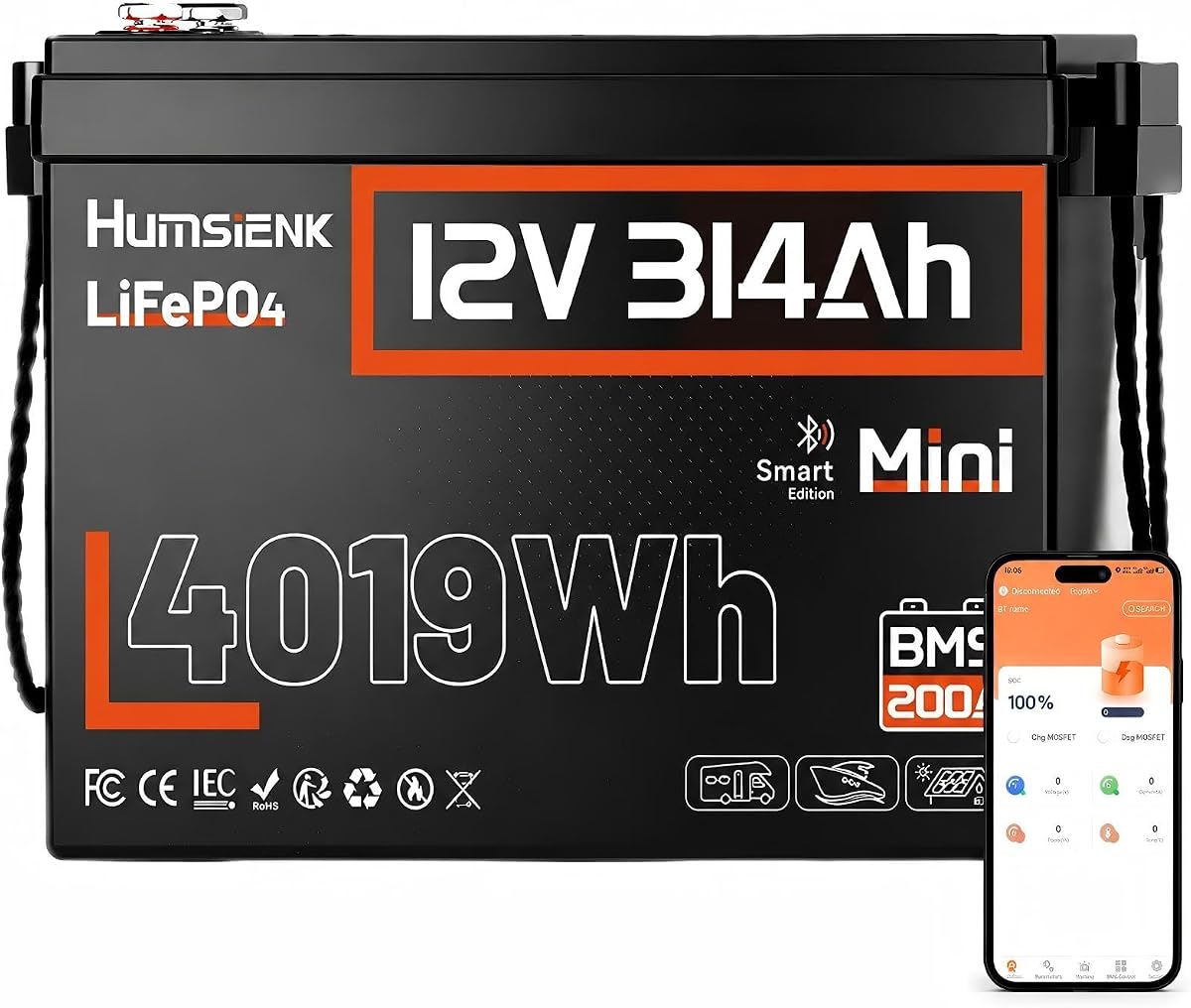
This model offers a slight capacity bump to 314Ah. The added LED indicators provide quick visual checks without needing a phone.
We may earn a commission when you buy through this link, at no additional cost to you.
With 4019Wh energy, it handles longer off-grid days. The 200A BMS ensures safe operation in varying temperatures.
The weight is a trade-off for capacity. Users should ensure their mounting brackets are sturdy enough.
Perfect for those needing a bit more power. Its LED feature adds convenience for quick status checks.
See charge level instantly with built-in LED indicators.
The extra amp hours mean more runtime for essential devices.
We may earn a commission when you buy through this link, at no additional cost to you.
Designed for tight spaces without sacrificing power. Its mini footprint makes it ideal for boats or small RVs.
We may earn a commission when you buy through this link, at no additional cost to you.
The Bluetooth range allows monitoring from a distance. With 4019Wh, it provides substantial storage for its size.
App compatibility is mostly solid but check specs. Users need to ensure their device matches support requirements.
Best for space-constrained setups. The combination of size and capacity is hard to beat.
Saves space while delivering high energy density efficiently.
Monitor from up to 15 meters away for convenience.
We may earn a commission when you buy through this link, at no additional cost to you.
This unit maximizes capacity in a small package. Using Grade-A cells ensures consistent output and longevity.
We may earn a commission when you buy through this link, at no additional cost to you.
With 4224Wh, it is a power dense option. The BMS provides protection against common issues like overheating.
App features are minimal compared to others. Users prioritizing raw capacity will find this sufficient.
Ideal for high-demand small setups. Its cell quality supports long-term performance.
Grade-A cells ensure stable performance over many cycles.
Maximize your energy storage in a smaller footprint.
We may earn a commission when you buy through this link, at no additional cost to you.
Built for tough environments with IP65 protection. This model is ideal for outdoor solar installations exposed to elements.
We may earn a commission when you buy through this link, at no additional cost to you.
Automatic balancing keeps systems stable. The 15000+ cycle rating ensures long-term reliability for heavy use.
It is storage-only so do not use for starting. Ensure your wiring is suitable for deep cycle use.
Perfect for off-grid solar projects. Its weather resistance makes it a durable choice.
IP65 rating protects against rain and dust exposure.
Automatically balances cells to maintain consistent performance.
We may earn a commission when you buy through this link, at no additional cost to you.
Focuses on robust safety features for all climates. The BMS handles overcharge and over-discharge protection effectively.
We may earn a commission when you buy through this link, at no additional cost to you.
Low temp cutoffs prevent charging in freezing weather. It offers the dual functionality of storage and starting.
No app means manual checks are required. Users should monitor manually for precise stats.
Ideal for those needing pure reliability. Its safety focus makes it suitable for cold climates.
Automatically cuts off charging to prevent damage in freezing temps.
Protects against overcurrent and short circuit events efficiently.
We may earn a commission when you buy through this link, at no additional cost to you.
A straightforward option focused on durability and weight. The ABS casing resists impacts and environmental wear well.
We may earn a commission when you buy through this link, at no additional cost to you.
At 57 lbs, it is easier to transport than heavier models. It supports long lifecycles for consistent performance.
It lacks smart features like Bluetooth. Users who prefer manual control will appreciate its simplicity.
Best for simple power needs. Its weight and casing make it practical for transport.
Weighs 57 lbs for easier handling and installation.
ABS casing protects internal cells from physical shocks.
We may earn a commission when you buy through this link, at no additional cost to you.
Selecting the right battery requires understanding key specs and features that impact performance and longevity.
Capacity determines how long your devices run before recharging. Look for 300Ah or slightly higher models for extended off-grid use.
Aim for 3840Wh minimum to ensure sufficient power for daily needs.
A BMS protects against overcharge overcurrent and thermal issues. Ensure your model has at least 200A capacity.
Low-temperature cutoffs are essential for preventing damage in freezing conditions.
Smart features like Bluetooth or app monitoring provide real-time status checks. This helps prevent unexpected shutdowns.
Basic models may lack these features but are cheaper for simple setups.
Consider if the battery supports series or parallel expansion. This allows scaling your system without replacing units.
Check voltage compatibility before wiring multiple batteries together.
Cycle life indicates how many charge cycles the battery can handle. Aim for 5000 to 15000 cycles for long-term value.
A minimum of 5 years warranty is standard for quality brands.
Lighter batteries are easier to install in boats or RVs. Compare weight to lead-acid alternatives for space savings.
Ensure the battery fits your existing compartment space before purchasing.
Choose models with dual-mode storage and starting if you need to start engines. Pure storage units may not handle high loads.
Verify waterproof ratings like IP65 for outdoor or marine use.
Ensure your solar charger supports 12V LiFePO4 charging curves. Mismatched chargers can reduce cycle life.
Look for support for MPPT or generator input methods.
Always charge the battery at 50C or higher to avoid lithium plating. Use a compatible charger designed for lithium chemistry.
Avoid deep discharge below 20% regularly to extend the battery life. Partial cycles are preferred over full discharge.
Store the battery in a cool dry place during winter months. If unused, charge to 50% and check every 3 months.
Only if the model specifically includes a starting or dual-mode feature. Most storage-only batteries cannot provide the high peak current needed for starting engines safely.
Connect positive to positive and negative to negative using equal-length cables. Ensure both batteries are at the same voltage before connecting to balance loads.
Most models have built-in low-temperature cutoffs that stop charging below zero degrees Celsius. Never charge a frozen battery as it can cause permanent damage.
Yes, typically they are one-third the weight of comparable lead-acid batteries. This makes installation and transport much easier for mobile setups.
Yes, use a charger with a lithium profile that matches the 14.6V cutoff. Standard lead-acid chargers can overcharge and damage the cells.
The 314Ah battery offers slightly more energy storage capacity. The extra amp hours provide additional runtime for high-demand devices.
Yes, they are designed specifically for solar and off-grid applications. They handle deep discharge cycles well and integrate easily with MPPT chargers.
Many models include built-in LED indicators for state of charge. You can also use a multimeter to check voltage levels for a rough estimate.
The top picks offer distinct advantages for expandability cost and dual functionality. Selecting the right model depends on your specific power needs.
Prioritize BMS safety features and cycle life when evaluating options. Long-term reliability is key for off-grid solar systems.
Check current pricing and availability to ensure the best value. Always verify compatibility with your existing solar setup.