
QNAP TL-D1600S
4.5Editor score
High-Performance Desktop SATA
Includes PCIe SATA Interface
Supports mixed drive sizes
Choosing the right storage solution is critical for data-intensive workflows. A 16 Bay NAS Enclosure offers massive capacity and flexibility for growing needs. These units support various drive types and interfaces for scalability.
We evaluated ten leading models based on build quality, drive support, and performance capabilities. Our analysis includes enterprise rackmount options and versatile desktop enclosures designed for different workloads and budgets.
Each pick highlights specific strengths like cooling efficiency or expansion options. Prices and availability change frequently, so verify details before purchasing. This list helps you find the ideal enclosure for your specific storage requirements.
4.5Editor score
4.3Editor score

4.3Editor score
As an Amazon Associate we earn from qualifying purchases.
This comparison table provides a side-by-side overview of all ten selected products. It highlights key specifications including processor type, drive bays, connectivity options, and warranty details to help you make an informed decision.


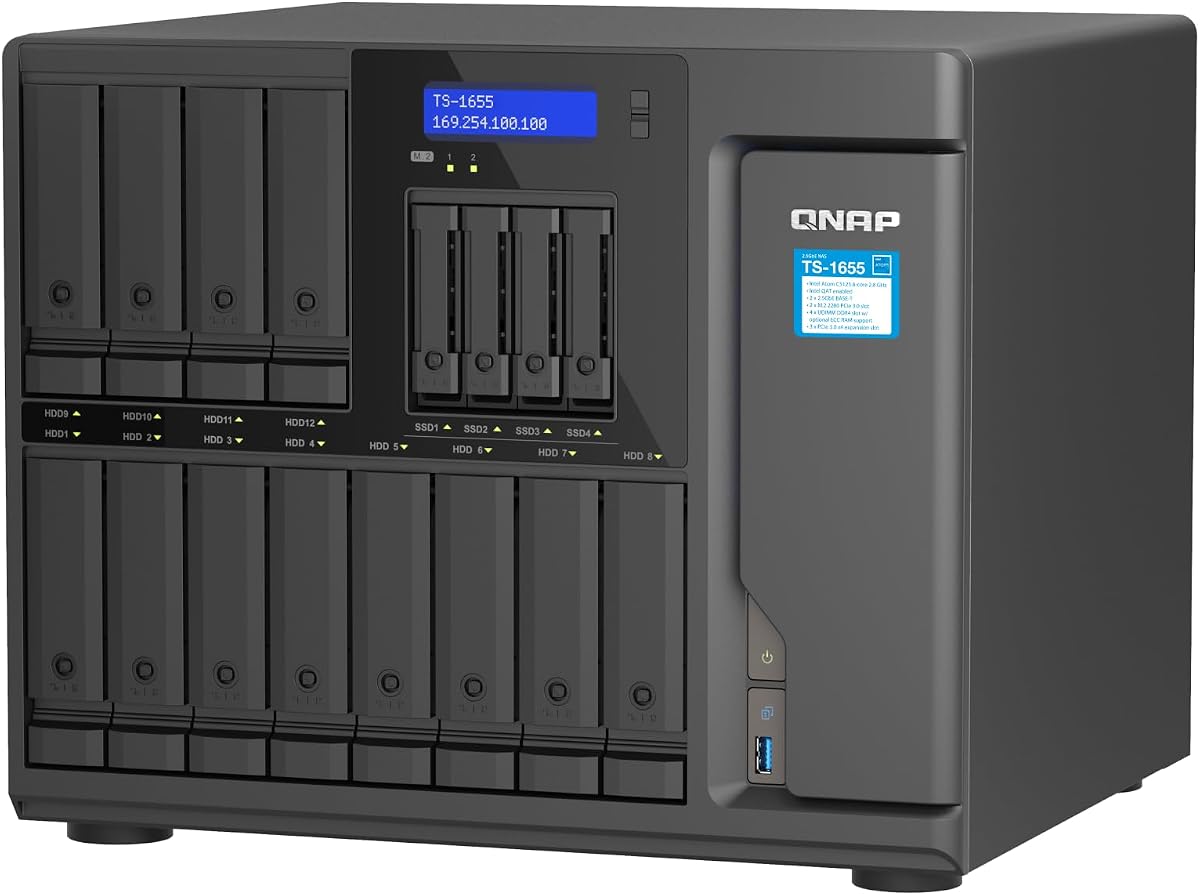
The QNAP TS-1655-8G-US is a powerful hybrid NAS designed for intensive workloads. It offers a balance of processing power and storage flexibility suitable for enterprise environments. The unit supports 16 drive bays with high-speed connectivity options.
We may earn a commission when you buy through this link, at no additional cost to you.
Its Intel Atom C-5125 processor provides robust performance for virtualization and media transfer. The inclusion of dual 2.5GbE ports ensures fast data access. Users can upgrade RAM significantly, which is crucial for running multiple services simultaneously.
While the unit is feature-rich, the complexity of setup may be a hurdle for casual users. The high cost also places it in the premium category. However, these trade-offs are acceptable for professional needs demanding reliability and speed.
This device is ideal for IT administrators requiring scalable and high-performance storage. It is highly recommended for organizations needing robust backup and multimedia handling capabilities. The long-term availability adds value for long planning planning.
Utilizing NVMe slots for cache significantly boosts read and write speeds for active data sets.
Dual 2.5GbE ports facilitate faster file transfers compared to standard Gigabit Ethernet connections.
We may earn a commission when you buy through this link, at no additional cost to you.
This Synology RackStation is designed for mission-critical enterprise applications. It features an 8-core Intel processor capable of handling compute-intensive services. The system ensures business continuity with redundant power supplies included.
We may earn a commission when you buy through this link, at no additional cost to you.
The ability to expand to 40 drive bays using RX1217(RP) units offers immense scalability. High IOPS performance makes it suitable for database and virtualization tasks. The 5-year warranty provides significant peace of mind for business investment.
The cost of this system is substantial, reflecting its high-end specifications. Users must purchase drives separately since it is diskless. Despite the expense, the reliability and performance justify the investment for serious businesses.
Organizations requiring maximum uptime and scalability should consider this RackStation. It is perfect for central servers handling large-scale storage and backup needs. The expandability ensures it grows with your data requirements.
Redundant power supplies protect data integrity by ensuring the system stays online during power failures.
Support for expansion units allows you to grow storage capacity without replacing the main NAS unit.
We may earn a commission when you buy through this link, at no additional cost to you.
The QNAP TL-D1600S is an excellent choice for expanding storage on existing systems. It acts as a high-performance desktop SATA JBOD enclosure. The package includes a PCIe SATA interface card for easy connection.
We may earn a commission when you buy through this link, at no additional cost to you.
It supports 12 larger drives and 4 smaller drives, offering great flexibility. This makes it ideal for users needing to mix capacities. The simple interface means it works well with Windows and Linux servers.
The lack of a built-in RAID controller means it relies on host system management. This limits its use as a standalone NAS unit but suits expansion needs. The budget-friendly price makes it accessible for many users.
Buyers looking for a simple way to add massive storage should pick this unit. It is best for home labs or small offices expanding existing file servers. The included card ensures compatibility and ease of installation.
Supporting both 3.5 and 2.5 inch drives allows for mixed capacity configurations based on user needs.
As a JBOD enclosure, it integrates directly with the host computer for unified management.
We may earn a commission when you buy through this link, at no additional cost to you.
This QNAP unit is a versatile storage expansion solution for rack environments. It features a space-efficient short depth design ideal for cabinets with cabling. Redundant power supplies ensure service continuity for your storage array.
We may earn a commission when you buy through this link, at no additional cost to you.
Using Mini-SAS HD interfaces, it offers reliable connectivity to host systems. It supports 16 large SATA drives for massive capacity. The design makes it easy to install in places with space constraints.
The rail kit is not included which is an additional cost to consider. It is primarily designed to work with QNAP NAS units. These limitations are minor given the specialized form factor and reliability.
IT managers needing a compact expansion unit for dense racks should choose this model. It is perfect for media cabinets or restricted server rooms. The redundant power adds critical safety for valuable data.
Short depth allows installation in media cabinets where standard rack units would not fit.
Mini-SAS HD provides high bandwidth connections suitable for petabyte-level storage expansion.
We may earn a commission when you buy through this link, at no additional cost to you.
The ZhenLoong tower is designed for custom workstation or NAS builds. It supports various motherboard sizes up to EATX and includes hot swap bays. The chassis also accommodates GPUs and offers substantial PCI expansion slots.
We may earn a commission when you buy through this link, at no additional cost to you.
Users can build a powerful machine with this frame and the 15 drive bays provide ample storage. The material quality ensures durability for heavy-duty use. Front panel controls simplify access and status monitoring.
Shipping takes 30-40 days by sea which impacts availability. Generic branding means less official technical support compared to major names. For builders planning a DIY project these factors are often acceptable trade-offs.
DIY enthusiasts wanting a high-capacity workstation case should consider this option. It suits those needing specific expansion features and hot swap access. The build quality supports complex internal configurations well.
Supporting EATX boards and GPUs allows for powerful computing alongside massive storage in one chassis.
Multiple PCI slots enable adding specialized cards for network or storage interface upgrades.
We may earn a commission when you buy through this link, at no additional cost to you.
This CENMATE enclosure provides a user-friendly DAS solution for personal or enterprise use. It supports up to 240TB capacity using a mix of SSDs and HDDs. The USB 3.0 interface ensures fast file transfers without complex setup.
We may earn a commission when you buy through this link, at no additional cost to you.
Tool-free installation makes swapping drives easy for maintenance. Three cooling fans protect data security by preventing overheating. Daisy chain expansion allows users to connect more devices for even greater capacity.
Fan noise can be noticeable at 40-50 decibels which may bother noise sensitive users. Loading drives must be done sequentially to ensure proper detection. Despite this the value and capacity make it a strong contender.
Users needing simple high-capacity external storage should look at this model. It is great for creatives or home users with growing data needs. The compatibility ensures it works with most standard computers.
Aluminum alloy construction and dedicated cooling fans help maintain stable temperatures for your drives.
Daisy chaining up to three devices allows significant storage growth without multiple cables.
We may earn a commission when you buy through this link, at no additional cost to you.
The Asustor Lockerstor 10 Gen3 is an AMD-powered NAS optimized for heavy enterprise workloads. It features high-speed networking and USB4 ports for professional workflows. ECC memory ensures data integrity for mission-critical applications.
We may earn a commission when you buy through this link, at no additional cost to you.
The 10-Gigabit Ethernet ports deliver ultra-fast transfer speeds for large files. Four M.2 NVMe slots allow for caching or high-speed storage pools. This model excels in virtualization and 4K/8K media production environments.
While it has 10 bays rather than 16 it offers superior networking features. The diskless configuration means additional cost for drives. However the performance capabilities justify this investment for enthusiasts and pros.
Businesses needing high bandwidth and reliable memory should choose this unit. It is ideal for creative studios and data centers. The enterprise features ensure stable 24/7 operation under heavy loads.
USB4 ports provide 40Gbps speeds for professional external storage and display connections.
ECC DDR5 memory detects and corrects common data corruption issues for stable performance.
We may earn a commission when you buy through this link, at no additional cost to you.
This Synology DiskStation is built for virtualization and backup consolidation. Its 6-core Xeon processor hosts multiple services efficiently. Networking options include 10/25GbE for high-speed file transfer needs.
We may earn a commission when you buy through this link, at no additional cost to you.
It scales up to 36 bays with DX1222 expansion units providing room for growth. NVMe SSD Cache can be added to boost read and write speeds significantly. This ensures fast access to frequently used data files.
The diskless setup requires purchasing drives separately which increases total cost. While the base price is high the performance and expansion options are valuable. It remains a top choice for growing businesses.
Organizations hosting VMs and video management systems will benefit greatly. It is recommended for users needing robust security and scalability. The long warranty adds peace of mind for critical infrastructure.
Capable Intel Xeon processors allow multiple virtual machines to run simultaneously without lag.
Support for 25GbE networking enables rapid transfer of large video and backup files.
We may earn a commission when you buy through this link, at no additional cost to you.
This DX1222 unit expands storage capacity for compatible Synology diskstation units. It configures quickly using Synology DSM unified tools for easy management. The 5-year warranty ensures long-term reliability for your storage setup.
We may earn a commission when you buy through this link, at no additional cost to you.
Designed specifically for Synology systems it avoids compatibility issues. It adds 12 bays of storage easily without complex networking configuration. This makes it an ideal choice for users already invested in the ecosystem.
Because it only works with Synology units it lacks flexibility for other brands. Users must ensure their main unit supports this expansion model. Despite this restriction the integration value is very high.
Current Synology users needing more space should select this expansion unit. It provides a straightforward path to increased capacity with minimal disruption. The high ratings reflect its reliability and ease of use.
DSM tools allow you to manage expanded storage exactly like your existing Synology drives.
Adding bays allows for higher capacity without needing a new full NAS system.
We may earn a commission when you buy through this link, at no additional cost to you.
This QNAP model delivers high performance and capacity for diverse workloads. It features a 16 bay design with 8-core processing power for speed. Dual 2.5GbE ports facilitate intensive file access and large backups.
We may earn a commission when you buy through this link, at no additional cost to you.
M.2 NVMe slots support SSD caching for faster image recognition tasks. It supports ECC memory up to 128GB ensuring data integrity. Long-term availability is highlighted for consistent support over time.
Advanced features like ECC support may require extra planning and budget. The sheer number of features can be daunting for basic users. However it offers excellent value for those needing robust capabilities.
Organizations needing a reliable long-term storage solution will appreciate this unit. It fits well for virtualization and multimedia transfer. The availability ensures you can rely on it for future upgrades.
Long-term availability support ensures the device remains a viable option for years to come.
NVMe slots allow for SSD caching that accelerates frequently accessed data significantly.
We may earn a commission when you buy through this link, at no additional cost to you.
Selecting the right 16 Bay NAS Enclosure requires evaluating processor power, drive compatibility, and network capabilities to ensure your storage solution meets current and future needs efficiently.
The processor determines how well the unit handles tasks like virtualization, media streaming, and backup management. Look for multi-core CPUs to handle heavy workloads efficiently.
Higher processing power ensures smoother performance when multiple users access data simultaneously.
Check if the enclosure supports both 2.5 and 3.5 inch drives to maximize your capacity and budget options. Ensure the SATA speed matches your drive capabilities.
Compatible bays allow flexible mixing of storage types for optimized performance.
Network ports define transfer speeds. For large files, 10GbE or 2.5GbE ports are essential to prevent bottlenecks in your workflow.
Fast networking is crucial for real-time collaboration and efficient backups.
Look for units that support daisy chaining or expansion modules to add storage without buying a new system. This scalability is vital for growing data needs.
Expansion capabilities protect your investment by allowing incremental growth.
Redundant power supplies keep the system running during outages which is key for business continuity. Cooling systems must handle the heat generated by 16 drives.
Proper cooling prevents drive failure and extends the hardware lifespan.
The NAS software interface affects usability and management. Some units come with advanced tools for backups and snapshots while others are simpler.
Choose software that matches your technical expertise and management needs.
A long warranty period like five years indicates manufacturer confidence in the product durability. Verify technical support channels for troubleshooting hardware issues.
Strong support ensures you can resolve issues quickly to minimize downtime.
Decide between desktop and rackmount designs based on your available space. Rackmount units save desk space but require specific cabinets or rails.
Proper physical fit prevents installation hassles and allows better airflow.
Start by installing the drives one at a time to verify each unit is functional before connecting the power fully. Ensure drives are properly seated in the hot swap bays.
Connect the NAS to your network via the provided Ethernet ports and configure the initial settings through the web browser interface for security.
Regularly monitor drive health indicators and update firmware to maintain security and performance. Ensure the cooling fans remain clean and unobstructed for optimal airflow.
Yes, they are suitable for home media enthusiasts requiring high capacity for movie libraries. Ensure the unit supports media transcoding if streaming to multiple devices.
Most units listed are diskless meaning you must purchase hard drives separately. This allows you to choose specific brands and capacities that fit your budget.
Many models support expansion units to add more bays. Check the compatibility list of your main unit to see if expansion enclosures can be added.
JBOD treats each drive independently while RAID combines them for redundancy. Choose based on whether you prioritize speed, data safety, or total capacity.
M.2 NVMe slots are vital for SSD caching which speeds up read and write operations significantly for active data.
A UPS protects against power surges and sudden shutdowns. It ensures data integrity during outages which is highly recommended for critical storage.
Noise levels vary by model. Units with multiple fans for 16 drives can be loud so consider placement if used in living areas.
Most manufacturers offer a standard five-year warranty covering defects and hardware failures. Always check the specific product details for exact terms.
The QNAP TS-1655-8G-US and Synology RackStation stand out for performance and expandability respectively. They offer robust solutions for both enterprise and advanced home users needing massive storage.
Prioritize your specific needs like network speed or budget when making a decision. Expansion capabilities and power redundancy are critical factors for long-term reliability in professional settings.
Always check current availability and pricing before purchasing as these details fluctuate frequently. This guide ensures you select a model that aligns with your current and future data growth.