
Urban Worm Soil Thermometer
4.6Editor score
5-inch stainless steel stem
Easy to read color marks
Ideal for worm bins
This guide compares the top digital soil thermometers for accuracy and ease of use to help you monitor soil temperature and care for your plants effectively.
Monitoring soil temperature is crucial for successful gardening and plant care. A digital soil thermometer provides precise readings that help you determine the best times for planting and transplanting.
We evaluated ten top-rated models based on accuracy, durability, and ease of use. Our analysis covers a range of options from basic probes to multifunctional testers with advanced features.
Each pick highlights key specifications and real-world performance notes. Please note that prices and availability change frequently so check the current listings before making a purchase decision.
4.6Editor score

4.2Editor score

4.2Editor score
The following table provides a side-by-side comparison of all ten products to help you quickly identify the right model for your specific gardening needs.




The YAMRON 4-in-1 Soil Moisture Meter stands out as a top choice for gardeners seeking comprehensive soil data. It offers a versatile range of measurements including moisture, pH, temperature, and sunlight levels.
We may earn a commission when you buy through this link, at no additional cost to you.
Its large LCD screen with backlight ensures readability in any lighting condition. The rotating head design allows for easy viewing without bending over which is a significant ergonomic benefit.
Users should note that accurate results require testing multiple soil locations and averaging the values. It is not designed for liquid testing and should not be forced into dry hard soil.
This device is ideal for both novice and experienced growers who want scientific data to guide plant care. Its multifunctional capabilities reduce the need for multiple tools.
This tester provides all essential soil metrics in one device allowing you to optimize watering and light exposure efficiently.
The rotating head and large display make reading data comfortable even when working in tight garden spaces or low light.
We may earn a commission when you buy through this link, at no additional cost to you.
The Luster Leaf 1625 Digital Soil Thermometer is designed specifically for determining soil temperature during planting seasons. It is a straightforward tool for gardeners who need to know when the soil is ready.
We may earn a commission when you buy through this link, at no additional cost to you.
Its primary strength is its focus on temperature accuracy without unnecessary complexity. This makes it easy to use for quick checks before transplanting seedlings into the ground.
While it lacks additional features like moisture or pH testing it serves its specific purpose well. Users looking for a dedicated temperature monitor will find it dependable.
This model is best for gardeners who prioritize soil temperature checks over broader soil analysis. It is an essential tool for early season planting success.
Dedicated solely to temperature this device provides clear readings that help you time your planting efforts perfectly.
We may earn a commission when you buy through this link, at no additional cost to you.
This 7-in-1 Digital Soil Tester Kit offers an impressive array of features including moisture pH temperature light intensity fertility and water quality metrics. It is built for gardeners who want deep insights into their soil health.
We may earn a commission when you buy through this link, at no additional cost to you.
The inclusion of EC and TDS functions sets it apart from standard moisture meters. These features help you manage nutrient levels and ensure plants receive adequate feeding and hydration.
The large LCD screen with backlight ensures visibility in any setting. However it requires four AAA batteries and some users might find the device slightly larger than basic testers.
Ideal for serious plant enthusiasts this kit provides all the data needed for science-based plant care. It simplifies the process of monitoring multiple soil parameters at once.
EC and TDS functions allow you to monitor nutrient levels and water quality for optimal plant growth and health.
Seven functions in one device reduce the need for multiple tools and streamline your gardening maintenance routine effectively.
We may earn a commission when you buy through this link, at no additional cost to you.
The Reotemp K83B1 is specifically designed for composting enthusiasts who need to monitor heat levels in their piles. Its 12-inch stem reaches deep into compost bins where temperature readings are critical.
We may earn a commission when you buy through this link, at no additional cost to you.
Included with the thermometer is a free digital composting guide that provides expert instructions. This added value helps beginners get started with efficient compost production.
Constructed with corrosion-resistant stainless steel and a glass lens this model is built to last. It is waterproof and dust-proof making it suitable for outdoor use in all weather conditions.
While it does not have a digital screen the analog display is clear and reliable. It is the best choice for those focused on compost pile management and soil temperature.
The 12-inch stem allows you to measure temperatures deep within large compost piles for accurate heat tracking.
We may earn a commission when you buy through this link, at no additional cost to you.
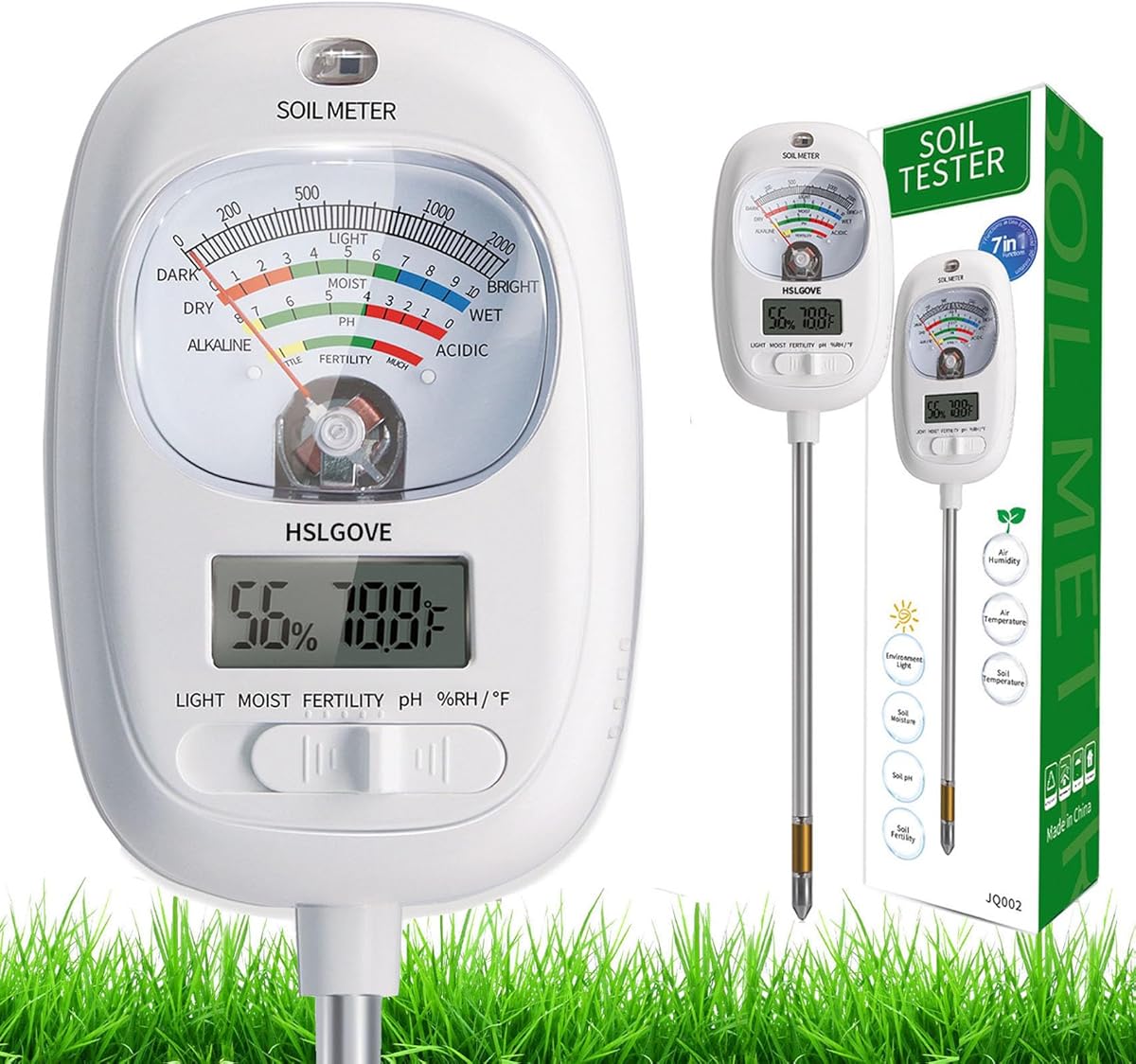
The HSLGOVE Soil Test Kit features a unique dual-dial design that combines soil moisture and air temperature humidity readings. This allows for a comprehensive view of the plant environment.
We may earn a commission when you buy through this link, at no additional cost to you.
It offers seven functions including moisture pH fertility light and temperature. The LCD screen clearly displays soil and air data aiding in scientific seedling cultivation.
The probe is constructed from three kinds of quality metal material ensuring durability. It is designed for medium to large potted plants and minimizes root disturbance during testing.
This kit is excellent for gardeners who monitor both soil and air conditions. Its dual display provides immediate insight into the microclimate surrounding your plants.
Measures both soil and air conditions to help you manage the complete growing environment for optimal plant health.
We may earn a commission when you buy through this link, at no additional cost to you.
The Urban Worm Soil Thermometer is a budget-friendly tool designed for simplicity and practicality. It features color-coded tick marks for easy monitoring of temperature ranges.
We may earn a commission when you buy through this link, at no additional cost to you.
Its 5-inch stainless steel stem is perfectly sized for worm bins and smaller garden areas. Worms thrive between 55F and 90F and this device helps you track that range efficiently.
While it does not offer a digital readout the visual indicators are clear and effective. It is an ideal choice for vermicomposters who need a reliable temperature check.
This thermometer proves that you do not need complex features to maintain healthy soil conditions. It is the most affordable option on our list.
Color tick marks provide instant feedback on temperature conditions without requiring interpretation of digital numbers.
We may earn a commission when you buy through this link, at no additional cost to you.
The ECOWITT WN34BS offers advanced features for gardeners who want remote access to soil temperature data. It pairs with a WiFi gateway to transmit data to apps and servers.
We may earn a commission when you buy through this link, at no additional cost to you.
You can track temperature history receive email alerts and monitor up to eight different locations. This is ideal for large gardens or greenhouses requiring consistent monitoring.
The sensor is IP65 waterproof ensuring it withstands outdoor weather conditions. While the gateway is sold separately the connectivity options make it a premium choice.
This device transforms soil monitoring into a seamless digital experience. It is best for tech-savvy gardeners who value data logging and remote access.
Connect to WiFi and access real-time data on your phone or computer for convenient remote monitoring capabilities.
We may earn a commission when you buy through this link, at no additional cost to you.
This Digital Soil EC Meter is a specialized tool for measuring electrical conductivity and temperature. EC is a key indicator of salt content and nutrient levels in the soil.
We may earn a commission when you buy through this link, at no additional cost to you.
The device includes temperature compensation to ensure accurate readings across varying conditions. It features a backlight LCD display for clear visibility even in low light.
Calibration is straightforward using a specific solution. While it requires more steps than basic testers it provides professional-level data for serious growers.
Ideal for hydroponics and advanced gardening this meter helps maintain optimal nutrient balance. It is a specialized tool for those who need precise soil analysis.
EC measurement provides critical data on soil nutrient and salt content to support advanced plant care strategies.
We may earn a commission when you buy through this link, at no additional cost to you.
The 4-in-1 Soil Moisture Meter features a wireless range of up to 328 feet allowing you to monitor plants from inside your home. It supports up to 12 sensors for extensive coverage.
We may earn a commission when you buy through this link, at no additional cost to you.
Its triple-probe TDR technology ensures stable and consistent moisture readings. The large screen displays moisture temperature light and clock data without complex menus.
The wireless capability reduces physical strain and allows monitoring in all weather conditions. It is a smart choice for large gardens or busy plant owners.
This device balances technology with ease of use. It offers significant convenience for those managing multiple indoor and outdoor plants.
Monitor plants from a distance with a wide wireless range that supports up to twelve sensors for large setups.
We may earn a commission when you buy through this link, at no additional cost to you.
The 7 in 1 Soil Meter features a 5-probe system designed for enhanced data precision and durability. It consolidates all critical parameters into a single tool for various environments.
We may earn a commission when you buy through this link, at no additional cost to you.
Its extra-large split HD display allows easy reading without bending down. This design is particularly helpful for seniors or those with mobility issues.
The probes are corrosion-resistant and built to withstand tough soil conditions. It is suitable for long-term outdoor use and hydroponic substrate testing.
This model offers a robust build quality for frequent field use. It is an excellent choice for commercial or large-scale garden applications.
The split HD display design reduces physical strain by making data visible at a comfortable viewing angle.
We may earn a commission when you buy through this link, at no additional cost to you.
Selecting the right digital soil thermometer depends on your specific gardening needs and the level of detail you require.
Consider whether you need a simple temperature probe or a multifunctional tester. Options range from single-purpose thermometers to 7-in-1 kits that measure moisture pH fertility and light.
For general gardening a basic thermometer may suffice. Complex setups benefit from multifunctional testers that provide comprehensive soil health data.
Look for devices with large LCD screens and backlighting. This ensures that you can read the data clearly in direct sunlight or in dark greenhouses.
A clear display improves accuracy by reducing reading errors. Backlighting is essential for early morning or evening garden checks.
Choose a model with corrosion-resistant probes and a waterproof rating. Stainless steel stems are more durable and less likely to degrade over time.
A sturdy build ensures the tool survives accidental drops and harsh weather. Check for IP ratings if you plan to use it outdoors frequently.
The device should offer intuitive controls and clear instructions. Simple button interfaces make it easier to switch between functions without confusion.
Quick readings reduce waiting time during active gardening. Models that do not require extensive setup save you valuable time.
Advanced models offer wireless tracking and app integration. These features allow remote monitoring and data logging for long-term analysis.
If you manage a large garden consider a system that supports multiple sensors. Connectivity adds convenience for regular monitoring routines.
Ensure the probe is long enough to reach the root zone or deep into compost piles. Standard lengths vary from 4 to 12 inches.
A rotating head or ergonomic design can make insertion easier. Longer stems are necessary for large plants and deep soil testing.
Check whether the device uses batteries or rechargeable options. Standard AAA batteries are common but frequent replacement can be inconvenient.
Consider models with low battery alerts to avoid unexpected downtime. Power efficiency affects how often you need to maintain the device.
Some digital testers require manual calibration for precise readings. Others come pre-calibrated and ready to use out of the box.
Basic gardeners may prefer ready-to-use devices. Advanced users might appreciate calibration features that ensure high accuracy.
Insert the probe into the soil to a depth of about 4 to 6 inches. Wait for the reading to stabilize which usually takes 10 to 15 seconds before recording the value.
For accurate results test multiple spots in the garden and calculate the average. Avoid inserting the probe into extremely dry or compacted soil as this may damage the device.
After each use remove any dirt from the probe with a damp cloth. Store the thermometer in a dry place and replace batteries when low to ensure continued functionality.
Soil temperature affects seed germination root growth and nutrient uptake. Different plants require specific temperature ranges to thrive so monitoring helps you plant at the right time.
Insert the probe 4 to 6 inches deep to measure the root zone temperature accurately. Avoid shallow insertion which may reflect surface temperatures rather than soil conditions.
Basic models are pre-calibrated and ready to use. Professional meters may require calibration using a solution to maintain accuracy over time.
Yes specialized compost thermometers are designed for this purpose. They have longer stems and durable casings suitable for heat in compost piles.
Moisture testers measure water content in the soil while temperature testers measure heat levels. Multifunctional models combine both for comprehensive plant monitoring.
They are worth it if you need remote monitoring or data logging. For small gardens a wired model may suffice and save money.
Check soil temperature weekly during planting seasons or when transplanting. Regular checks help you track seasonal changes and adjust care accordingly.
We have reviewed ten digital soil thermometers that cater to different gardening needs. Whether you require basic temperature checks or multifunctional data these options provide reliable tools.
Prioritize durability and display readability when selecting a device. These features ensure that you get consistent results in various weather conditions.
Remember to check current pricing and availability before purchasing. Prices change frequently so verify the latest deals on the products you are interested in.