
Intel AX210 Tri-Band Wi-Fi 6E Bluetooth 5.3 Network Card for Notebook
4.8Editor score
Intel AX210 Chipset
Tri-Band 6GHz Support
Bluetooth 5.3 Integration
This guide compares the top M2 WiFi cards for laptops and PCs, covering WiFi 6E and WiFi 7 options to help you choose the right upgrade for your needs.
M2 WiFi cards are essential upgrades for modern laptops and desktops needing faster wireless speeds. They support the latest standards like WiFi 6E and WiFi 7, offering tri-band connectivity and improved stability for gaming and streaming tasks.
We compared ten top-rated cards based on chipset performance, Bluetooth version, and compatibility. Our analysis focuses on real-world speeds, latency, and ease of installation to help you find the perfect match for your system setup today.
Each pick highlights key specs and ideal use cases for different users. Prices and availability can change frequently, so always check the current listing before purchasing to ensure you get the best deal for your specific hardware configuration.
4.8Editor score
4.6Editor score

4.6Editor score
This side-by-side comparison helps you evaluate the top M2 WiFi cards available today. We list key specs like max speed, Bluetooth version, and compatibility to simplify your decision-making process for upgrading your wireless network.


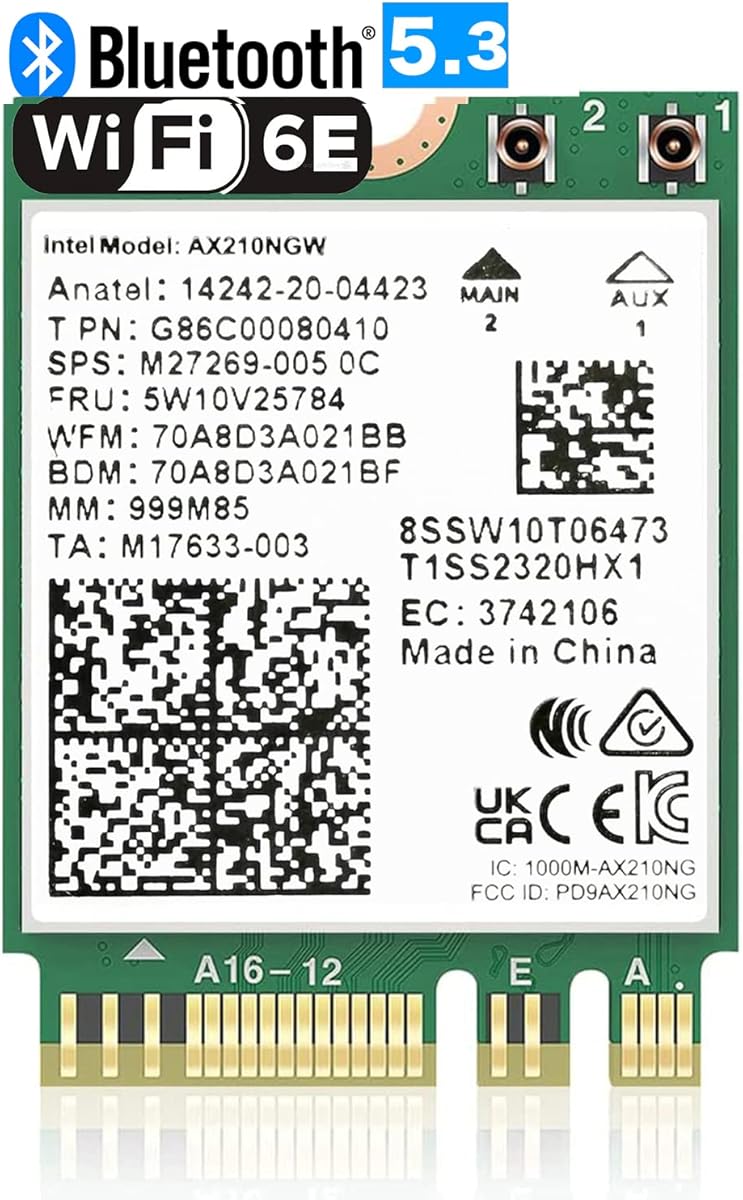
This AX210NGW DTK card offers a complete WiFi 6E upgrade solution at a budget-friendly price. With a 4.5 rating, it is a reliable choice for users wanting to unlock the 6GHz band without breaking the bank.
We may earn a commission when you buy through this link, at no additional cost to you.
Powered by the Intel AX210 chipset, it delivers tri-band speeds up to 574Mbps on 2.4GHz and 2400Mbps on both 5GHz and 6GHz bands. The included 5dBi high gain antennas ensure strong signal reception even in larger spaces.
While it comes with antennas, you may need to install them carefully inside your case. The low-profile brackets make it versatile for both standard and compact desktops. Driver installation is straightforward via the Intel website.
Ideal for gamers and streamers needing low latency, this card handles VR and 8K video efficiently. Its TWT technology also helps extend battery life on compatible laptops. Overall, it is a top value pick for modern connectivity.
The 6GHz band offers interference-free connections essential for competitive gaming and large file transfers.
Upgraded Bluetooth ensures faster pairing and lower latency for wireless headphones and peripherals.
We may earn a commission when you buy through this link, at no additional cost to you.
This AX210 module provides excellent performance for laptops seeking tri-band connectivity. With a 4.6 rating, it stands out for its robust speed capabilities and seamless integration with modern Windows systems.
We may earn a commission when you buy through this link, at no additional cost to you.
It supports up to 5400Mbps across 2.4GHz, 5GHz, and 6GHz bands, ensuring smooth streaming and gaming. The MU-MIMO and OFDMA technologies enhance network efficiency when multiple devices are connected simultaneously.
Users should note it requires a 64-bit Windows OS and does not include antennas. The Bluetooth 5.3 upgrade offers better range and stability compared to older versions. Installation is simple for most M.2 2230 slots.
Perfect for power users needing consistent high-speed internet, this card handles 8K video and large backups well. Its TWT feature also helps preserve battery life on portable devices. A solid choice for laptop upgrades.
5400Mbps aggregate speeds ensure you can fully utilize modern gigabit fiber internet connections.
OFDMA and MU-MIMO prevent congestion when multiple smart home devices are active.
We may earn a commission when you buy through this link, at no additional cost to you.
The Intel AX210 Tri-Band card is a top-rated upgrade for notebooks needing WiFi 6E capabilities. Its 4.8 rating reflects exceptional reliability and performance for everyday and demanding tasks alike.
We may earn a commission when you buy through this link, at no additional cost to you.
Featuring the official Intel AX210 chipset, it ensures maximum compatibility with WiFi 6 routers and drivers. The 5GHz and 6GHz bands provide clean, fast connections ideal for video calls and cloud gaming.
While it lacks included antennas or brackets, the module itself is easy to install in any standard M.2 2230 slot. Its low power consumption makes it suitable for thin and light laptops requiring long battery life.
Ideal for professionals and students alike, this card balances speed, stability, and cost perfectly. It is a safe investment for anyone wanting official Intel support without paying premium brand markups. Highly recommended.
Direct Intel chipset ensures maximum compatibility with system drivers and firmware updates.
Optimized power usage extends battery life on portable notebooks during travel.
We may earn a commission when you buy through this link, at no additional cost to you.
This WiFi 7 card brings cutting-edge BE200 technology to supported laptops. With a 4.6 rating, it is ideal for users with new Intel systems wanting to maximize wireless potential immediately.
We may earn a commission when you buy through this link, at no additional cost to you.
It delivers up to 5800Mbps tri-band speeds and includes the latest Bluetooth 5.4 for enhanced peripheral connection. The card reduces power consumption while improving service life compared to older standards.
Compatibility is strictly limited to Intel 12th Gen+ CPUs, so check your system before buying. Linux support is a bonus for developers needing flexible OS environments. Drivers are available via Intel website.
Best for enthusiasts with future-proof setups, this card handles 8K streaming and VR seamlessly. Its low latency is perfect for competitive gaming. A premium choice for those needing top-tier specs.
BE200 chipset enables massive throughput for next-level multimedia and file transfer tasks.
LE enhanced connection features improve battery life for connected peripherals.
We may earn a commission when you buy through this link, at no additional cost to you.
This EDUP WiFi 7 card offers unique support for both AMD and Intel systems. Its 4.4 rating reflects solid performance for users needing high-speed wireless on non-Intel hardware.
We may earn a commission when you buy through this link, at no additional cost to you.
Powered by the MT7925 chipset, it supports Multi-Link Operation (MLO) for smoother gaming with virtually no lag. The tri-band support ensures speeds up to 6.5Gbps for demanding streaming applications.
Be sure to disable built-in Bluetooth before use and download drivers from the official site. It supports Windows 11 and Linux Kernel 6.7+, making it versatile for different user needs. Installation is quick on M.2 slots.
Ideal for gamers with AMD rigs wanting WiFi 7, this card eliminates lag effectively. Its wide compatibility and MLO feature make it a standout choice for modern setups. Recommended for AMD users.
MLO dynamically selects optimal paths to prevent lag and disconnections during gameplay.
Works seamlessly on both AMD and Intel platforms unlike many other WiFi 7 cards.
We may earn a commission when you buy through this link, at no additional cost to you.
This EDUP card uses the trusted Intel AX210 chipset for reliable WiFi 6E performance. With a 4.8 rating, it is a favorite for users wanting stable connections without complex setup requirements.
We may earn a commission when you buy through this link, at no additional cost to you.
It supports 5400Mbps tri-band speeds and 160MHz bandwidth for fast downloads. The Bluetooth 5.3 integration ensures smoother connections for headsets and mice. WPA3 security adds extra protection to your network.
Lifetime technical support is a unique value that distinguishes it from other generic cards. However, it does not include antennas so check your device capabilities. It supports Windows 10/11 64-bit systems well.
Perfect for general users needing a steady upgrade, this card handles streaming and work smoothly. Its high rating and support make it a safe, hassle-free choice. Recommended for stability seekers.
Access to ongoing help ensures your wireless setup remains optimized over time.
WPA3 encryption protects your data against modern security threats.
We may earn a commission when you buy through this link, at no additional cost to you.
The Intel 9560NGW is a budget-friendly option for users needing basic dual-band connectivity. Its 4.4 rating confirms solid reliability for everyday tasks like browsing and video calls.
We may earn a commission when you buy through this link, at no additional cost to you.
It supports 1.73Gbps max speeds via 160MHz channels and includes Bluetooth 5.1 for stable peripheral connections. The MU-MIMO technology improves efficiency when multiple devices are online.
While it lacks WiFi 6 features, it is a great cost-effective choice for older systems or light use. Installation requires minimal effort on any standard M.2 2230 slot. Security includes WPA3 protocols.
Ideal for basic users or as a spare card, this model delivers consistent performance. It is a smart pick if you do not need 6GHz bands. Affordable and effective for general use.
Offers reliable dual-band speeds at a fraction of newer WiFi 6 card prices.
5GHz band ensures interference-free connections in congested wireless environments.
We may earn a commission when you buy through this link, at no additional cost to you.
This BrosTrend card delivers dual-band WiFi 6 speeds ideal for everyday laptops. With a 4.4 rating, it balances performance and cost well for users seeking an affordable upgrade.
We may earn a commission when you buy through this link, at no additional cost to you.
It offers 1800Mbps total speeds across 2.4GHz and 5GHz bands. The Bluetooth 5.2 upgrade provides faster transmission and broader range than older models. Linux kernel 6.5+ is also supported.
While it needs driver downloads, installation is straightforward. The M.2 2230 format ensures it fits most modern systems easily. MU-MIMO technology helps maintain speed in multi-device homes.
Best for general users wanting faster speeds without tri-band, this card is efficient. It handles streaming and browsing smoothly. A solid budget pick for those needing WiFi 6 basics.
Balanced speeds on 2.4GHz and 5GHz bands ensure consistent performance.
Four times broader range than Bluetooth 4.2 improves peripheral connection.
We may earn a commission when you buy through this link, at no additional cost to you.
The Intel Killer BE200 brings WiFi 7 performance with a focus on gaming. With a 4.6 rating, it is designed for users demanding ultra-low latency and high throughput.
We may earn a commission when you buy through this link, at no additional cost to you.
It delivers up to 5.8 Gbps speeds and integrates Killer networking tech to prioritize gaming traffic. Bluetooth 5.4 ensures seamless connection for controllers and headsets without lag.
This card requires Windows 11 and compatible Intel 12th Gen+ systems. While powerful, it may be overkill for casual users. The white/green design suits enthusiast builds perfectly.
Ideal for competitive gamers wanting top performance, this card minimizes lag effectively. It is future-ready for next-gen routers. Recommended for serious PC enthusiasts.
Intelligently prioritizes gaming apps to reduce lag and interruptions during play.
WiFi 7 support ensures your system is ready for upcoming wireless standards.
We may earn a commission when you buy through this link, at no additional cost to you.
The Intel AX411 is designed specifically for server and high-demand environments. With a perfect 5.0 rating, it ensures reliable and stable connectivity for critical workloads.
We may earn a commission when you buy through this link, at no additional cost to you.
It delivers up to 3 Gb/s speeds and uses Killer optimization to minimize lag. The tri-band access ensures reduced interference even in crowded network environments. WPA3 security is standard.
While built for servers, it fits standard M.2 2230 slots on modern PCs. Its low power design helps maintain system efficiency during heavy use. Drivers are supported on Windows 10/11.
Ideal for enterprise users needing maximum stability, this card offers exceptional performance. It is a safe investment for critical tasks. Highly recommended for reliable wireless needs.
Engineered for continuous operation without interruption or signal drops.
WPA3 and other protocols ensure your data remains safe from unauthorized access.
We may earn a commission when you buy through this link, at no additional cost to you.
Choosing the right M2 WiFi card depends on your system compatibility and performance needs. This guide outlines key factors to consider before making a purchase.
Ensure the card supports your current or future router standards. WiFi 6E offers tri-band including 6GHz, while WiFi 7 provides even higher speeds and lower latency for future-proofing.
Look for WiFi 6E or WiFi 7 standards if you want the latest connectivity options.
Most modern M2 cards include Bluetooth. Newer versions like 5.3 or 5.4 provide better range and lower latency for peripherals like mice and headsets.
Check the Bluetooth version to ensure smooth pairing with your devices.
Verify your laptop supports M.2 2230 slots with Key E or Key A/E. Some WiFi 7 cards only work with newer Intel CPUs and not AMD systems.
Confirm CPU generation and slot type before buying to avoid return issues.
Match card speeds with your internet plan. WiFi 6E cards deliver up to 5700Mbps, while WiFi 7 can reach over 6 Gbps for heavy usage like 8K streaming.
Choose higher speeds if you have gigabit internet or many connected devices.
Desktop users may need external antennas or low-profile brackets to mount the card securely. Laptops often have built-in antennas for easy installation without accessories.
Check if the kit includes necessary hardware for your specific setup type.
Ensure drivers are available for your OS. Most cards support Windows 10/11 64-bit and some support Linux kernel 6.5 or higher for broader compatibility.
Download latest drivers from manufacturer or Intel websites for best performance.
Modern cards support WPA3 security which offers better protection against hacking. Older models may only support WPA2 which is less secure for public networks.
Prioritize WPA3 support to keep your wireless connection secure.
Prices vary from budget-friendly WiFi 6 options to premium WiFi 7 models. Determine if extra speed or features justify the higher cost for your usage.
Set a budget to find the best balance between features and affordability.
Install the M2 card by opening your device and locating the M.2 slot. Align the key notch with the slot gently and secure with a screw or latch to prevent movement.
Install the latest drivers from the manufacturer or Intel website to ensure optimal performance. This step unlocks all features like WiFi 6E bands and Bluetooth connectivity.
Periodically update drivers and firmware to maintain security and stability. Keep antennas connected and away from metal interference to ensure strong signal strength.
Not all laptops support M2 WiFi cards. Check if your laptop has an M.2 2230 slot with Key E or Key A/E. Some devices have soldered WiFi that cannot be upgraded.
Yes, you must install drivers for the new card. Download the latest versions from Intel or the manufacturer website for best compatibility and performance.
WiFi 6E adds a 6GHz band reducing interference and providing cleaner, faster channels. This results in lower latency ideal for gaming and high-speed streaming.
Yes, WiFi 7 cards work with older routers but will operate at the router's speed. To unlock WiFi 7 speeds, you need a compatible WiFi 7 router.
Some WiFi 7 cards only support Intel 12th Gen CPUs due to firmware or driver limitations. Always check compatibility lists for AMD systems before purchasing.
Ensure antennas are correctly connected and positioned away from metal cases. Updating drivers and optimizing router settings also help boost signal strength.
Choosing the right M2 WiFi card depends on your specific needs and system capabilities. Top picks like the AX210 Tri-Band offer excellent value while WiFi 7 options provide future-proof speeds.
Focus on compatibility with your CPU and OS to avoid issues. Prioritize features like Bluetooth version and tri-band support if you need maximum performance.
Always verify current prices and availability since these change frequently. Checking user reviews and warranty details helps ensure a smooth upgrade experience.