
EBOOT Photoresistor Kit
4.6Editor score
Thirty pieces for large scale projects
Standard 5mm GM5539 resistors
Ideal for educational and DIY use
This guide compares the top light sensors for Arduino projects, evaluating accuracy, ease of use, and compatibility to help you choose the best module for your
Selecting the right light sensor for Arduino is crucial for successful automation projects. These modules help detect ambient light levels to control displays, lights, or alerts efficiently. Choosing the correct type ensures your project responds accurately to environmental changes without complex coding.
We evaluated ten top-rated light sensors based on accuracy, compatibility, and ease of integration. Our analysis covers various technologies including photoresistors, photodiodes, and digital modules. This list helps you find the perfect match for your specific microcontroller requirements and project goals.
Each pick highlights key features, pros, and cons to simplify your decision-making process. You will find options ranging from basic analog sensors to advanced digital modules. Remember that product availability and prices can change, so verify details before purchasing for your next build.
4.6Editor score
5.0Editor score
4.7Editor score
This comparison table provides a quick overview of the top ten light sensors available for Arduino and compatible microcontrollers. Reviewing these specs side by side helps you identify which module best fits your voltage requirements and output needs.


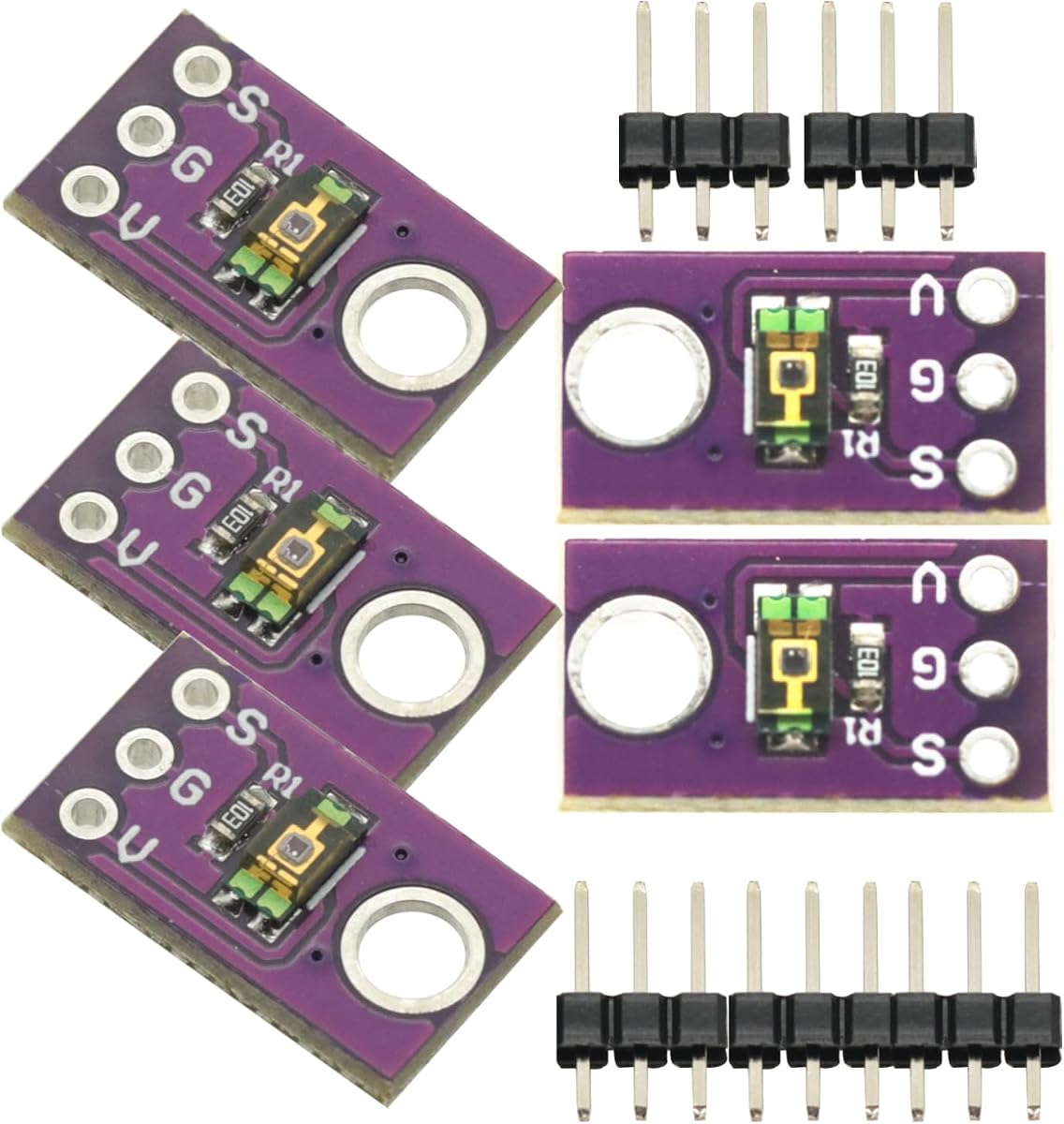
The TEMT6000 Light Sensor stands out as a top choice for professionals needing reliable ambient light detection. With a perfect rating from users, this module is designed for applications like display backlight dimming and industrial lighting control. It offers high precision and consistency in varying light environments.
We may earn a commission when you buy through this link, at no additional cost to you.
This sensor uses a specialized design that mimics the human eye's response to light, making it ideal for consumer electronics projects. Its compact size allows for easy integration into tight spaces like mobile device casings or custom enclosures. The output is stable and reliable for automated systems.
While it performs exceptionally well, it may require specific libraries or drivers to communicate effectively with microcontrollers compared to basic resistors. This added complexity is a minor trade-off for the superior accuracy it provides. Most users find the setup documentation sufficient for quick implementation.
Engineers and hobbyists working on smart displays or automated lighting systems should prioritize this module. It delivers the precision needed for polished products. Buying this sensor ensures your project meets professional standards for light sensitivity and control.
The sensor mimics human eye response for more natural light control in displays and indicators.
Designed for robust industrial lighting control scenarios requiring consistent performance over time.
We may earn a commission when you buy through this link, at no additional cost to you.
The EBOOT Photoresistor Kit offers an incredible value for anyone needing multiple sensors for various projects. With thirty 5mm GM5539 resistors, it is perfect for classrooms, workshops, or large scale DIY installations. The price per unit is unmatched compared to pre-built modules.
We may earn a commission when you buy through this link, at no additional cost to you.
These photoresistors are standard components that are easy to find and use in basic circuits. They respond well to light changes and can be connected directly to analog pins on an Arduino. Their voltage tolerance allows for flexibility in power supply choices without damage.
The main downside is that they are individual components without pre-installed resistors or breakout boards. You will need to solder them onto a prototype board or breadboard carefully. Also, resistance values may vary slightly between pieces which is normal for this component type.
Students and beginners should choose this kit to learn about light sensing fundamentals. It provides ample parts for experimentation without financial risk. This is the ideal starting point for those new to electronics and light detection projects.
Provides enough parts for multiple students to build separate circuits simultaneously.
Allows custom circuit design without being limited by module form factors.
We may earn a commission when you buy through this link, at no additional cost to you.
The GY-302 BH1750 Module is a premium choice for users requiring precise digital light readings. It uses a high-quality BH1750FVI chip that provides accurate lux measurements directly. This digital approach simplifies code and ensures consistent results across different lighting conditions.
We may earn a commission when you buy through this link, at no additional cost to you.
Its compact size makes it ideal for projects with limited space on the main board. The module operates on a wide voltage range allowing it to work with both 3.3V and 5V microcontrollers without extra regulators. The I2C interface uses only two data pins saving GPIO resources.
While it offers superior performance, users must familiarize themselves with the I2C protocol and specific libraries. This might be slightly daunting for absolute beginners compared to reading an analog voltage. However, the payoff is accurate data without calibration hassles.
Advanced makers and professional developers should select this module for data intensive applications. It is excellent for weather stations or smart home hubs where precise light data matters. This purchase ensures your project handles light sensing with professional precision.
Delivers ready to use lux values eliminating the need for manual math calculations.
Small footprint preserves valuable board space for other sensors and components.
We may earn a commission when you buy through this link, at no additional cost to you.
The WWZMDiB LDR Sensor module combines a basic light sensor with an LM393 comparator for versatile output options. It provides both digital and analog signals allowing flexibility in how you process light data. This hybrid design is useful for projects needing threshold triggers and raw values.
We may earn a commission when you buy through this link, at no additional cost to you.
The included potentiometer lets you adjust the detection threshold easily without changing code. This hardware flexibility is great for rapid prototyping or tuning sensitivity to specific environments. The comparator ensures a clean digital signal that is reliable for triggering alarms or relays.
One limitation is that the module draws slightly more power than a bare resistor due to the active circuit. The board size is also larger which might be an issue in tight enclosures. Despite this, it remains a strong choice for general purpose light switching.
Project builders needing simple automation should opt for this module for its convenience. It bridges the gap between raw components and complex digital sensors. This is a reliable workhorse for basic light on and off control systems.
Hardware potentiometer allows quick adjustment of trigger points without recompiling code.
Supports both simple switching and detailed reading for varied project needs.
We may earn a commission when you buy through this link, at no additional cost to you.
This Photodiode Sensor Module offers distinct advantages for applications requiring specific directional light detection. Unlike omnidirectional resistors, this module focuses on light directly in front of it. This directional focus is essential for robotics or line following applications.
We may earn a commission when you buy through this link, at no additional cost to you.
The module features a small potentiometer to adjust sensitivity allowing you to tune it for your specific environment. It provides both digital and analog outputs giving you options for coding logic. The compact PCB includes bolt holes for secure mounting in active projects.
While it is excellent for targeted detection, it has a smaller viewing angle which might miss light from sides. You may need to calibrate the sensitivity carefully to avoid false triggers in ambient light. The soldering points require some assembly before use.
Robotics enthusiasts should choose this module for light seeking or tracking behaviors. It provides the necessary signal stability for reliable movement. This purchase ensures your robot reacts accurately to specific light sources rather than ambient noise.
Provides targeted light detection ideal for tracking and aiming tasks.
Built in bolt holes facilitate stable mechanical installation on robots.
We may earn a commission when you buy through this link, at no additional cost to you.
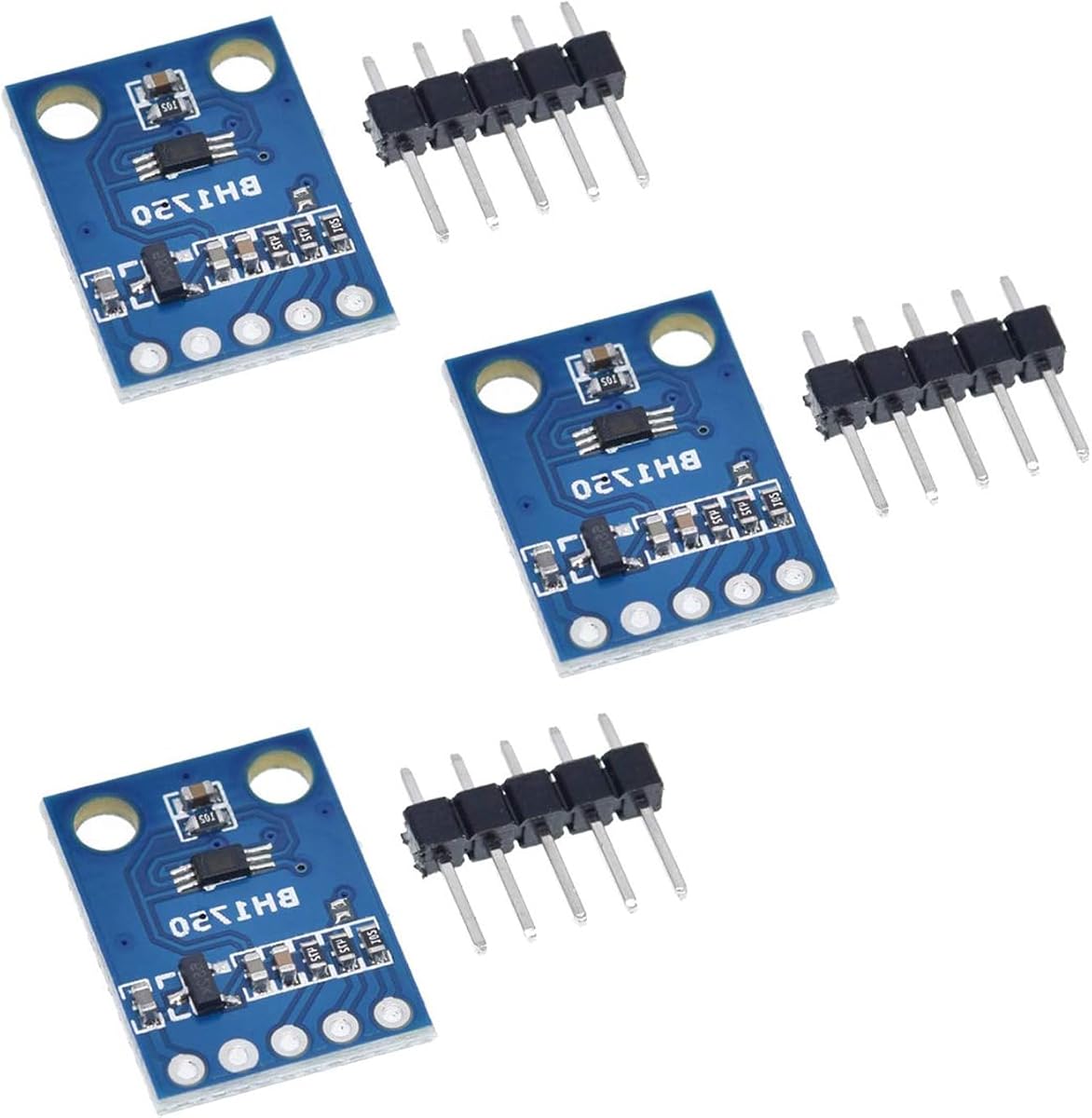
HiLetgo is a trusted brand in the maker community for reliable sensor modules. This GY-302 pack includes three digital light sensors with the original BH1750FVI chip. It offers consistent quality and performance for those needing multiple sensors for a project.
We may earn a commission when you buy through this link, at no additional cost to you.
The dimensions are compact allowing easy integration into small projects or multi sensor arrays. It supports a wide voltage range making it compatible with most common microcontrollers. The digital I2C interface simplifies wiring compared to analog solutions.
While it performs similarly to other BH1750 modules, the brand reputation ensures better soldering and component selection. However, the price might be slightly higher than generic alternatives. For many users, the peace of mind is worth the small difference.
Makers prioritizing brand reliability should pick this set for their builds. It is perfect for projects needing several digital sensors like environmental monitoring stations. This ensures your setup remains stable and consistent over time.
HiLetgo reputation for quality control reduces risk of component failure.
Three modules allow distribution across different zones for better coverage.
We may earn a commission when you buy through this link, at no additional cost to you.
Teyleten Robot offers a robust LDR module designed specifically for automation tasks. Its digital output is strong enough to drive relay modules directly without extra transistors. This feature simplifies wiring for high power lighting control applications.
We may earn a commission when you buy through this link, at no additional cost to you.
The module detects changes in ambient light reliably and toggles its digital output accordingly. You can control connected hardware like lights or fans simply by detecting light levels. It is highly responsive making it suitable for real time switching needs.
Adjusting the threshold is straightforward but requires careful tuning to avoid rapid toggling in fluctuating light. The analog output exists but the digital signal is the main strength. The compact design fits easily on standard breadboards or shield boards.
Those looking to automate lights or fans should choose this module for its robustness. It handles practical tasks without complex circuitry. This is a solid choice for home automation experiments and prototypes.
Strong digital output allows direct connection to relay boards for loads.
Optimized for detecting general environmental light changes efficiently.
We may earn a commission when you buy through this link, at no additional cost to you.
This Digital Light Sensor is explicitly marketed for a wide range of popular platforms including Arduino and ESP32. It simplifies setup with built-in adjustments and clear support for different voltage levels. The included tutorials make it accessible even for less experienced users.
We may earn a commission when you buy through this link, at no additional cost to you.
The module features both digital and analog outputs giving you flexibility in how you use it. You can set a trigger point via the potentiometer or read raw values. This versatility ensures it works for simple on-off systems and detailed monitoring.
While it is versatile, the pinout might vary slightly between batches so checking the schematic is recommended. The analog output is stable but may need filtering for very precise measurements. Overall, it is a well rounded module for general use.
Platform agnostic users should select this sensor to ensure cross compatibility. It is great for mixed environments where you switch between different controllers. This allows you to reuse the same parts across multiple builds.
Designed to work seamlessly across different popular microcontroller platforms.
Online tutorials reduce learning curve for new users significantly.
We may earn a commission when you buy through this link, at no additional cost to you.
This pack offers a massive quantity of GL5516 photoresistors making it perfect for large scale manufacturing or education. The 50 count ensures you never run out during experimentation. Each resistor provides standard resistance values typical for high quality GL5516 components.
We may earn a commission when you buy through this link, at no additional cost to you.
The resistance values are consistent with industry standards for bright and dark conditions. You get high resistance when dark and low resistance in light allowing for clear signal differentiation. This consistency is key for reliable project performance.
Because these are raw components you must wire them with external resistors on a breadboard. They do not come with mounting hardware or pre-wired leads which requires some skill to install. However, the price per unit is very low.
Large workshops and schools should stock this pack for regular student use. It ensures ample supply for every student to build their own sensors. This choice supports scalable education and prototyping environments.
High count reduces the need for reordering during long workshops.
Reliable resistance characteristics ensure predictable circuit behavior.
We may earn a commission when you buy through this link, at no additional cost to you.
uxcell provides a reliable general purpose light detection module suitable for many electronics applications. It uses a stable LM393 comparator to provide clean digital signals for Arduino or ESP. This makes it a solid choice for smart car and automation projects.
We may earn a commission when you buy through this link, at no additional cost to you.
The module supports both 3.3V and 5V logic levels giving you flexibility in your power system. You can connect to analog or digital pins based on your project needs. This versatility ensures it works in most modern microcontroller setups.
The plastic housing is basic but adequate for indoor or protected environments. It lacks mounting hardware so you may need adhesive or zip ties. Despite the simple build, the electrical performance remains consistent and reliable.
Automotive hobbyists should consider this for light detection needs in cars. It offers the stability required for harsh environments when protected properly. This purchase provides a solid solution for practical detection tasks.
Uses LM393 for stable threshold detection and clean signal output.
Compatible with both low and standard voltage logic systems.
We may earn a commission when you buy through this link, at no additional cost to you.
Selecting the right sensor depends on your specific project requirements and budget. This section covers the key factors to consider.
Analog sensors provide a raw voltage that changes with light intensity giving you detailed data. Digital sensors output a simple high or low signal based on a set threshold which is easier to code.
Choose digital for simple on off tasks and analog for measuring specific brightness levels.
Ensure your sensor works with your microcontroller voltage. Many modules support both 3.3V and 5V but you should check specs carefully.
Match the sensor voltage to your board to avoid damaging components.
Different sensors detect different ranges of light intensity. Some are better for low light while others work well in bright sunlight.
Check the lux range to ensure it fits your environment.
Modules come in various sizes from small chips to larger boards. Consider the space available on your main board or enclosure.
Select a compact module if space is limited in your project.
Most sensors use GPIO pins but some use I2C or SPI protocols. I2C saves pins but requires specific libraries.
Choose I2C for complex setups and GPIO for simplicity.
Bulk packs are cheaper per unit but require more assembly. Modules cost more but save time on wiring.
Buy bulk for classrooms and modules for professional prototypes.
Some sensors need software calibration to give accurate values. Others come with pre set thresholds or pots.
Look for adjustable pots to reduce calibration effort.
Projects like displays need specific human eye mimicry sensors. Automation tasks need robust switching capabilities.
Match the sensor type to your intended use case.
Start by connecting the VCC pin to your power supply. GND should connect to the ground pin on your board. If using digital output, connect the DO pin to a digital input.
For analog sensors connect AO to an analog input pin. Adjust the potentiometer to set your sensitivity level. Test with light and dark conditions to verify readings.
Keep the sensor clean and away from direct water exposure. Ensure the sensor face is not blocked by housing materials. Regularly check connections for loose wires.
The TEMT6000 is excellent for display dimming because it mimics human eye response. This ensures the display brightness feels natural to users.
Basic photoresistors do not need a library but digital modules like BH1750 do. You can find open source libraries for most popular models.
Connect the analog output to an analog pin and use the analogRead() function. Map the values to light intensity percentages or lux.
Yes most modules work with Raspberry Pi provided they match the voltage. You may need to install specific GPIO libraries for digital modules.
LDR sensors are simple resistors that change with light while photodiodes are semiconductor devices. Photodiodes respond faster and are better for precise detection.
The threshold might be set too low or the sensor is damaged. Adjust the potentiometer or check your circuit for shorts.
We reviewed the top ten options from simple resistors to advanced digital modules. The TEMT6000 leads for precision while the EBOOT kit offers best value for students.
Prioritize compatibility with your voltage and interface needs before making a decision. Choose a module that supports your specific application type.
Prices and availability change quickly so check current listings before buying. Use the links in this guide to find the best deal.