
SUNLU Filament Dryer Box S1 Plus
4.3Editor score
Fan assisted fast drying
LCD display with humidity read
Compatible with most materials
This guide compares the top filament dryer for 3D printing models to help you eliminate moisture issues and achieve smoother, higher quality prints every time.
Choosing the right filament dryer for 3D printing is essential for anyone serious about print quality. Moisture in filament leads to bubbles, stringing, and weak layers that ruin your projects before they even start.
We evaluated ten top-rated models based on heating speed, capacity, sealing quality, and ease of use. Each product was analyzed against real-world drying needs for hobbyists and professionals alike.
Each pick highlights key strengths and ideal use cases so you can find the perfect match for your workflow. Please note that prices and availability may change over time on Amazon.
4.3Editor score

4.6Editor score

4.5Editor score
The following table provides a side-by-side comparison of the ten leading filament dryers to help you quickly identify capacity, power, and key features for your needs.



The Creality Space Pi X4 stands out as a top performer in the filament drying category with a robust 4.6 rating. Its dual independent chambers offer unique flexibility for high volume users who need to manage multiple materials simultaneously.
We may earn a commission when you buy through this link, at no additional cost to you.
Key strengths include its ability to reach 85C for tough engineering filaments like ABS and PC. The dual 200W heaters ensure moisture is removed 30% faster than single chamber models, which significantly reduces wait times between prepping and printing.
The main trade-off is the cost and size compared to simpler models. However, for users printing with composites or needing constant availability of dry filament, the efficiency gains in quality and reliability justify the higher investment immediately.
This model is ideal for professionals or advanced makers who print daily and need reliable humidity control. We recommend it for anyone ready to upgrade their workflow to handle diverse material libraries with consistent results.
Separate heating zones allow you to run different temperature profiles at once. This feature maximizes throughput by keeping multiple spools ready without cross contamination or thermal lag.
The 85C limit unlocks drying capabilities for materials like Nylon and Polycarbonate. Most budget dryers cap at 60C or lower, making this unit essential for high performance engineering plastics.
We may earn a commission when you buy through this link, at no additional cost to you.
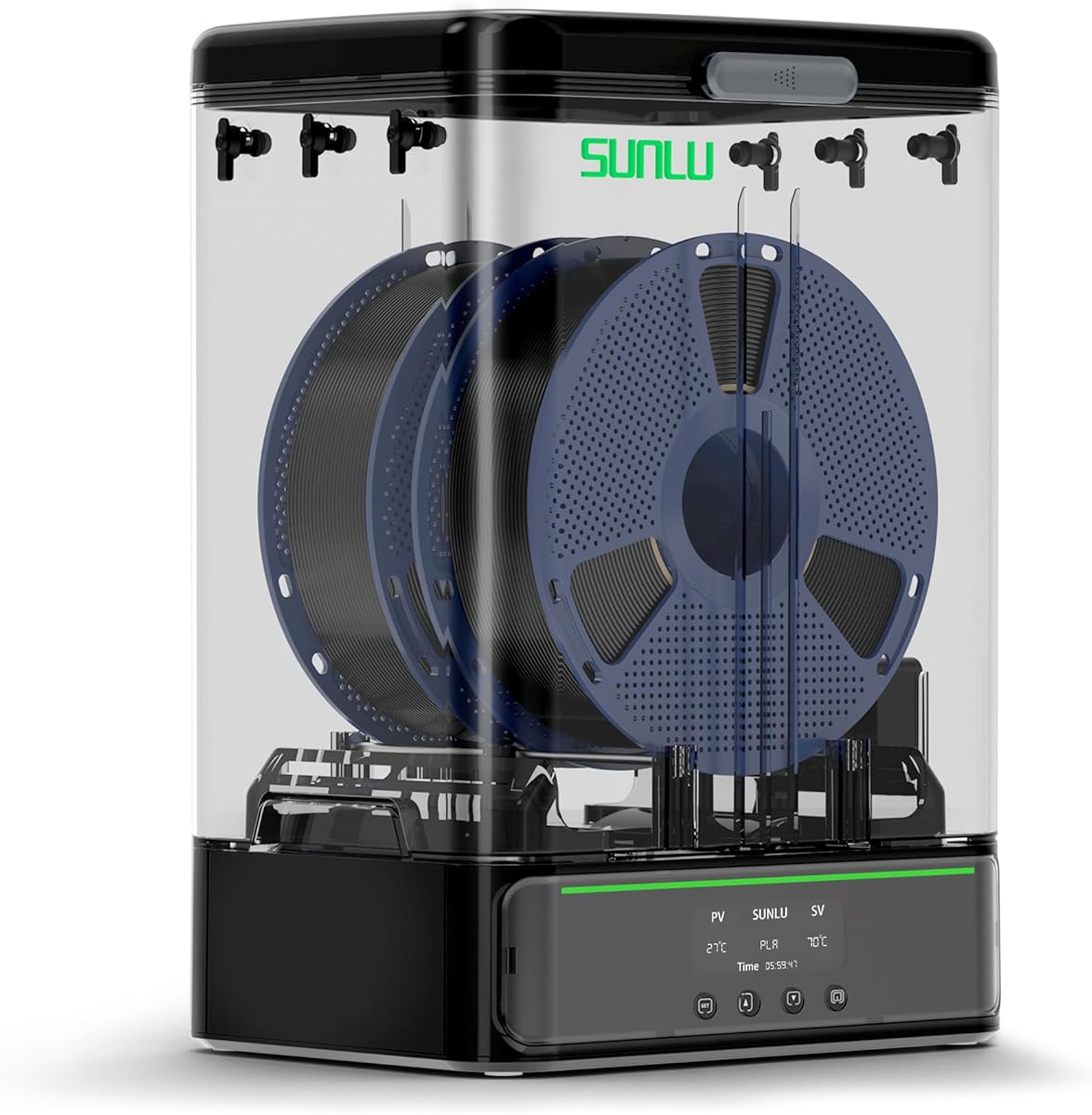
The SUNLU S1 Plus is a popular choice for those entering filament drying with a 4.3 rating. It focuses on value while providing essential features like fan assisted drying and humidity monitoring.
We may earn a commission when you buy through this link, at no additional cost to you.
Its main strength is the built-in fan which improves air circulation. This helps move moisture out faster than static heat alone. The LCD screen clearly shows temperature and time so you can track progress easily.
The unit caps at 55C which limits use to standard filaments. You cannot dry Nylon or ABS effectively with it. Still, for PLA and PETG users on a budget it offers solid performance without complexity.
This dryer is perfect for casual makers or students learning 3D printing. We recommend it for anyone needing a reliable starter unit that handles daily PLA jobs without breaking the bank or taking up too much desk space.
The internal fan moves hot air across spools continuously. This circulation prevents stagnant pockets and ensures moisture evaporates evenly from the filament core to the outside.
Dedicated buttons allow quick adjustments without complex menus. This simplicity reduces setup time and makes the unit approachable for users unfamiliar with drying technologies.
We may earn a commission when you buy through this link, at no additional cost to you.
The SUNLU S4 is a powerhouse for high volume drying with a 4.5 rating. It supports up to four spools simultaneously and features a powerful heater designed for efficiency.
We may earn a commission when you buy through this link, at no additional cost to you.
Key strengths include its 350W PTC heater and three fans. This setup ensures even heat distribution so every spool dries uniformly. The eight exit holes also allow feeding into multiple printers without removing the unit.
Its size and weight make it less portable than single spool units. You need to dedicate permanent space for it. However, for a dedicated print room this stability and capacity are worth the extra footprint.
This dryer is best for studios or labs needing bulk prep. We recommend it for users who manage multiple printers and want to minimize downtime by drying large batches in a single run.
The 350W heater warms the chamber quickly. This allows you to reach target temperatures faster. reducing energy consumption during the heating phase.
Eight exit holes enable routing filament to different machines. This flexibility supports complex workflows where you need to switch materials often or run multiple jobs at once.
We may earn a commission when you buy through this link, at no additional cost to you.
The Creality Space PI Plus offers modern features with a 4.4 rating. It focuses on ease of use through presets and a large interface for monitoring conditions.
We may earn a commission when you buy through this link, at no additional cost to you.
Key strengths include one touch presets for various filaments like PLA and ASA. The large touch screen supports switching between Celsius and Fahrenheit easily. The 360 circulation ensures no cold spots exist.
The 110W heater is less powerful than multi spool units. It is suitable for smaller batches only. Still, the ease of use and monitoring capabilities make it attractive for home setups.
This dryer suits makers who value convenience over volume. We recommend it for users who want a smart interface and reliable drying for occasional or moderate printing loads.
Pre configured settings remove guesswork from temperature selection. This ensures optimal drying for specific materials without needing to look up settings manually.
The humidity monitor helps verify dryness before printing. This feature prevents premature removal from the unit and ensures filament is ready for use.
We may earn a commission when you buy through this link, at no additional cost to you.
The Comgrow SH01 is a compact solution with a 4.4 rating. It emphasizes simple drying and storage in a small footprint for tight workspaces.
We may earn a commission when you buy through this link, at no additional cost to you.
Key strengths include the silicone cable sheath outlet which prevents tangling. The LCD allows setting temperature and duration easily. It fits standard 1kg spools without taking up excessive space.
The temperature is capped at 50C which limits it to basic materials. You cannot dry engineering plastics. For PLA and PETG users needing a space saver this is a good functional choice.
This dryer is ideal for desktop setups with limited room. We recommend it for users who want a tidy solution to prevent moisture issues without investing in larger systems.
The unit is designed to sit next to a printer. This placement allows direct feeding during printing. It saves shelf space compared to larger cabinet style units.
The silicone sheath guides the filament smoothly. This reduces stress on the spool and prevents friction at the exit point.
We may earn a commission when you buy through this link, at no additional cost to you.
The Polymaker Polydryer stands out with a 4.3 rating by integrating storage and drying into one connected system. It focuses on maintaining dry conditions continuously.
We may earn a commission when you buy through this link, at no additional cost to you.
Key strengths include the sealed design and hygrometer for tracking status. The desiccant support provides ongoing protection against moisture. This helps keep filament dry between print sessions.
It may have fewer controls than dedicated dryers. This trade-off favors users who want set and forget convenience. It is excellent for maintaining condition over long periods.
This unit suits users prioritizing storage integrity. We recommend it for those who want a complete solution for managing moisture sensitive materials like Nylon with minimal effort.
The unit seals tightly after drying. This locks in the dry environment and prevents the filament from re absorbing moisture from the air.
Built in monitoring tracks humidity levels inside. This feature reduces guesswork and ensures you know when filament is safe to use.
We may earn a commission when you buy through this link, at no additional cost to you.
The Creality Space PI SE offers efficiency with a 4.3 rating. It focuses on speed and safety for everyday drying tasks.
We may earn a commission when you buy through this link, at no additional cost to you.
Key strengths include the 15 minute heat up and insulation. The display shows humidity to help track progress. The knob control makes adjustments straightforward.
It lacks the capacity of larger units. This is fine for occasional users. The safety features like insulation prevent burns during operation.
This dryer is best for general maintenance. We recommend it for users who need a reliable and safe unit for occasional spool prep without advanced features.
The PTC heater reaches temperature quickly. This reduces energy use and prepares filament faster for urgent jobs.
Thermal cotton keeps the outer walls cool. This protects users from accidental burns when touching the unit during operation.
We may earn a commission when you buy through this link, at no additional cost to you.
The SUNLU S4 V2 is a robust option with a 4.6 rating. It matches the capacity of the S4 and adds features like a longer timer.
We may earn a commission when you buy through this link, at no additional cost to you.
Key strengths include the three fans and four spool capacity. The 70C cap allows for some advanced materials. The long timer supports overnight cycles.
The size requires dedicated space. This is standard for high capacity units. It provides reliability for bulk drying needs.
This dryer fits print farms and studios. We recommend it for users who need to keep a stock of dry filament ready for continuous printing.
The 99 hour timer allows unattended drying. This feature lets you run long cycles for difficult materials without constant monitoring.
Included tubes ensure smooth feeding. This accessory helps prevent friction and jams during printing operations.
We may earn a commission when you buy through this link, at no additional cost to you.
The SUNLU SP2 targets larger spools with a 4.4 rating. It offers high power and a detachable design for storage convenience.
We may earn a commission when you buy through this link, at no additional cost to you.
Key strengths include support for 3kg spools and fast heating. The LCD screen displays humidity clearly. The base acts as a storage box too.
The 250W heater is efficient for the volume. It balances performance and size well. This is great for heavy duty filament needs.
This dryer is ideal for commercial or semi pro users. We recommend it for those needing to dry large rolls without frequent refills.
Rollers inside accommodate larger spool sizes. This feature supports continuous printing by reducing the frequency of spool changes.
The base separates for easy storage transport. This design adds flexibility when managing inventory or moving the unit.
We may earn a commission when you buy through this link, at no additional cost to you.
The SUNLU S2 is a reliable unit with a 4.3 rating. It focuses on basic drying needs with a large capacity and translucent lid.
We may earn a commission when you buy through this link, at no additional cost to you.
Key strengths include the spindle which spins filament. Even drying and the large size that fits multiple spools. The touch screen is simple to use.
It lacks advanced monitoring features. This is a minor trade-off for users who prioritize drying over monitoring. It is a solid workhorse for home labs.
This dryer suits budget conscious makers. We recommend it for users who want a proven dryer for standard materials without complex electronics.
The spindle rotates spools during heating. This motion ensures the heat reaches all sides and dries the filament evenly.
The lid lets you check spools without opening. This prevents moisture ingress while allowing visual monitoring of the drying process.
We may earn a commission when you buy through this link, at no additional cost to you.
Selecting the right dryer involves evaluating capacity, heating speed, and material compatibility to match your specific workflow needs.
Capacity determines how many spools you can dry at once. Look for units that hold at least two standard 1kg spools to avoid frequent switching. Larger models can hold up to four spools for bulk efficiency.
Choose capacity based on your print volume. Small units save space while larger ones support high throughput.
Heating temperature limits the types of filament you can dry. Most PLA units cap at 50C to 60C. Advanced models reach 70C or 85C for Nylon and ABS.
Check the max temp to match your material list. A higher range offers more flexibility for engineering plastics.
Air circulation prevents cold spots during drying. Look for PTC heaters and fans that ensure even heat. Good airflow reduces drying time and improves consistency.
Prioritize units with active fans over static heating. This ensures uniform drying for reliable print quality.
Sealing prevents moisture reabsorption after drying. Models with tight lids and silicone gaskets lock in dry conditions. Some units include desiccant slots for extra protection.
Choose sealed designs to maintain dryness between sessions. This extends the shelf life of your filament stock.
Control interfaces vary from knobs to touch screens. Humidity monitors help track dryness without guesswork. Timers allow scheduling cycles while you sleep.
Opt for interfaces that match your comfort level. Monitoring features add value by ensuring filament readiness.
Compatibility ensures the unit fits your standard spools. Check for support for 1.75mm and 2.85mm diameters. Ensure the design supports your brand of spools.
Verify physical fit before buying. Proper compatibility prevents issues with feeding or storage.
Build quality impacts durability and safety. Look for insulation to prevent scalding. Stable materials reduce noise during operation.
Prioritize safety features like auto shut off. This protects your equipment and home environment from overheating.
Set the temperature based on your filament type. Start with manufacturer recommended settings to avoid damage. Place spools inside and close the lid tightly.
Run the drying cycle for the required duration. Most PLA jobs take 4 to 12 hours. Check humidity levels before feeding into your printer.
Clean the interior periodically with a dry cloth. Ensure outlets remain clear for smooth feeding. Store units in a dry place when not in use.
Generally drying PLA takes 4 to 12 hours depending on humidity. ABS or Nylon may require longer cycles up to 24 hours. Always check internal humidity levels before printing to ensure it is ready.
Yes most dryers allow feeding while drying. This keeps the filament dry during the entire print run. Ensure the outlet is sealed properly to prevent moisture ingress while the printer is active.
Yes keeping filament dry extends its shelf life significantly. Moisture causes brittle filaments that degrade over time. Proper drying and storage prevent this degradation for future use.
Wet filament causes stringing bubbling and layer adhesion issues. The moisture turns to steam during extrusion. This ruins surface quality and weakens the structural integrity of your prints.
Most modern dryers have safety shut off features. Ensure you set timers or choose units with auto off. Still avoid leaving it running indefinitely to conserve energy and prevent accidents.
Yes many units support two to four spools simultaneously. This saves time and prepares bulk batches at once. Check the internal dimensions to confirm they fit your spools.
The Creality Space Pi X4 SUNLU S1 Plus and SUNLU S4 top our list for performance and value. Each brings unique strengths depending on your capacity and budget needs.
Prioritize models with active airflow and sufficient temperature ranges. Good sealing and ease of use are equally important for consistent results in your daily workflow.
Always check current prices and reviews on Amazon. Models may see changes in features over time so verifying details before purchase ensures you get the best value available.