This guide compares the top 5V to 3V voltage regulator modules for stable power conversion in electronics, embedded systems, and portable device projects today.
As an Amazon Associate we earn from qualifying purchases. We may earn a commission when you buy through links on this page, at no additional cost to you. Read our affiliate disclosure.As an Amazon Associate we earn from qualifying purchases.Purchases through our links may earn us a commission, at no extra cost to you. Read our affiliate disclosure.
Choosing the right voltage regulator is critical for protecting sensitive electronics from power fluctuations. A good 5V to 3V regulator ensures stable output for microcontrollers and sensors.
We evaluated ten top-rated modules based on efficiency, output stability, and user feedback. Our analysis covers buck converters and linear regulators suitable for various power needs.
Each pick highlights key specs and real-world performance. Note that availability and pricing change frequently, so verify details before purchasing your components for new builds.
Top 3 Picks for Best 5V to 3V Voltage Regulator
Best Budget
Dorhea 7 Pack 3.3V DC-DC Buck Converter 3 Pins AMS1117-3.3V DC 4.75V-12V to 3.3V Voltage Regulator Step Down Power Supply 800mA Buck Module
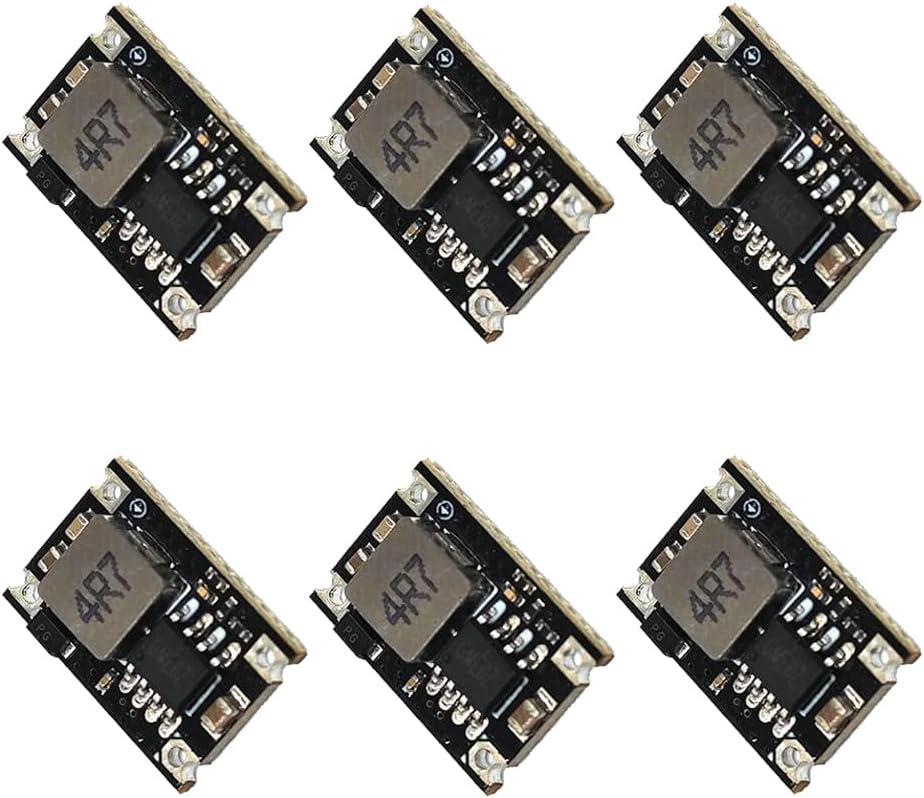
3.3V Regulator 6pcs Mini Reducer DC 4.75-23V 5V 12V Buck to 3.3V Buck Converter Board 1.8A Output Mini360 Small Size Aircraft Model MP1584EN Power Module(3.3 Volts)
Top 10 Best 5V to 3V Voltage Regulator in 2026 Compared
The following table provides a side-by-side comparison of all ten selected products. Review the input voltage ranges, output current capabilities, and package quantities to find the best match for your specific circuit design requirements.
This module leads our list as the most versatile choice for general electronics projects. It handles a broad input range while maintaining a stable 3.3V output essential for modern microcontrollers.
Pros
Wide input voltage compatibility
High current output capacity
Stable low ripple output
Compact and space-saving size
Includes five modules per pack
Cons
Requires diode for motors
Soldering needed for wiring
We may earn a commission when you buy through this link, at no additional cost to you.
Its ability to deliver up to 1.8A makes it suitable for powering more demanding components like Raspberry Pi or ESP32 boards. The low ripple ensures sensitive sensors receive clean power without noise interference.
While the output is stable, users must add protection diodes when powering inductive loads like motors. This prevents voltage spikes from damaging the module or connected devices during operation.
This product is ideal for hobbyists needing a reliable solution for multiple builds. Its balance of performance and value solidifies its position as the top recommendation for most users today.
Wide Input Compatibility
The module accepts inputs from 4.5V to 24V, allowing use with standard 5V, 9V, 12V, and 24V power supplies without additional adapters.
Clean Power Output
Operating at a switching frequency of 1MHz to 1.5MHz, it keeps ripple under 30mV, ensuring stable power for delicate circuit components.
This pack offers a straightforward solution for simple circuits requiring stable 3.3V power. The linear design is robust for applications where efficiency is less critical than reliability.
Pros
Simple three-pin connection
Suitable for low power projects
Integrated overheat protection
Compatible with many MCUs
Cons
Limited to 800mA current
Higher heat dissipation
We may earn a commission when you buy through this link, at no additional cost to you.
It supports a wide range of microcontrollers including Arduino and STM32. The built-in overheat shutdown circuit provides essential safety against excessive temperature during operation.
Users should note the 800mA limit is lower than switching alternatives. Also, linear regulators dissipate excess voltage as heat, so ventilation or heat sinking may be required.
Ideal for educational projects or low-power sensors. This pack provides a good supply of components for prototyping without risking insufficient voltage regulation.
MCU Compatibility
Designed to work with common development boards like Arduino UNO, MSP430, and various ARM-based systems for flexible prototyping.
Safety Features
The overheat shutdown circuit protects the chip from damage during prolonged use under heavy load conditions.
This unique converter handles inputs both above and below the target 3.3V output. It is perfect for battery-powered projects where voltage drops over time.
Pros
Works with inputs below 3.3V
Step up and down capability
Perfect for small sensors
High user rating
Cons
Low 100mA current limit
Not for high power loads
We may earn a commission when you buy through this link, at no additional cost to you.
With a maximum current of 100mA, it suits low-power sensors and tiny microcontrollers. The step-up feature ensures consistent output even as batteries drain.
It lacks the power for motors or complex boards. Users must match this to low-demand devices to avoid voltage drops or performance issues.
Choose this for portable or wearable electronics. Its specialized function makes it a valuable addition to any toolkit focused on energy efficiency.
Flexible Input Range
The ability to accept inputs from 1.8V to 5V allows it to regulate power even when the battery level falls below the output target.
Small Load Suitability
With a 100mA limit, it is designed for efficient operation with low-power electronics rather than high-current components.
This mini converter delivers impressive current capacity within a tiny footprint. It is excellent for space-constrained designs requiring robust power management.
Pros
Very small footprint
Up to 1.5A output
Low ripple specification
Handles motor loads with care
Cons
Protection components needed for motors
High current requires care
We may earn a commission when you buy through this link, at no additional cost to you.
The 1.5A output supports devices needing more power than standard linear regulators can provide. Its size fits easily into crowded PCB layouts or enclosures.
Like other switching regulators, users should add protection for inductive loads. Large ripples from motors can interfere with chips if not filtered properly.
Best for portable projects needing efficient power conversion. Its performance and size make it a strong contender for advanced DIY electronics work.
Compact Form Factor
Measuring just 17.5 by 12.3 by 4.3 millimeters, it fits comfortably in tight spaces for portable or wearable projects.
Stable Voltage Regulation
With ripple under 30mV and a switching frequency up to 1.5MHz, it maintains a steady output for sensitive electronics.
This seven-pack offers one of the most cost-effective options for basic voltage regulation needs. The linear design is reliable for steady inputs within range.
Pros
Very affordable per unit
Simple three-pin design
Built-in overheat protection
Stable for low power
Cons
Limited to 800mA
Standard linear heat issues
We may earn a commission when you buy through this link, at no additional cost to you.
It provides a constant 3.3V supply suitable for common microcontrollers. The overheat shutdown adds a layer of safety against accidental overloads or poor ventilation.
Users must respect the 800mA limit to ensure longevity. Also, linear regulators waste energy as heat which may require attention in high-duty applications.
Select this for budget builds or education. The pack size allows for multiple projects without frequent reordering, making it highly practical for beginners.
Easy Integration
The simple 3-pin layout allows direct connection to development boards for simplified circuit designs without complex wiring.
Overheat Protection
Internal safety mechanisms prevent damage by shutting down the regulator when excessive temperature is detected.
This fifteen-pack provides excellent long-term value for developers who regularly prototype small circuits. The consistent performance is key for reliable testing.
Pros
Fifteen units per package
Fixed voltage accuracy
Dynamic voltage control
Plug and play design
Cons
Standard 800mA current limit
Linear efficiency limitations
We may earn a commission when you buy through this link, at no additional cost to you.
Dynamic voltage difference control helps reduce power consumption in battery scenarios. The accuracy of plus or minus two percent ensures precise voltage levels.
The 800mA cap remains a constraint for high-power devices. However, for logic-level components and sensors, it performs reliably within its rated specifications.
This product is perfect for stocking a workbench. The quantity ensures you have replacements ready for failed components during iterative design processes.
Battery Efficiency
Dynamic control lowers impedance when output drops, reducing power consumption significantly in portable applications.
Simple Wiring
The three-pin design allows quick integration with common boards like Arduino or STM32 without extra components.
This module accepts higher input voltages than many standard options. It is suited for industrial or automotive environments where power sources may vary widely.
Pros
Accepts inputs up to 30V
High current output
Small PCB board
Stable switching frequency
Cons
Lower user rating
Requires careful protection
We may earn a commission when you buy through this link, at no additional cost to you.
Delivering 1.8A allows it to power various peripherals. The compact PCB design is useful for tight enclosures needing flexible mounting options.
Some users note potential issues with ripple or protection. Ensuring proper heat dissipation and component protection is vital for stable operation.
Choose this for projects needing high voltage tolerance. It provides a balance of capacity and size for versatile engineering applications.
Wide Input Range
Inputs from 5V to 30V allow connection to various battery and power supply configurations without voltage mismatch risks.
High Output Capacity
The 1.8A output supports demanding loads, making it suitable for more power-intensive circuits than standard regulators.
This buck converter offers flexibility with its wide input voltage range. It supports various power sources including 12V and 24V batteries easily.
Pros
High input range
Compact and ready
Suitable for Arduino
Clean power output
Cons
Limited user feedback
Requires soldering
We may earn a commission when you buy through this link, at no additional cost to you.
Designed for prototyping, it fits wearables and IoT devices. The clean power output at 3.3V ensures reliable operation for sensitive digital components.
Users may need to solder wires for connection. Testing before shipping gives confidence in unit quality for immediate project deployment.
It is a strong pick for developers needing adaptable power. The compact form factor supports diverse use cases from drones to sensors.
Broad Compatibility
Supports inputs from 4.5V to 30V, enabling use with various battery types and external power supplies safely.
Ready for IoT
Its small size makes it ideal for wearables, drones, and IoT devices where space is at a premium.
This product uses the high-efficiency MP1584EN chip for excellent performance. It offers robust current output in a very small package for tight designs.
Pros
High efficiency switching chip
Ultra-compact design
Strong current output
Low ripple stable
Cons
Protection for inductive loads
Smaller package count
We may earn a commission when you buy through this link, at no additional cost to you.
Its stability and current capacity make it suitable for aircraft models or complex builds. The six-pack quantity is sufficient for serious prototyping sessions.
Inductive loads like motors need protection to prevent ripples. Users should follow guidelines for adding capacitors to ensure chip safety.
Best for premium builds needing reliability. Its combination of efficiency and current rating justifies its top-tier positioning in professional projects.
Efficiency
The MP1584EN chip ensures efficient power conversion, minimizing heat and maximizing battery life in portable applications.
Strong Performance
Delivering up to 1.8A, it supports demanding loads that standard regulators cannot handle without voltage drops.
We may earn a commission when you buy through this link, at no additional cost to you.
Buying Guide – How to Choose the Best 5V to 3V Voltage Regulator
Selecting the right regulator requires understanding your power source, load current, and environmental constraints. This guide outlines the critical factors to consider for successful circuit design.
Input Voltage Range
Ensure the regulator accepts your source voltage. Switching regulators often handle wider inputs like 4.5V to 24V or 30V, while linear ones are limited to 12V. Mismatched ranges cause failure or inefficient operation.
Always check that the input range covers your minimum and maximum power source voltage.
Output Current Requirement
Calculate the maximum current your load needs. Linear regulators like AMS1117 usually offer 800mA, while switching modules can go up to 1.8A. Exceeding limits risks overheating or voltage drops.
Choose a regulator with at least 20 percent more current headroom than your highest expected load.
Regulator Type
Linear regulators are simple and low noise but less efficient. Switching regulators handle more power and generate less heat but can produce ripple. Use linear for low power noise sensitive tasks and switching for efficiency.
Pick the type that matches your priority between noise quality and power efficiency.
Package Size
Consider physical dimensions for your enclosure or PCB space. Modules range from 3-pin TO-220 to ultra-small boards under 20mm. Compact sizes fit portable devices but may limit heat dissipation.
Select a footprint that fits your mechanical layout and allows for necessary spacing.
Thermal Management
High currents and voltage drops generate heat. Switching converters are better at managing heat due to higher efficiency. Ensure adequate ventilation or heat sinking if your design runs warm.
Monitor temperature during testing and add cooling measures if the module gets hot.
Protection Features
Look for overheat or overcurrent protection built-in. These prevent damage during faults. Also consider external protection like diodes for inductive loads like motors to prevent voltage spikes.
Prioritize safety features to protect both the regulator and connected components from damage.
Noise and Ripple
Sensitive electronics like audio or high-precision ADCs need low ripple. Switching regulators vary in output noise quality. Check if ripple is specified under 30mV for clean power delivery.
Verify output stability specs if your circuit includes sensitive analog sensors.
Connector and Pinout
Check the pinout matches your wiring plan. Common pins are VIN, VOUT, and GND. Easy soldering pads or header pins simplify assembly for DIY projects.
Ensure the module interface supports your preferred connection method without complex wiring.
How to Use and Care for Your 5V to 3V Voltage Regulator
Connect the input pins to your power source and output to your load. Always double-check polarity to avoid reversing connections which can instantly damage the module.
Mount the regulator on a flat surface with airflow. Do not enclose high current modules tightly. This helps dissipate heat and prolongs the lifespan of the internal components.
If powering motors or inductive loads, add a diode and capacitor near the load. This prevents back EMF spikes from damaging the regulator or other sensitive parts in your circuit.
Frequently Asked Questions
What is the difference between linear and switching regulators?
Linear regulators drop excess voltage as heat and are simpler to use but less efficient. Switching regulators convert voltage efficiently and handle higher currents but produce electrical noise. Use linear for low power and switching for high efficiency needs.
Can I connect 24V input to a 3.3V regulator?
Yes, if the regulator accepts 24V input. Many switching buck converters support up to 24V or 30V. Always verify the input voltage range on the datasheet before connecting to avoid damage to the module.
How do I prevent overheating with these modules?
Ensure good ventilation around the regulator. If running near max current, consider a heat sink or fan. Switching regulators generate less heat than linear ones at high loads.
What is the maximum current for 5V to 3V regulators?
Most small modules support up to 800mA for linear types and up to 1.8A for switching types. Exceeding these limits can cause overheating or voltage drops that damage your circuit.
Why do I need protection diodes for motors?
Motors generate back EMF spikes when switched off. These spikes can exceed the voltage rating of the regulator. A flyback diode safely dissipates this energy and protects the circuit.
Which regulator is best for Arduino projects?
AMS1117 linear regulators are common for simple logic level conversion. For higher power needs, switching buck modules are better. Both are available in packs suitable for hobbyist builds.
Do these modules need external capacitors?
Most buck modules include capacitors on board but external ones may help stability. Check the manufacturer recommendation. Adding capacitors near input and output improves filtering.
How do I test if my regulator is working?
Use a multimeter to measure output voltage with no load. Ensure it reads close to 3.3V. Then connect your load and check if voltage remains stable under current draw.
Final Thoughts on Choosing the Best 5V to 3V Voltage Regulator
The best regulator depends on your load current and efficiency needs. The buck converter module leads for versatility while AMS1117 packs offer value for low power tasks.
Prioritize current capacity and protection features to avoid failures. Check input ranges carefully and add diodes for inductive loads to ensure long term reliability.
Always verify current prices and availability before buying. Components change frequently so double check details to match your project needs accurately.
This guide compares the top 10 heat guns for circuit board repair, evaluating temperature control, airflow, accessories, and reliability for professionals and