
AMD Ryzen 7 7800X3D
4.8Editor score
8 Cores with 3D V-Cache
Excellent Power Efficiency
Reliable Performance for Small Scenes
This guide compares the top 10 Cpus for 3D Rendering available in October 2026 to help you choose the right processor for your workflow.
Selecting the right Cpus for 3D Rendering is critical for professionals who demand speed and precision in their creative workflows. Modern rendering engines rely heavily on multi-core performance and cache efficiency to handle complex scenes without bottlenecks.
We evaluated ten top-rated processors based on core counts, architecture efficiency, and real-world performance metrics. Our analysis focuses on how each unit handles demanding rendering tasks while maintaining thermal stability under sustained loads.
Each pick highlights specific strengths for different budget tiers and professional needs. Please note that pricing fluctuates frequently, so verify current costs before making your final investment decision.
4.8Editor score

4.7Editor score

4.2Editor score
This table provides a side-by-side look at the core specifications and key attributes of all ten processors reviewed in this guide to help you compare them easily.

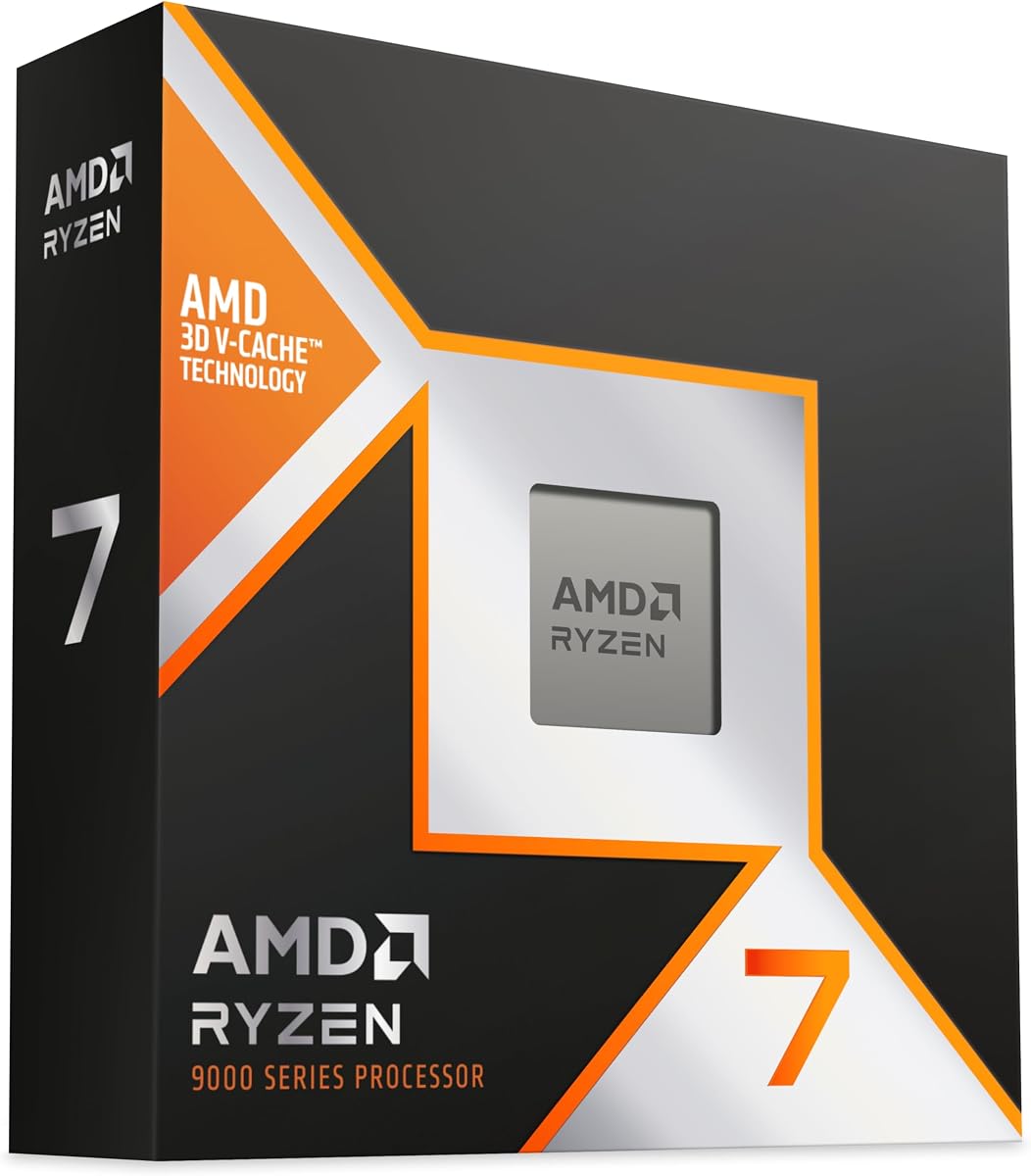


The AMD Ryzen 9 9950X3D stands out as a top contender for Cpus for 3D Rendering with its impressive 16 core design and Zen 5 architecture. This processor delivers massive throughput for professional workflows while maintaining high efficiency during extended rendering sessions.
We may earn a commission when you buy through this link, at no additional cost to you.
With a maximum boost clock reaching up to 5.7 GHz, this unit ensures that even single threaded tasks remain snappy. The architecture is optimized to handle demanding content creation software without throttling, making it ideal for studios needing reliable uptime.
While it is a premium option, the cost is justified by the performance gains you see in heavy compute workloads. The only minor drawback is that a cooling solution is not included, so you must budget for a high quality liquid cooler.
If you need a processor that can handle both gaming and professional rendering with equal finesse, this is the recommended choice. It balances raw power with efficiency better than most competitors in the current market landscape.
The 16 cores and 32 threads allow parallel rendering tasks to complete significantly faster than older generations.
Built on the latest Zen 5 design, it offers improved instructions per cycle for better overall throughput.
We may earn a commission when you buy through this link, at no additional cost to you.
The AMD Ryzen 7 7800X3D is an exceptional choice for users seeking Cpus for 3D Rendering without breaking the bank. Its 5nm process technology ensures reliability while the large cache allows for efficient handling of smaller to medium scenes.
We may earn a commission when you buy through this link, at no additional cost to you.
With a clock speed of 4.20 GHz and 16 threads, this processor offers solid execution of tasks with maximum efficiency. It is particularly strong in scenarios where single core speed matters as much as total thread count.
The main trade-off is the lower core count compared to flagship models, which might limit performance in massive parallel renders. However, for most independent creators and small studios, this limitation is often negligible given the price savings.
This processor is highly recommended for those building a cost effective workstation that still delivers professional quality output. It proves that you do not need the most expensive hardware to achieve excellent rendering results.
The 96MB L3 cache provides excellent hit rates enabling improved system performance during data heavy operations.
Its power efficiency allows it to run cooler which simplifies cooling requirements for standard builds.
We may earn a commission when you buy through this link, at no additional cost to you.
The AMD Ryzen Threadripper PRO 7975WX is the ultimate powerhouse for professionals needing Cpus for 3D Rendering capable of handling enterprise level complexity. With 32 cores and 64 threads, it offers incredible throughput for demanding professional software applications.
We may earn a commission when you buy through this link, at no additional cost to you.
It features a massive 160MB cache and eight channel DDR5 support up to 2TB which ensures that bottlenecks are virtually eliminated. The 128 usable PCIe 5.0 lanes provide ultimate bandwidth and I/O for connecting multiple GPUs and storage arrays.
While the performance is undeniable, the cost and infrastructure requirements make this a niche product for large studios. You must invest in a compatible motherboard and robust cooling solutions as the TDP is high at 350W.
If you work with massive scenes or multiple simultaneous render nodes, this CPU is the clear winner. It represents the peak of desktop workstation performance available for serious content creation tasks today.
The 32 cores and 64 threads ensure that heavy professional software applications run without any stutter or delay.
Eight channel DDR5 RDIMM support allows for massive memory capacity essential for complex texture and geometry data.
We may earn a commission when you buy through this link, at no additional cost to you.
The AMD RYZEN 7 9800X3D is a strong alternative for Cpus for 3D Rendering that emphasizes speed and efficiency. It is built on Zen 5 technology and features Next Gen 3D V-Cache for delivering +~16% IPC uplift and great power efficiency.
We may earn a commission when you buy through this link, at no additional cost to you.
With 8 cores and 16 threads, this unit allows higher clock speeds up to 5.2GHz while maintaining better thermal performance than previous generations. The 96MB L3 cache ensures that data access times remain low during rendering tasks.
Although it shares core counts with older models, the architectural improvements make it significantly faster in real world scenarios. However, you will need to buy a cooler separately as it is not included in the box.
This processor is ideal for users who prioritize high clock speeds and efficiency over massive thread counts. It works seamlessly with proven Socket AM5 infrastructure for a reliable upgrade path.
The Next Gen 3D V-Cache provides higher hit rates which improves rendering times for complex textures.
It is drop in ready for proven Socket AM5 infrastructure making upgrades simple for existing users.
We may earn a commission when you buy through this link, at no additional cost to you.
The AMD Ryzen 7 9850X3D is a robust processor designed for Cpus for 3D Rendering that balances power and efficiency effectively. It leverages the Zen 5 architecture to deliver consistent performance across various content creation workloads.
We may earn a commission when you buy through this link, at no additional cost to you.
As a desktop processor optimized for rendering, it benefits from the AM5 platform support which ensures longevity and upgradeability. The design focuses on providing stable throughput without excessive heat generation during normal operation.
While specific core counts are not detailed in the brief description, its positioning suggests it targets high performance needs similar to its siblings. It is a solid choice for those wanting the latest tech without going full enterprise class.
This chip is well suited for creators who need a reliable workhorse for daily rendering tasks. It offers a modern foundation for building a system that will last for years.
The Zen 5 architecture ensures that every core contributes effectively to the final render output.
Support for the AM5 platform means you get access to the latest features and standards.
We may earn a commission when you buy through this link, at no additional cost to you.
The AMD Ryzen 9 9950X is a powerful unlocked processor ideal for Cpus for 3D Rendering where customization is key. With 16 Cores and 32 processing threads, it is based on AMD Zen 5 architecture for ultra fast performance.
We may earn a commission when you buy through this link, at no additional cost to you.
It offers a 5.7 GHz Max Boost and is unlocked for overclocking allowing enthusiasts to push beyond factory limits. The 80 MB cache supports DDR5-5600 for fast data movement through memory during complex calculations.
This processor supports PCIe 5.0 on select motherboards which is great for future proofing high speed storage and GPUs. However, it requires a liquid cooler for optimal performance as the stock solution is not included.
If you want maximum flexibility and raw power for rendering, this is an excellent choice. It bridges the gap between consumer and prosumer needs with its high thread count and overclocking potential.
Since it is unlocked you can tweak the settings to squeeze out extra performance for your specific software.
Support for PCIe 5.0 ensures that you can use the latest high bandwidth storage and graphics cards.
We may earn a commission when you buy through this link, at no additional cost to you.
The AMD Ryzen 5 9600X offers an entry point for Cpus for 3D Rendering on a budget with modern Zen 5 architecture. It provides 6 Cores and 12 processing threads which are sufficient for smaller scenes and general editing tasks.
We may earn a commission when you buy through this link, at no additional cost to you.
With a max boost of 5.4 GHz it delivers pure gaming performance with smooth 100+ FPS in popular games too. It is based on Zen 5 architecture which means you get efficiency and IPC gains right out of the box.
While it has fewer cores than the flagship models, it still supports PCIe 5.0 on select motherboards for future upgrades. The 38 MB cache and DDR5-5600 support help maintain responsiveness during moderate workloads.
This unit is best for hobbyists or those just starting with 3D work who want a modern system. It is not designed for heavy production but it lays a solid foundation for growth.
The Zen 5 architecture ensures better instructions per cycle meaning faster rendering per watt consumed.
With a max boost of 5.4 GHz single threaded tasks remain very fast and responsive.
We may earn a commission when you buy through this link, at no additional cost to you.
The AMD Ryzen Threadripper PRO 5955WX is a dedicated workstation unit for Cpus for 3D Rendering that prioritizes stability. It delivers 16 cores and 32 threads ensuring that professional software runs without interruption over long periods.
We may earn a commission when you buy through this link, at no additional cost to you.
This processor supports DDR4 3200 memory making it compatible with a wide range of existing enterprise hardware. Its design focuses on professional reliability and consistent performance under load rather than raw gaming speed.
While the DDR4 support is older, the performance remains very high for rendering tasks. It is a strong option for users who do not need the latest DDR5 standards and prefer proven stability.
If you need a reliable workhorse for daily studio use this chip is excellent. It offers a balance of performance and stability that is crucial for professional environments.
The PRO series is designed for 24/7 operation ensuring that your render farm stays online.
With 16 cores and 32 threads it handles multiple concurrent tasks without slowing down.
We may earn a commission when you buy through this link, at no additional cost to you.
The Intel Core Ultra 7 270K Plus offers an alternative platform for Cpus for 3D Rendering with a unique hybrid core design. It features 24 Cores including 8P and 16E cores for balanced performance across varied tasks.
We may earn a commission when you buy through this link, at no additional cost to you.
Built on Arrow Lake architecture it supports motherboards with Intel 800 series chipset for modern features. The 40MB L2 Cache and support for PCIe 5.0 and 4.0 and DDR5 ensure fast data movement and storage connectivity.
With a max speed of up to 5.50 GHz it provides excellent speed for single threaded operations. The 125W processor-based power indicates efficient energy use compared to older high wattage models.
This processor is a great choice for those who prefer Intel over AMD. It offers a strong balance of speed and efficiency for modern rendering workflows.
The mix of performance and efficiency cores allows for better task management during multi-app work.
Supports PCIe 5.0 and DDR5 ensuring that storage and memory bottlenecks are minimized.
We may earn a commission when you buy through this link, at no additional cost to you.
The AMD Ryzen 9 5900XT is a budget friendly option for Cpus for 3D Rendering that still provides strong thread counts. It features 16 Cores and 32 processing threads based on Zen 3 architecture for powerful content creation capabilities.
We may earn a commission when you buy through this link, at no additional cost to you.
With a max boost of 4.8 GHz unlocked for overclocking it allows users to tune performance to their needs. The 72 MB cache ensures efficient data handling while DDR4 memory support keeps memory costs lower.
For the AMD Socket AM4 platform with PCIe 4.0 support it remains a valid choice for existing users. It is powerful enough for most rendering tasks without requiring a full platform rebuild.
This unit is ideal for those upgrading an older system or sticking with AM4. It delivers solid performance for the price and is unlocked for future optimization.
16 cores for 32 threads provide plenty of parallelism for rendering large scenes.
Since it is unlocked you can push frequencies higher to gain a bit more performance.
We may earn a commission when you buy through this link, at no additional cost to you.
Selecting the right processor requires understanding how core counts, cache, and platform support impact your specific rendering tasks.
Most rendering engines utilize all available threads so a higher core count usually translates to faster render times. Look for at least 16 threads for professional workloads to ensure smooth multitasking.
More threads mean you can render scenes while handling other applications without slowdowns.
Newer architectures like Zen 5 or Arrow Lake offer better instructions per cycle efficiency. This means faster processing of data regardless of total clock speed.
Always prioritize the latest generation chips for better future-proofing and efficiency.
L3 cache acts as a high speed buffer for frequently accessed data which is crucial for geometry processing. Larger cache sizes reduce the need to fetch data from slower system RAM.
Higher cache capacity improves performance in complex scenes with many assets.
Choosing a modern platform like AM5 or LGA 1851 ensures you can upgrade later without changing the motherboard. Older sockets may limit your ability to install DDR5 memory or PCIe 5.0 storage.
Check socket compatibility to ensure your chosen CPU fits your existing or planned motherboard.
Rendering often requires large amounts of memory bandwidth which is why DDR5 is preferred for new builds. Ensure the CPU supports DDR5 speeds to avoid bottlenecks in data transfer.
Fast memory support complements the CPU power to ensure data flows freely to the cores.
High performance CPUs generate significant heat so you must select an appropriate cooling solution. TDP ratings indicate how much heat the chip produces under full load.
Plan for adequate cooling to maintain stable performance and avoid thermal throttling.
Unlocked CPUs allow you to tweak frequencies for better performance or lower power draw. This is useful for enthusiasts who want to customize their system.
Check if the model is unlocked if you plan to adjust settings manually.
Balance the cost of the CPU against your specific needs. High end options may be overkill for small studios or hobbyists.
Select a CPU that fits your budget while meeting your minimum performance requirements.
Install the processor carefully aligning the markers on the chip with the socket to prevent damage. Apply thermal paste evenly before mounting the cooler to ensure good contact between the surfaces.
Keep your system updated with the latest BIOS and drivers to ensure optimal stability and performance. Regularly check for firmware updates from your motherboard manufacturer.
Monitor temperatures during long rendering sessions using software tools to avoid thermal throttling. Clean dust from your fans and heatsinks every few months to maintain airflow and cooling efficiency.
While more cores generally help in parallel tasks some rendering engines rely heavily on single core speed. It is best to find a balance that suits your specific software.
Most high end CPUs do not come with coolers so you must purchase one separately. Ensure the cooler is rated for the TDP of your specific model.
3D V-Cache significantly increases L3 cache which helps in data heavy operations like gaming and rendering. It reduces latency when accessing frequently used assets.
Upgrades depend on the socket and motherboard compatibility. Modern platforms like AM5 are designed to support future generations of CPUs.
New platforms like AM5 support DDR5 memory which offers higher bandwidth. Using DDR5 ensures your system does not bottleneck the processor.
You can use built-in software tools provided by your motherboard manufacturer. These apps allow you to monitor real-time temperature and usage stats.
For high end CPUs liquid cooling is often recommended to handle the heat load effectively. It helps maintain boost clocks for longer durations without throttling.
Both AMD and Intel offer strong options depending on your specific needs. Focus on core counts and architecture efficiency rather than brand alone.
We reviewed ten top processors including the AMD Ryzen 9 9950X3D and the Threadripper PRO 7975WX to cover different needs. Each unit offers unique strengths for varying budgets and production scales.
Prioritize core counts and cache sizes when looking for speed and efficiency in your workflow. Ensure that the platform supports modern memory standards for longevity.
Remember to check current prices and availability before finalizing your purchase. Technology costs fluctuate so verify the best value at the time of buying.