
SOLPERK Solar Panel Kit 20W
4.5Editor score
20W Monocrystalline Cell
Integrated Smart Controller
Adjustable Mounting Bracket
Discover the top marine solar panels for 2026. This guide compares efficiency, durability, and features to help you power your boat reliably.
Marine solar panels are essential for boaters seeking energy independence and reliable power while on the water. Whether you need trickle charging or full off-grid capability, choosing the right panel ensures your batteries stay charged and your electronics run smoothly.
We evaluated ten top-rated solar solutions based on efficiency, build quality, and suitability for marine environments. Our analysis covers rigid, flexible, and bifacial options from leading brands like Renogy and Callsun to help you find the perfect match.
Each product entry details key specifications, standout features, and real-world performance traits. Note that prices and availability change frequently, so verify current listings before purchasing. This guide aims to simplify your decision with honest, data-driven insights.
4.5Editor score

4.8Editor score
4.6Editor score
This side-by-side comparison highlights key specifications across all ten marine solar panels reviewed. Use this table to quickly assess wattage, efficiency, and protection ratings before diving into detailed reviews.


The Callsun 400W Bifacial Panel tops our list with industry-leading efficiency and durable construction. Boaters seeking maximum output per square foot will appreciate its dual-module design and bifacial capabilities.
We may earn a commission when you buy through this link, at no additional cost to you.
At 25.6% efficiency, this panel generates more power than conventional PERC options. The bifacial technology captures light from both sides, while the parallel anti-shade design ensures consistent output even when parts are obstructed.
Installation is straightforward thanks to pre-drilled holes and a low weight of 23.8 lbs per unit. The main trade-off is the size; you will need ample deck or roof space to deploy both 200W units effectively.
For serious marine applications needing reliable high-wattage power, this kit is an excellent choice. It balances performance, weather resistance, and modern cell technology for long-term marine energy needs.
Captures reflected light from the rear side to boost total daily output in open environments.
Dual parallel modules ensure that partial shading does not shut down the entire panel array.
We may earn a commission when you buy through this link, at no additional cost to you.
The SOLPERK 20W Kit offers an affordable way to maintain batteries without complex installations. It suits small boats or vessels needing only trickle charging power.
We may earn a commission when you buy through this link, at no additional cost to you.
Its smart controller prevents overcharging with a three-stage process. The adjustable bracket allows optimal sun alignment, while the waterproof frame ensures durability in humid marine conditions.
While 20W won't power large loads, it is perfect for keeping starter batteries healthy during storage. The included cables are plug-and-play, reducing wiring headaches for beginners.
Boaters on a tight budget will find this kit practical and reliable. It delivers basic solar charging functionality without breaking the bank or requiring technical expertise.
The included 8A controller protects your battery from overcharging and extends its overall lifespan.
Tempered glass and aluminum framing withstand wind, rain, and salt exposure effectively.
We may earn a commission when you buy through this link, at no additional cost to you.
The Renogy 400W ShadowFlux delivers premium performance for high-demand marine systems. Its N-Type cells and anti-shading technology ensure consistent power even in variable light.
We may earn a commission when you buy through this link, at no additional cost to you.
ShadowFlux technology minimizes power loss from partial shade, a common issue on boat decks. The panel is 10% more compact than standard PERC models, saving valuable space.
Durability is excellent with IP67 protection against dust and water. However, the high cost means it is best suited for larger boats with significant power requirements.
For those prioritizing reliability and space efficiency, this panel stands out. It combines cutting-edge solar tech with Renogy's reputation for marine-grade durability.
The compact design allows more watts per square foot, ideal for crowded boat roofs.
ShadowFlux tech keeps power flowing even when rigging or antennas cast shadows.
We may earn a commission when you buy through this link, at no additional cost to you.
SUNER POWER's 20W PRO features Ultra-Smart MPPT technology to maximize every bit of solar energy. This is ideal for maintaining 12V batteries against self-discharge.
We may earn a commission when you buy through this link, at no additional cost to you.
The three-stage charging algorithm and visual indicators make monitoring easy. You can switch between AGM, Lithium, and flooded modes to match your specific boat battery type.
Safety features like over-voltage and spark-proof protection are built-in. While not for main power generation, it ensures your batteries stay ready during idle periods.
This kit is perfect for small cruisers or boats stored for long periods. Its smart features add significant value over basic 20W trickle chargers.
Indicators show 25%-100% charge stages so you know battery status at a glance.
Compatible with AGM, Lithium, and flooded batteries for broad marine utility.
We may earn a commission when you buy through this link, at no additional cost to you.
The Renogy 100W N-Type panel offers a balanced solution for mid-sized boats needing reliable daily charging. Its 25% efficiency ensures solid output even in moderate sunlight.
We may earn a commission when you buy through this link, at no additional cost to you.
N-Type cells perform better in heat than standard panels, reducing power loss on hot days. The IP67 rating means it can withstand rain and wind common to marine environments.
Installation requires a rigid frame but provides long-term stability. With a 25-year performance guarantee, it is a durable investment for boat owners.
This panel suits users seeking a single, high-quality unit. It bridges the gap between small trickle chargers and large off-grid arrays effectively.
Low temperature coefficient maintains power output during summer heatwaves.
Backed by Renogy's industry-standard warranty for material and performance.
We may earn a commission when you buy through this link, at no additional cost to you.
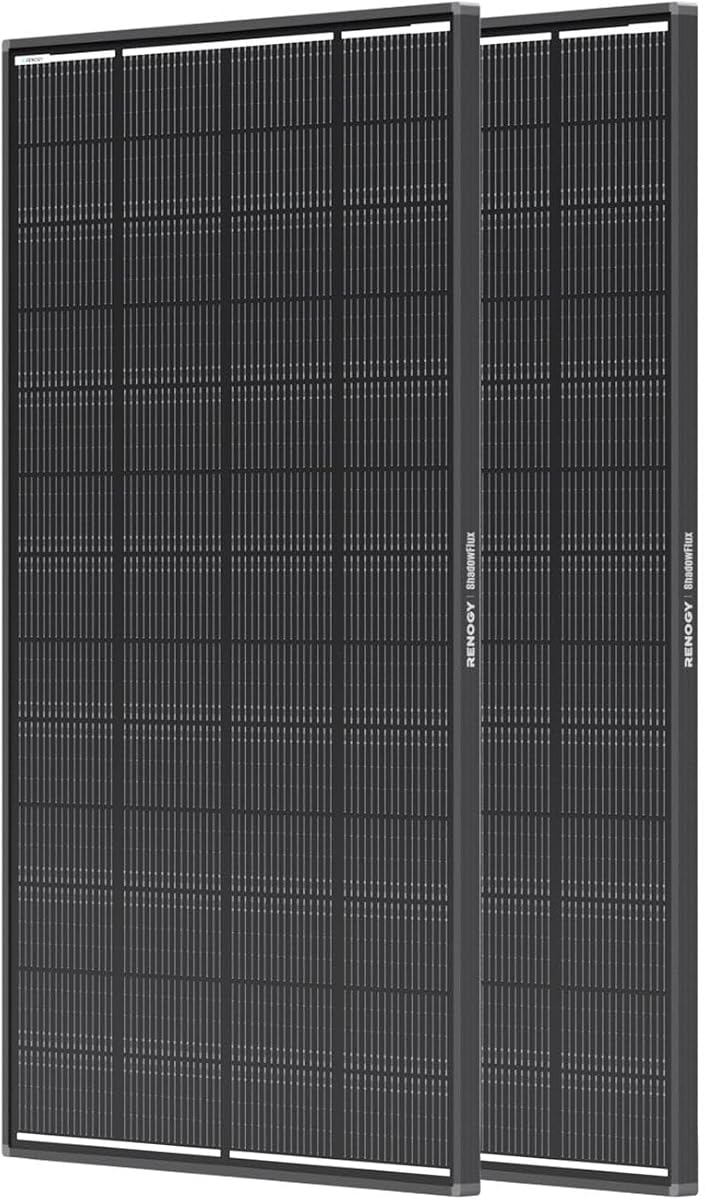
This 200W ShadowFlux panel packs significant power into a smaller footprint. It is ideal for boats with limited roof or deck space.
We may earn a commission when you buy through this link, at no additional cost to you.
ShadowFlux technology reduces hot-spot risks, ensuring the panel keeps working even if partially shaded by masts or antennas. Its N-Type cells offer reliable efficiency.
Installation is manageable, though securing it for salt spray is essential. The compact size makes it easier to fit alongside other equipment compared to traditional rigid panels.
For space-constrained cruisers needing substantial power, this is a strong contender. It prioritizes efficiency and shade resilience without sacrificing wattage.
10% more compact than standard PERC panels for better layout flexibility.
Reduces impact of partial shading from boat rigging or nearby obstacles.
We may earn a commission when you buy through this link, at no additional cost to you.
Renogy's Flexible 200W panel bends up to 240 degrees, making it perfect for curved boat roofs. It eliminates the need for bulky mounting frames.
We may earn a commission when you buy through this link, at no additional cost to you.
At half the weight of rigid panels, it simplifies installation on curved surfaces. The half-cut PERC cells enhance light capture and electrical performance significantly.
Adhesive installation works well but requires a clean surface. While it offers great flexibility, ensure you avoid excessive heat buildup that can reduce lifespan.
This panel suits boats with non-flat surfaces where traditional panels won't fit. It offers a sleek, functional solution for challenging mounting scenarios.
Bends to fit rounded cabin tops or curved deck areas without gaps.
Pre-drilled holes or adhesive tape allows frameless mounting options.
We may earn a commission when you buy through this link, at no additional cost to you.
The 120W ShadowFlux panel excels in partially shaded environments typical on boat decks. Its N-Type cells and anti-shading design ensure consistent energy harvest.
We may earn a commission when you buy through this link, at no additional cost to you.
The 120W rating provides a solid middle ground between small trickle chargers and large 200W panels. Its compact dimensions allow for flexible placement options.
Durability is supported by IP67 protection against water and dust. Ensure the mounting hardware is rated for saltwater corrosion to maximize longevity.
This model fits well on medium boats where space is moderate. It offers a smart balance of power, size, and shade tolerance for marine use.
ShadowFlux technology minimizes power drops when shadows cross the panel.
Lightweight and small for easy placement on complex boat structures.
We may earn a commission when you buy through this link, at no additional cost to you.
This 50W upgrade from SUNER POWER offers more power for maintaining larger house banks. The MPPT controller extracts maximum energy even in varying light.
We may earn a commission when you buy through this link, at no additional cost to you.
Its three-stage charging and visual indicators make monitoring simple. You can select battery types like AGM or Lithium to optimize charging cycles effectively.
Safety is built-in with over-voltage and spark-proof protections. While still a trickle kit, 50W helps charge batteries faster than standard 20W options.
Ideal for boats with moderate electrical needs, this kit delivers extra capacity. It is a reliable solution for keeping systems charged without full solar arrays.
Ultra-Smart MPPT boosts utilization rates compared to standard PWM controllers.
Switch between Lithium, AGM, and flooded modes easily.
We may earn a commission when you buy through this link, at no additional cost to you.
The POWOXI 7.5W unit is a tiny trickle charger suitable for very small batteries. It offers a simple plug-and-play solution for basic maintenance tasks.
We may earn a commission when you buy through this link, at no additional cost to you.
An LED indicator confirms sunlight reception and battery connection. Its ABS+PC frame is sturdy and resists scratches and impacts during storage.
While 7.5W is minimal, it effectively prevents deep discharge in idle motors or small boats. It is best used for storage maintenance rather than active charging.
For users needing just a basic charge boost, this unit is a budget option. Its simplicity makes it an easy addition to any boat maintenance kit.
Dual-color LED shows sunlight and battery connection status clearly.
ABS+PC construction resists scratches and impacts better than flexible units.
We may earn a commission when you buy through this link, at no additional cost to you.
Selecting the right marine solar panel involves balancing power needs, space, and durability. This guide highlights key factors to help you make an informed choice.
Assess your daily energy needs. Trickle chargers (20W-50W) maintain batteries while larger panels (100W-400W) run electronics and appliances.
Choose wattage that matches your usage. High consumption requires higher wattage or multiple panels.
Higher efficiency panels produce more power in less space. Look for N-Type or 25% efficiency models for better performance.
Prioritize efficiency if deck space is limited. It maximizes your solar energy harvest.
Flexible panels fit curved surfaces but may degrade faster. Rigid panels are more durable and better at dissipating heat.
Use rigid for flat roofs and flexible for curved cabin tops. Durability often favors rigid units.
Marine panels must withstand salt, UV, and moisture. Look for IP67 or IP68 rated junction boxes and corrosion-resistant frames.
Ensure all connectors are sealed. This prevents water damage and corrosion over time.
Boats often have shadows from masts. Technologies like ShadowFlux or dual-module parallel help reduce power loss.
If your boat has many obstructions, choose anti-shading panels. They ensure consistent energy generation.
Rigid panels usually need frames, while flexible ones use adhesive. Ensure your chosen option fits your boat's structure.
Consider wind load when mounting. Secure installation prevents panels from detaching in storms.
MPPT controllers improve efficiency, especially for high-voltage setups. Ensure your panels match your charge controller specs.
Check if the kit includes a controller. Adding one separately adds to the total cost.
Solar panels are long-term investments. Look for at least a 10-year material warranty and 25-year performance guarantee.
Reputable brands offer better support. This ensures help is available if issues arise.
Position your panels to face true south if in the northern hemisphere for maximum sun exposure. Avoid shading from masts or rigging.
Clean the panels regularly with fresh water to remove salt and dirt. This ensures the glass remains clear and efficient.
Inspect wiring and connectors every season for corrosion or loose connections. Replacing damaged components early prevents larger electrical failures.
Rigid panels are generally more durable and better at heat dissipation. Flexible panels suit curved surfaces but may not last as long.
Yes, a charge controller prevents overcharging and extends battery life. It regulates the power from panels to your batteries safely.
This depends on your load. Small boats may only need 20W for maintenance, while larger systems need 200W or more.
They can supplement engines but rarely power large loads alone. They are best for charging house batteries while cruising.
Quality panels last 25+ years. Marine-specific warranties often cover corrosion and performance degradation.
Yes, most are rated IP67 or IP68 for submersion. Ensure all connections are sealed for full water resistance.
The Callsun 400W Bifacial leads in performance, while the SOLPERK 20W offers great value. Each panel has specific strengths for different boat needs.
Prioritize durability and efficiency when making your choice. A high-quality panel ensures reliability during long voyages.
Prices and availability vary, so check current listings before purchasing. Investing in the right solar solution keeps your boat powered independently.